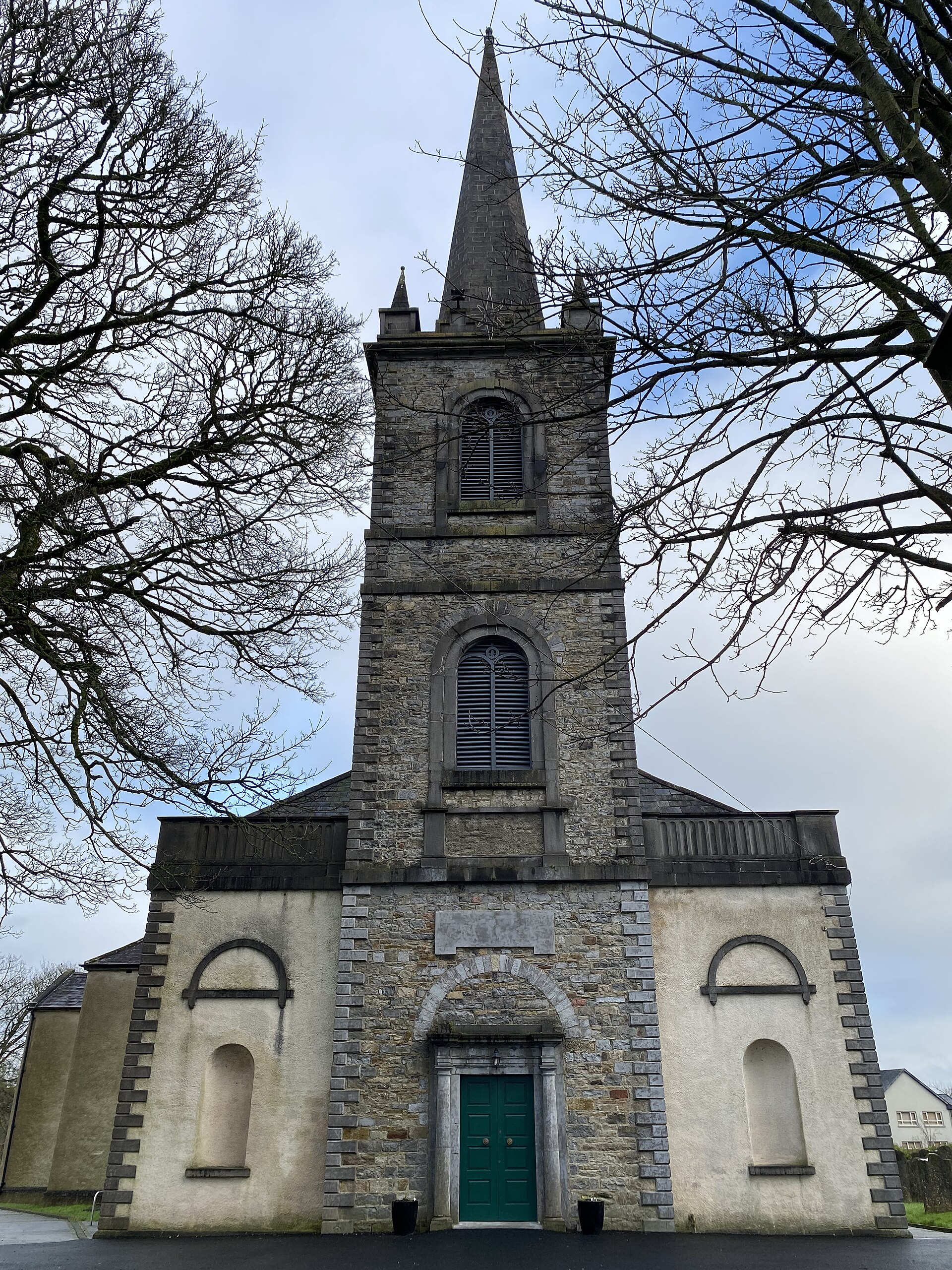
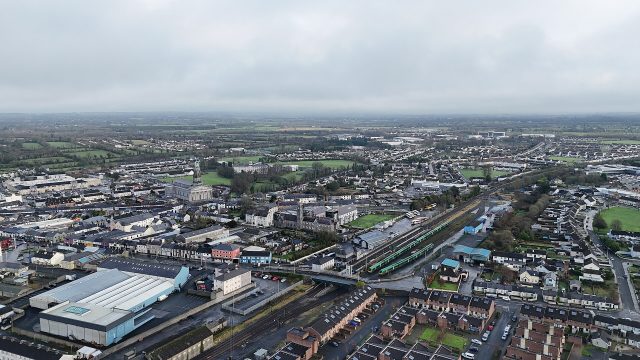
St John’s Church in Longford is the kind of place that doesn’t demand attention but lingers in the mind long after you’ve left. It sits on a gentle rise near the town centre, surrounded by low houses and old trees, as if quietly holding onto memories of a time when Longford was more than just a dot on a map—when it was a crossroads for lives passing through. Built in the 1840s, during a period of religious revival in Ireland, the church emerged when the Catholic faith was reasserting itself after centuries of suppression. For a community devastated by the Great Famine, the new building wasn’t just a place of worship but a symbol of resilience, funded by the very people who had little to spare.
The architecture is unassuming yet solid, reflecting the practical spirit of 19th-century Irish Catholicism. There are no soaring Gothic spires or intricate stained glass here—just a sturdy, well-proportioned structure in the neo-Romanesque style. The façade is marked by tall arched windows and heavy wooden doors, with a modest bell tower rising above. Inside, the space feels open despite its simplicity: whitewashed walls, plain wooden pews, an unadorned altar. Everything serves a single purpose—to create a sense of quiet reflection. What makes the church feel particularly intimate is the fact that it was built by the community itself. Many of the carved wooden details were crafted by local hands, giving the interior a warmth that feels almost personal, as if each stone and beam was laid with care for those who would one day pray beneath them.
Longford was never a major religious hub, and St John’s doesn’t pretend to be anything more than what it is. That’s part of its charm. It doesn’t try to impress or overwhelm; it simply exists, woven into the fabric of the town’s daily life. Sundays bring the faithful for Mass, while weekdays see people stopping by to light a candle or sit in silence. Weddings, baptisms, and funerals mark the milestones of local families, just as they have for generations. In this way, the church fulfils its oldest purpose—it gathers people together, offering a reminder that there’s something beyond the rush of everyday concerns.
The small park surrounding the church is where the town’s rhythm slows even further. In summer, elderly locals feed the pigeons, children play on the grass, and couples stroll along the paths. Benches sit in the shade of trees, and nearby, a memorial honours those lost in war. The scene is one of quiet contentment, as if time moves a little more gently here than elsewhere in Longford. St John’s stands at the heart of it all, a silent witness to nearly two centuries of ordinary lives unfolding.
The church’s history is inseparable from that of the town itself. Longford, founded by the Normans in the 12th century, has always been small but significant—a place where trade routes intersected and travellers paused. By the 19th century, the arrival of canals and railways brought growth and new faces, reshaping the town’s character. St John’s watched it all: the expansion, the changing fortunes, the passing of generations. Perhaps that’s why it feels so alive—its walls hold the echoes of countless stories, from the struggles of the Famine years to the quiet joys of families who have called Longford home.
Today, St John’s remains an active parish church, open during services and at set times for visitors. There are no grand frescoes or gilded altars inside, nor is there a need for them. The beauty of the place lies in its sincerity. Side chapels display faded photographs of past congregations and plaques commemorating those who contributed to the church’s upkeep. These small details serve as a reminder that a church is more than bricks and mortar—it’s a living community, sustained by the efforts of many over time.
Longford rarely features on tourist itineraries, and St John’s is seldom a destination for visitors. But those who do find their way here often leave with the sense of having glimpsed something authentic. There are no crowds, no souvenir stalls, no guides reciting rehearsed facts. Just silence, old stone, and the faint rustle of wind through the trees in the park. It’s the kind of place that appeals to those weary of the noise of bigger cities, offering a moment to pause and reflect.
In the end, St John’s isn’t remarkable for its grandeur or uniqueness. Its significance lies in the fact that it endures—not as a relic of the past, but as a part of Longford’s present. Prayers are still offered here, people still gather, and faith is still lived. That, perhaps, is the church’s greatest strength: it doesn’t just preserve history, it helps shape the everyday.