Kanazawa Castle sits on a gentle rise in the heart of the city, its stone walls and moats still whispering of Japan’s feudal past. Built in the late 16th century, it became the seat of power for the Maeda clan, one of the most influential samurai families of the era. For over two and a half centuries, the Maeda ruled from here, turning Kanazawa into a thriving center of wealth and culture. The castle endured fires and wars, each reconstruction adding to its grandeur, a testament to the clan’s enduring influence.
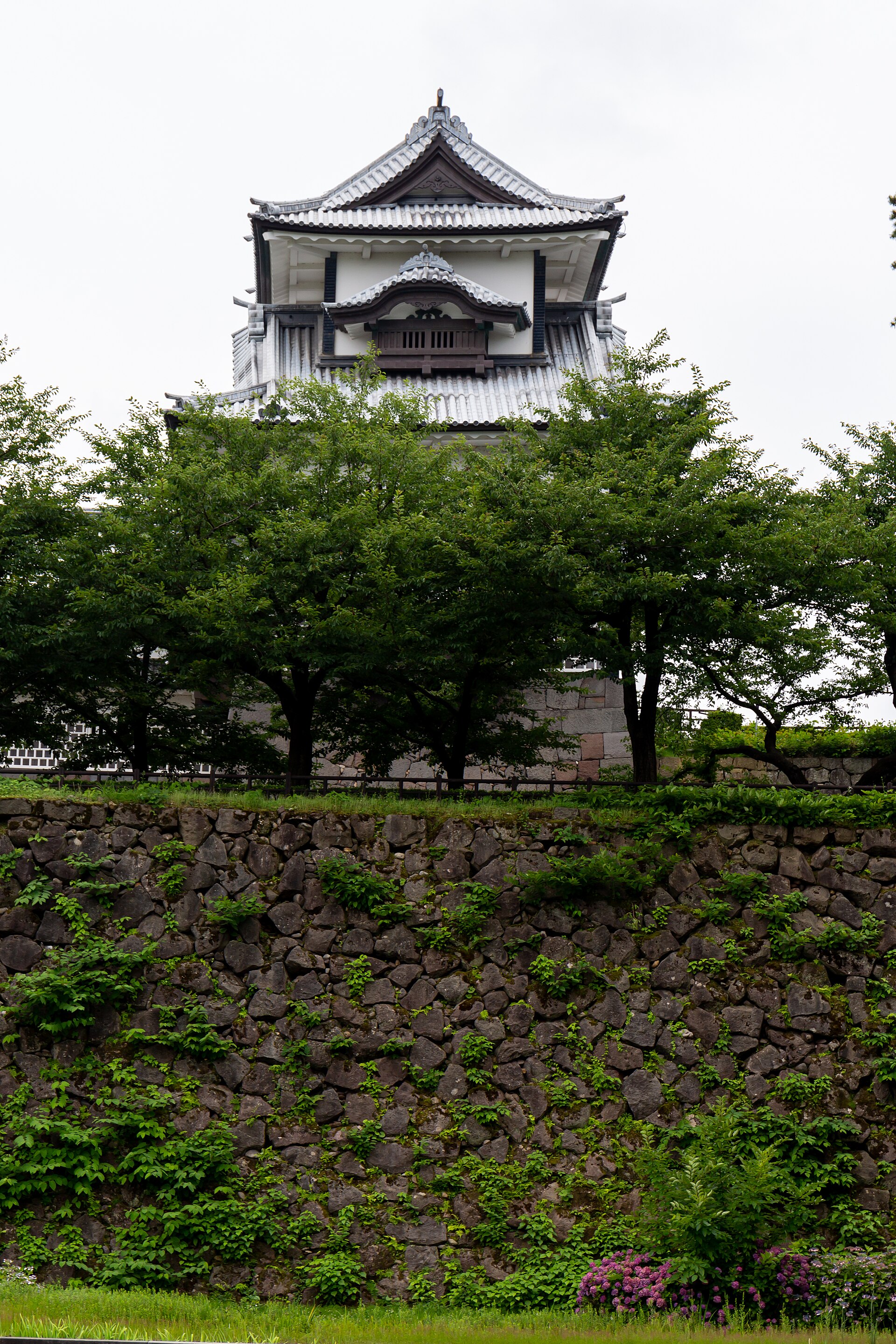
Little remains of the original structures today, but the Ishikawa Gate, dating back to 1788, stands as a striking example of traditional Japanese fortress architecture. Its massive stone base supports wooden beams and white plaster walls, crowned by gracefully curved tiled roofs. The gate feels imposing yet balanced, as if strength and elegance were never at odds. Nearby, reconstructed towers and walls offer a glimpse of the castle’s former glory, their proportions and details carefully restored to reflect the Edo period.
The castle’s interior buildings were lost to time, but in the early 2000s, key structures were rebuilt using historical records and traditional techniques. The main keep, for instance, was reconstructed without a single nail, its wooden beams fitted together with precision, its tiles laid by hand. Inside, a museum displays samurai armor, weapons, and household items from the Maeda era, along with models showing how the castle evolved over the centuries. These exhibits help visitors imagine the daily life of the clan that once ruled here.
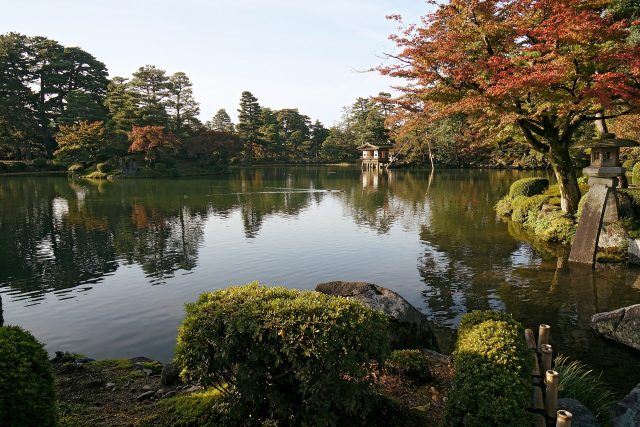
Surrounding the castle is Kenrokuen, one of Japan’s most celebrated gardens. Together, they form a harmonious whole—where the fortress represents power and authority, the garden embodies tranquility and refinement. Throughout the year, the landscape shifts with the seasons: cherry blossoms in spring, fiery maples in autumn, snow-dusted pines in winter, and serene ponds reflecting arched bridges. Walking these paths feels like stepping into the past, when samurai and lords strolled the same grounds.
Unlike many Japanese castles, Kanazawa was never the site of major battles, but its role in the region was profound. During the Edo period, it served as both a military stronghold and an administrative hub, where decisions shaped the lives of thousands. Diplomats were received here, taxes collected, and even coins minted within its walls. After the Meiji Restoration, the castle lost its military purpose but remained a symbol of the city’s resilience and cultural legacy.
Visiting Kanazawa Castle is less about spectacle and more about quiet appreciation. There’s no sense of forced tourism here—just a careful preservation of history. The reconstructions are so meticulous that it’s easy to forget they aren’t original. In the early morning or late afternoon, when the crowds thin, you can sit by the moat and imagine the patrols that once circled the walls or the guards who stood watch in the towers.
Kanazawa is often called the best-preserved city of old Japan, and the castle is a big reason why. It may not have the fame of Himeji or Matsumoto, but that’s part of its charm. There are no hurried crowds here, just space to wander and notice the small details—the intricate tile patterns, the carefully laid stone paths, the ancient trees that have witnessed centuries of change.
If you visit in spring or autumn, when Kenrokuen is at its most vibrant, the castle becomes part of a larger celebration of nature. Festivals bring music and light, and in the evenings, the illuminated walls and towers take on an almost mystical presence. But even on ordinary days, the place holds its magic. It doesn’t demand attention; it simply waits for those who are willing to listen to its quiet stories.