Myoryu-ji is one of those places in Kanazawa where time feels different. It doesn’t draw crowds with grand displays or dramatic views, but rather with the quiet persistence of something that has simply endured. Tucked away in the Higashi-Chayamachi district, an area where narrow lanes still carry the weight of the Edo period, the temple exists almost as an afterthought to the city’s more famous landmarks. Yet that very obscurity is what makes it special—here, the past isn’t staged for visitors; it’s just there, waiting to be noticed.
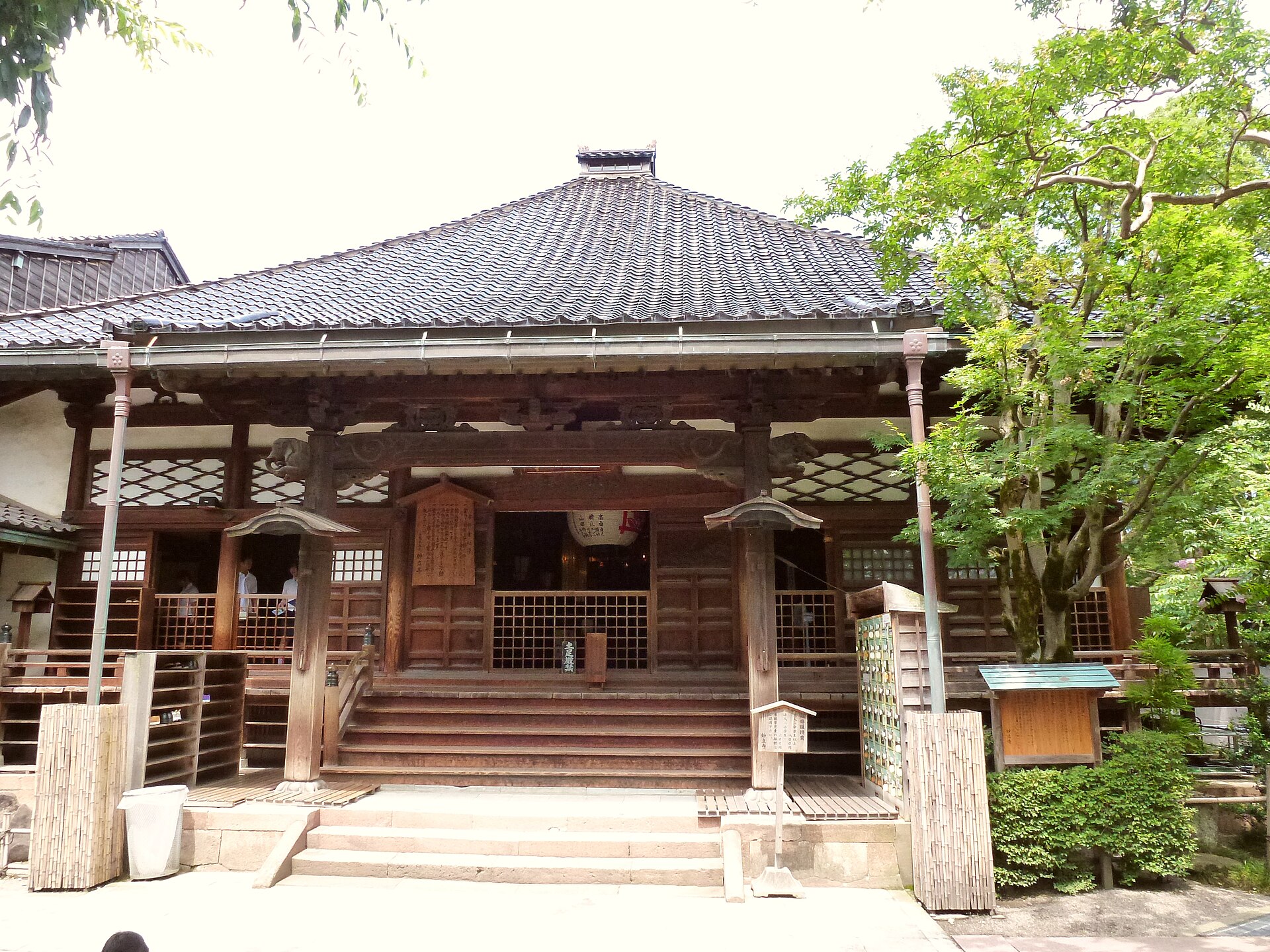
The temple’s history begins in the early 1600s, when Kanazawa was the seat of the Maeda clan, one of Japan’s most powerful feudal families. Unlike the grand castles and lavish gardens they commissioned, Myoryu-ji was never meant to be a statement of power. It was built in 1618, not as a centerpiece of religious authority, but as a place of quiet devotion. That modesty is still evident today, especially in its three-story pagoda, one of the oldest wooden structures of its kind in the Hokuriku region. The pagoda doesn’t tower over its surroundings; instead, it blends into them, its weathered wood darkened by centuries into the kind of patina that Japanese craftsmen have long revered. There’s no attempt to impress—just a structure that has stood long enough to become part of the landscape.
Inside the pagoda, a statue of Kannon, the bodhisattva of compassion, has watched over the temple for generations. For locals, it was a place of refuge during times of war and hardship, a quiet corner where prayers could be offered without fanfare. The statue isn’t always on display, but when it is, it’s presented with the same understated reverence that defines the temple itself. Other relics—a few ancient scrolls, ritual objects, stone lanterns worn smooth by time—are kept with similar care. They’re not showcased as treasures, but rather as things that have always been there, their significance lying in their continuity rather than their grandeur.
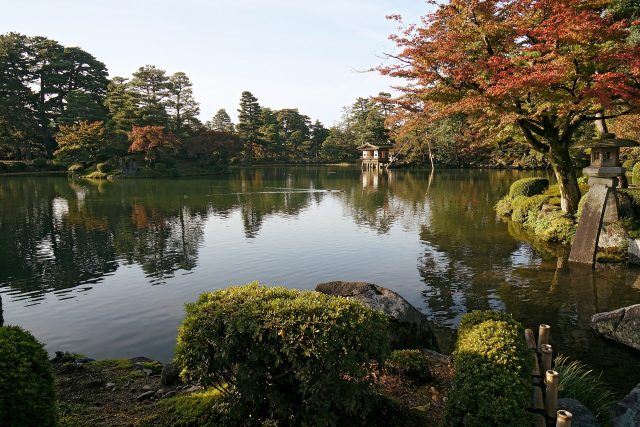
The temple grounds are small, almost austere. There are no elaborate gardens or ornamental ponds like those in Kyoto’s more famous temples. Instead, a modest courtyard of raked gravel and a handful of pines creates a sense of stillness. The simplicity isn’t accidental; it’s a deliberate choice, one that reflects the temple’s role as a place of reflection rather than spectacle. In summer, the shade of the trees offers relief from the heat; in winter, the silence is broken only by the occasional rustle of wind through bare branches. Autumn, of course, brings the kind of foliage that has inspired Japanese artists for centuries, but even then, the colors feel subdued, as if the temple itself is reluctant to draw too much attention.
Myoryu-ji is often described as a place for those seeking authenticity, and that’s true in the most unassuming way. There are no souvenir stalls, no guided tours, no attempts to package the experience for visitors. The monks who tend to the temple go about their work quietly—maintaining the grounds, conducting services, ensuring that the place remains what it has always been. Their presence is felt more than seen, a reminder that some traditions don’t need to be announced to be meaningful. It’s a very Japanese kind of restraint, one that values the integrity of a place over its appeal to outsiders.
The temple hasn’t always been this quiet. During the Edo period, it was part of a bustling neighborhood where artisans and merchants served the Maeda clan. Kanazawa was one of Japan’s most vibrant cultural centers at the time, and while Myoryu-ji may have been on the fringes of that world, it was still very much a part of it. The city’s legacy is still visible today in its preserved samurai districts, tea houses, and workshops where lacquerware and ceramics are still made by hand. Myoryu-ji, in its own way, carries that same sense of continuity. It doesn’t try to evoke the past; it simply exists within it, a small but enduring thread in the fabric of the city’s history.
Reaching the temple is part of the experience. From central Kanazawa, it’s a walk through Higashi-Chayamachi’s old streets, where the occasional shop selling traditional sweets or a house with lattice windows hints at the neighborhood’s past. The route isn’t marked with signs or tourist maps; it’s the kind of place you stumble upon, or perhaps hear about from someone who’s been there before. The temple is open most of the year, though weekdays are the best time to visit if you want to avoid even the smallest crowds. There’s a small admission fee, but it’s more of a formality than anything else. Inside the pagoda, photography isn’t encouraged—some things, after all, are meant to be experienced rather than documented.
What makes Myoryu-ji worth visiting isn’t any single feature, but the way it all comes together—the way the pagoda’s wood has darkened with age, the way the light filters through the pines, the way the silence feels like something you can almost touch. It’s the kind of place that doesn’t reveal itself immediately, but lingers in your memory long after you’ve left. In a country where so much is about spectacle, Myoryu-ji offers something far rarer: the chance to simply be still, and to find beauty in the quiet persistence of things that have endured.