Glenveagh Castle sits on the shore of its namesake lake in County Donegal, where Ireland’s rolling green hills meet the wild Atlantic coast. Unlike the grand, polished castles that draw crowds of tourists, Glenveagh is a ruin—its crumbling walls and moss-covered stones whispering stories rather than standing as a monument to power. There are no guided tours here, no gift shops or neatly manicured gardens. Instead, the only sounds are the cry of gulls, the rush of wind through the valley, and the occasional rustle of heather underfoot. It’s a place that feels untouched by time, where the past lingers in the silence.
The castle’s history stretches back to the 16th century, when this corner of Ireland was ruled by the O’Donnells, one of the most powerful clans in the northwest. Glenveagh wasn’t built as an impregnable fortress but as a fortified home, designed to withstand raids from rival families rather than full-scale invasions. In those days, Donegal was a land of shifting alliances and sudden violence, and the castle served as both a residence and a refuge. When English rule tightened across Ireland, Glenveagh lost its strategic importance. By the time the O’Donnells were forced into exile after the Battle of Kinsale in 1601, the castle had already begun its slow decline into ruin.
What remains today are fragments—sections of walls, the skeletal outlines of towers, and the occasional archway still standing against the sky. The stones are weathered, their surfaces softened by centuries of rain and wind, while trees now grow where grand halls once echoed with voices. Historians believe the castle once had multiple floors, perhaps even a great hall for feasting and hidden passages beneath the earth, though no detailed records survive. The lack of certainty only adds to its mystique. There’s no way to know exactly what it looked like in its prime, but that doesn’t make it any less compelling. The ruins feel like a puzzle with missing pieces, inviting visitors to imagine the rest.
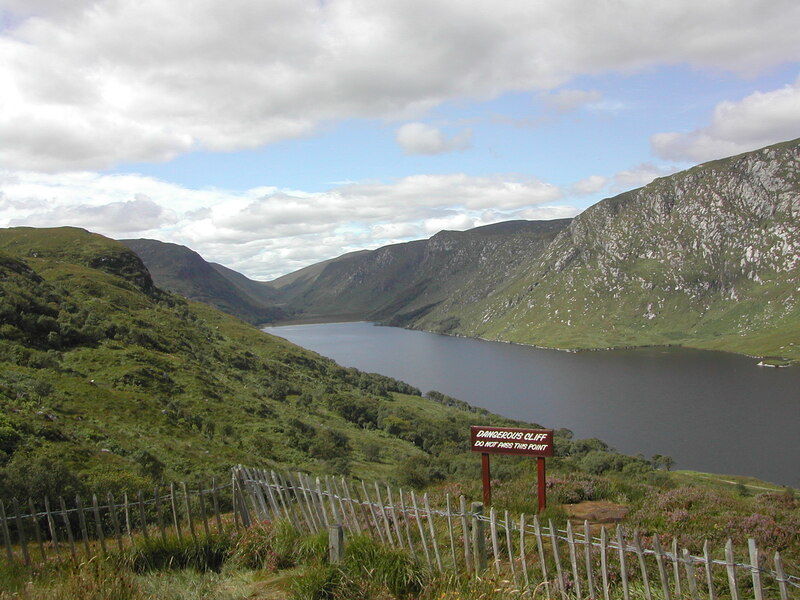
The landscape around Glenveagh is just as striking as the castle itself. The lake, dark and still, mirrors the surrounding mountains, their slopes covered in heather and peat bogs. The water has a deep, almost inky hue, giving the scene an otherworldly quality. Locals speak of a giant trout said to lurk in its depths, a creature no one has ever caught but everyone insists exists. The road to the castle winds through empty hills, where sheep graze on the sparse grass and the occasional eagle circles overhead. It’s easy to spend hours here without seeing another soul, the vastness of the land making even the ruins feel small in comparison.
Glenveagh is deeply tied to Ireland’s turbulent past, particularly the centuries of conflict between Irish clans and English forces. In the 17th century, the castle changed hands multiple times, its owners shifting loyalties between the English crown and Irish resistance. After the defeat at Kinsale, the land was seized and given to English settlers, and Glenveagh was left to decay. By the 1800s, it was little more than a shell, a shadow of its former self. Yet even in ruin, it carries the weight of history—of battles fought, alliances broken, and a way of life that disappeared long ago.
This part of Donegal is one of the most remote in Ireland, a place where the modern world feels far away. The roads twist through valleys and over hills, revealing sudden glimpses of the ocean or stretches of empty moorland. Near the castle, you might stumble upon old Celtic crosses, abandoned cottages, or the remains of ancient settlements, each with its own quiet story. If you’re lucky enough to meet someone from the area, they might share tales of the past—legends of hidden treasures, ghostly figures seen in the mist, or the last chieftains who once ruled these lands. But even without the stories, the landscape speaks for itself.
There’s a timelessness to Glenveagh that makes it easy to picture the past. No modern buildings intrude on the view, and the only sounds are natural ones—the wind, the water, the distant call of a bird. In the late afternoon, when the sun dips behind the mountains, the ruins cast long shadows, and the air grows cooler. It’s a place that demands patience, where the reward isn’t a spectacle but a sense of connection—to history, to the land, to something older than memory. This isn’t a destination for those seeking comfort or entertainment. It’s for travelers who want to step outside of time, if only for a little while.
The best time to visit is in summer or early autumn, when the weather is milder and the days are longer. Winter brings rain, wind, and narrow, winding roads that can be difficult to navigate. A car is the easiest way to reach the castle, though the walk from the nearest village is manageable for those who prefer to explore on foot. There are a few small guesthouses and pubs in the area, but don’t expect luxury—this is a place for simplicity, where a warm meal and a dry bed are enough. The lack of crowds is part of the appeal, though it also means planning ahead is wise.
Glenveagh isn’t the kind of place you visit for a quick photo or a checklist of sights. There are no signs explaining its history, no audio guides narrating its past. Instead, it offers something rarer: the chance to stand in the quiet and let the place tell its own story. It’s a ruin, yes, but one that feels alive in its own way—less a monument to the past than a conversation with it. If you ever find yourself in Donegal, take the time to come here. Walk along the lake’s edge, climb the crumbling steps, and listen. The silence has a way of making the past feel very close.