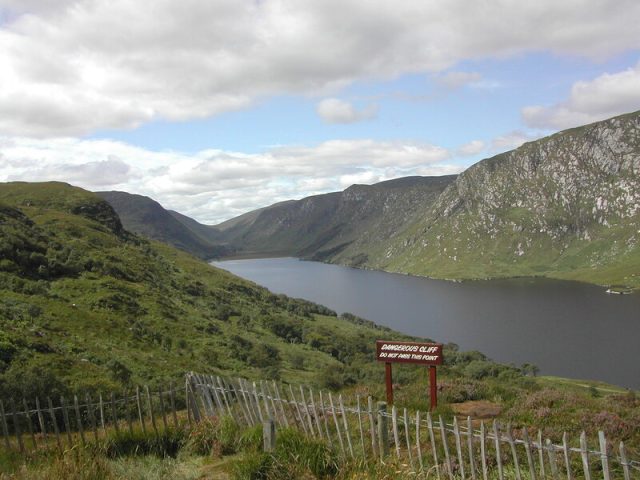
St. James’s Church in Guidor sits on a low hill. The view from here stretches across the Irish countryside—rolling fields, scattered stone walls, and the distant hum of a landscape that has changed little over time. Built in the mid-1800s, the church has grey stone walls, a steeply pitched roof, and narrow stained-glass windows that catch the light in soft hues.
Guidor is a small town on Ireland’s western edge. It doesn’t feature on postcards or in guidebooks, and that’s what makes St. James’s stand out. For nearly two centuries, this church has been the heart of the community. Baptisms, weddings, and funerals took place within these walls. Even now, people come here not just to pray, but to talk, to remember, to simply be.
The architecture is typical of rural Irish churches from the 19th century. The nave is small, the altar simple, the wooden beams overhead worn smooth by time. The stained glass carries scenes from the life of Christ alongside Celtic motifs. The light filtering through these windows paints the interior in blues and reds, creating an atmosphere that feels both sacred and intimate.
This church is tied to Guidor’s history. When it was built, Ireland was still reeling from the Great Famine. In places like this, the church wasn’t just a spiritual refuge—it was a symbol of endurance. Today, it stands as a reminder of how people once leaned on one another, how they marked time with rituals that have faded elsewhere. The past lingers in the creak of the pews and the scent of old wood.
Beyond the churchyard, a small cemetery spreads across the hillside. The gravestones, some leaning with age, others half-hidden by ivy, tell stories. Names have worn away over the decades, but a few remain legible. Walking among them, you sense lives lived quietly—families who worked the same land, attended the same services, and were laid to rest here.
The cemetery isn’t separate from the church. It’s part of the same story, where the living and the dead exist side by side.
Visiting St. James’s isn’t like visiting a tourist attraction. There are no crowds, no guided tours. Instead, there’s the stillness of a place that has seen joy and sorrow, the scent of wax and old timber, the rustle of wind through the open door. For many, it’s not just about seeing a building—it’s about feeling something deeper, something that connects them to the land and the people who came before.
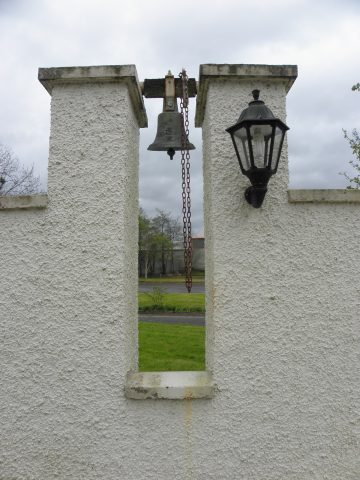
If you find yourself in Guidor, climb the hill. Step inside, let your eyes adjust to the dim light, and listen. You might catch the way the sun slants through the stained glass, casting colored patterns across the stone floor. Or you might hear the distant chime of the church bell.
There’s a beauty in places like this. St. James’s Church isn’t trying to impress anyone. It simply is, as it has been for generations. Here is a place that asks only for a moment of your time—and gives something in return.