Photo: Wikimedia Commons, CC BY-SA 2.5
Frederiksborg Castle
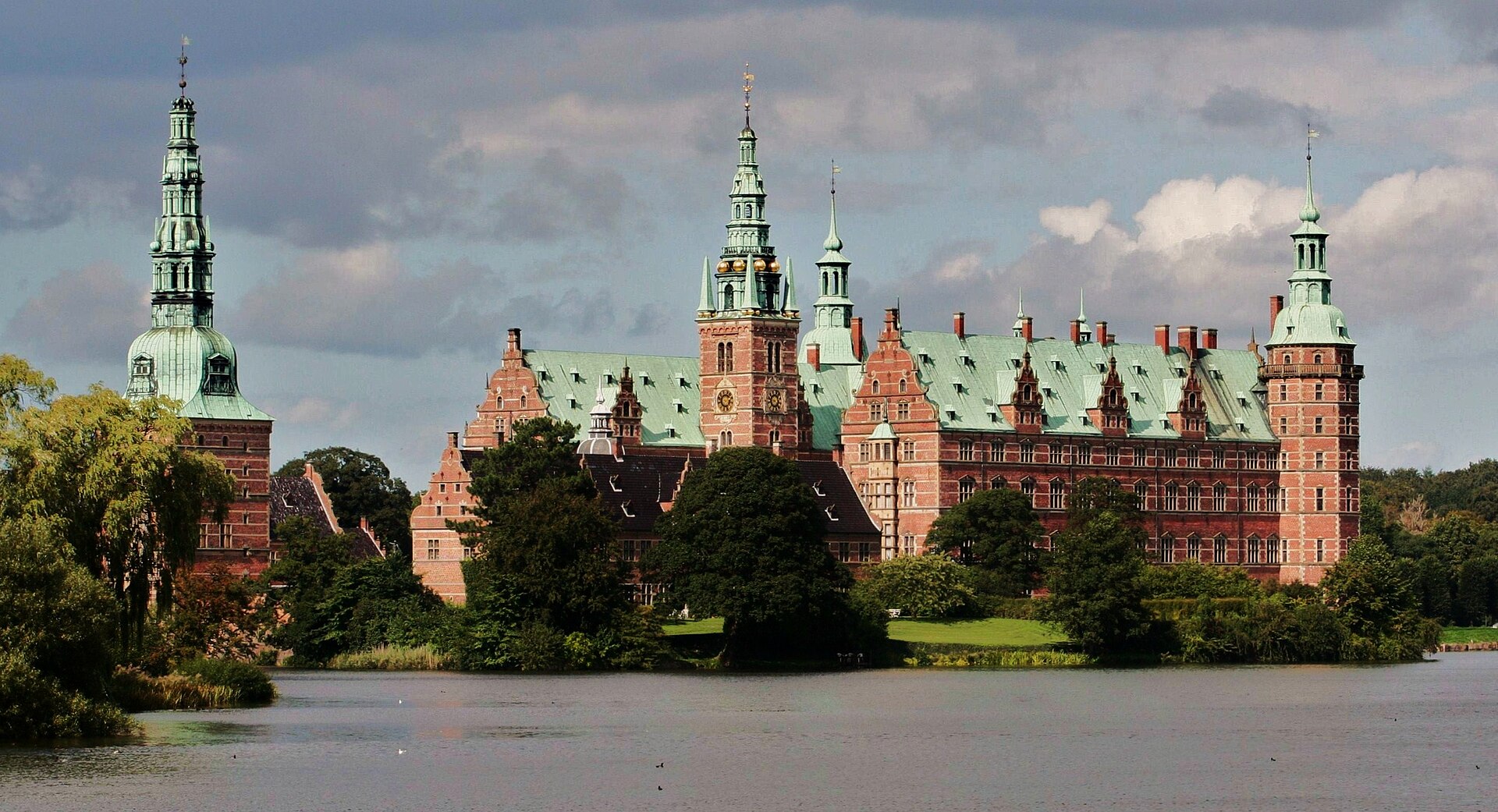
out of 5 0 ratingsPerched on the edge of a quiet lake in the Danish town of Hillerød, Frederiksborg Castle rises like a vision from a storybook. Its red-brick walls and pointed towers mirror perfectly in the still water, creating an image so picturesque it has inspired artists and writers for centuries. Yet this grand palace, now one of Denmark’s most famous landmarks, began not as a royal residence but as a modest manor built in the late 1500s for King Frederik II. At the time, no one could have guessed that this spot on the shores of Slotssø would one day become the heart of Danish monarchy, a symbol of power and prestige that would endure for generations.
The castle’s transformation into the magnificent structure we see today is largely thanks to Frederik’s son, Christian IV, one of Denmark’s most ambitious rulers. In the early 1600s, he set out to remake Frederiksborg into a royal residence worthy of Europe’s great courts. Dutch Renaissance architecture became the guiding style, and no expense was spared. The best architects and craftsmen of the era were brought in to redesign the castle, adding ornate gables, soaring spires, and interiors rich with gilded stucco, intricate woodwork, and grand paintings. The chapel, in particular, was designed not just as a place of worship but as a statement of the Oldenburg dynasty’s might, its walls adorned with symbols of royal authority.
For much of the 18th century, Frederiksborg remained a key site for royal ceremonies, even after it ceased to be a primary residence. Coronations took place within its walls, and official state events were held in its grand halls. But in 1859, disaster struck—a fire ravaged the interior, leaving much of the castle in ruins. For a time, it seemed the building’s glory days were over. Yet Denmark refused to let its history fade. Through a combination of private donations and government funding, Frederiksborg was painstakingly restored, with architects and artisans working to recreate its original splendor as faithfully as possible. Today, it stands as one of the few historical buildings in Europe to have been brought back to life so completely, a testament to both the craftsmanship of the past and the dedication of those who refused to let it disappear.
The architecture of Frederiksborg is a blend of influences, reflecting both its Dutch Renaissance roots and Danish traditions. The main structure, with its three wings and central courtyard, echoes the grand castles of the Netherlands, but the details reveal a distinctly local character. The deep red brick, a hallmark of Danish construction, gives the castle a warmth that contrasts with the cool lake waters. The steep, pointed towers add a touch of medieval fortification, a nod to the country’s northern heritage. Inside, the chapel remains the most striking feature, largely unchanged since the 17th century. Its walls are lined with the coats of arms of Danish noble families, and the 1610 organ still fills the space with music during concerts. The coronation chairs, where kings once sat in ceremony, are still on display, a quiet reminder of the castle’s role in shaping the nation’s history.
Beyond its architectural beauty, Frederiksborg is a living museum of Denmark’s past. The halls are filled with portraits of monarchs, antique weapons, and period furniture, each piece telling a story of life at court. The art collection is particularly noteworthy, featuring works by some of Denmark’s most celebrated 19th-century painters. But more than the objects on display, it’s the atmosphere that lingers. Walking through the rooms, it’s easy to imagine the sounds of a royal ball, the murmur of courtiers, or the solemn hymns sung in the chapel. The castle has a way of slowing time, inviting visitors to pause and take in the details—the carved ceilings, the faded tapestries, the play of light on gilded surfaces—as if afraid to break the spell of centuries.
Surrounding the castle is a park designed in the English style, a contrast to the formal gardens that might have once existed here. There are no rigid flowerbeds or grand fountains, just winding paths, shaded lawns, and small ponds where swans glide across the water. In summer, the park is alive with the scent of roses and linden trees, while in winter, it transforms into a quiet, snow-dusted landscape. From certain vantage points, the castle’s reflection in the lake is so perfect it feels like stepping into a painting. The park is a place for leisurely strolls, picnics, or simply sitting by the water, watching the light change over the towers. In the warmer months, outdoor concerts are held here, adding another layer to the castle’s connection with the present.
Frederiksborg’s significance goes beyond its role in royal history—it has also been a symbol of Danish identity. In the 19th century, after Denmark’s defeats in wars with England and Sweden, the country faced a period of national soul-searching. The restoration of the castle coincided with a resurgence of Danish pride, and many saw Frederiksborg as a physical embodiment of the nation’s resilience. It became a place where Danes could reconnect with their past, a reminder of the strength and continuity of their monarchy. Even today, the castle serves as a bridge between eras, offering visitors a chance to understand how Denmark’s royal history shaped its culture and society.
Visiting Frederiksborg is less about ticking off a tourist attraction and more about stepping into another time. Unlike some of Europe’s more crowded palaces, it rarely feels overrun, allowing visitors to explore at their own pace. The castle hosts occasional exhibitions on Danish history or art, but even without them, it leaves a lasting impression. It doesn’t overwhelm with opulence like Versailles or dazzle with whimsy like the châteaux of the Loire. Instead, there’s a quiet dignity to Frederiksborg, a sense of understated elegance that feels distinctly Danish—simple, yet deeply meaningful.
Hillerød itself is a small town with a relaxed charm, far removed from the hustle of tourist hotspots. Its streets are lined with low-slung houses, cozy cafés, and local shops where you can sample traditional Danish pastries or pick up fresh seafood from the nearby markets. The town moves at its own unhurried pace, and the castle on its edge feels like a natural part of the landscape rather than a relic cordoned off from everyday life. Getting here from Copenhagen is easy by train, and a visit to Frederiksborg can easily be paired with a stroll through Hillerød’s quiet streets, making for a day trip that feels both enriching and effortless.
Frederiksborg is more than just a monument to the past—it’s a place where history continues to breathe. It doesn’t demand attention; it simply stands, as it has for centuries, waiting for those who are curious enough to listen. Whether you spend an hour or a day here, the castle has a way of staying with you, its stories unfolding long after you’ve left its shores. It’s a reminder that some places aren’t just preserved—they’re kept alive, ready to share their secrets with anyone willing to take the time to hear them.
Day around this place
Where else to go on the same day
Building the day…
Where it is
55.93904, 12.30115