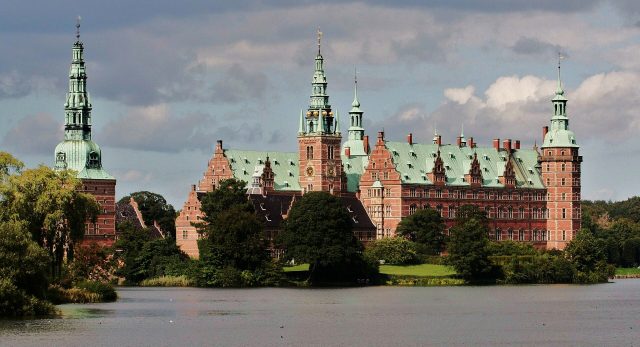
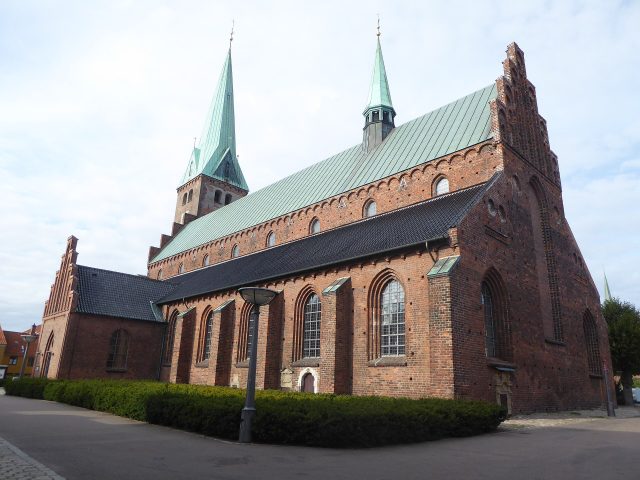
Hillerød Theatre is one of those quiet places that doesn’t demand attention but lingers in your memory long after you’ve left. Tucked away in the heart of a small Danish town best known for Frederiksborg Castle, it exists without fanfare, content to be exactly what it’s always been—a gathering place for locals rather than a stop on the tourist trail. The building itself is unassuming, a brick structure with tall windows and a neat gable, its design rooted in the early 20th century when theatre was less about spectacle and more about community. There’s nothing flashy about it, yet stepping inside feels like slipping into another era, one where the arts were woven into the fabric of everyday life.
The theatre’s story begins in the mid-1800s, when Hillerød was flourishing. Though Frederiksborg Castle had long since lost its role as a royal residence, the town remained a cultural hub, connected to Copenhagen yet distinct in its own right. The first permanent theatre opened in 1859, quickly becoming a meeting point for the town’s intellectuals and residents. Back then, performances were a mix of high drama and light entertainment—Ibsen and Strindberg shared the stage with comedies and farces, while the audience chatted, smoked, and debated politics between acts. The theatre wasn’t just a venue; it was a social space where ideas and gossip flowed as freely as the candlelight flickering in the sconces.
The current building dates to the 1920s, when the original structure could no longer keep up with the town’s ambitions. Its architecture reflects the era’s shift toward simplicity and function, with clean lines and minimal ornamentation—a hallmark of Scandinavian modernism. Inside, the theatre retains a sense of intimacy: a modest auditorium with wooden seats, soft lighting, and delicate plasterwork on the ceiling that hints at a time when even small-town theatres aspired to elegance. There are no grand chandeliers or marble columns, but the space feels carefully considered, as if every detail exists to serve the performance rather than impress the audience.
Unlike Copenhagen’s grand stages, Hillerød Theatre has never tried to compete. Its programming is shaped by the people who live here—classic plays reimagined for modern audiences, Danish dramas, and occasional touring productions. You won’t find international stars on the posters, but you might stumble upon a show that’s playing nowhere else. The theatre has a reputation for nurturing new talent, giving young directors and actors room to experiment. That spirit of discovery is palpable, whether the production is a sharp social critique or a lighthearted comedy.
Children’s performances are a cornerstone of the theatre’s identity. Hillerød is a family-oriented town, and the theatre makes sure it’s part of every child’s upbringing. On weekends, the auditorium fills with parents and kids, drawn by adaptations of Hans Christian Andersen’s fairy tales or interactive shows where the audience becomes part of the story. For many, it’s their first introduction to theatre, and the atmosphere is designed to make that experience welcoming. The goal isn’t just to entertain but to spark a lifelong appreciation for the arts.
Beyond performances, the theatre serves as a cultural hub. The foyer often hosts exhibitions by local artists, literary readings, and chamber music concerts. In summer, there are open-air play readings accompanied by jazz quartets; in winter, families gather for Christmas concerts. The theatre’s calendar is a reflection of the town’s rhythms, offering something for everyone—whether it’s a world premiere or simply a quiet place to sit with a coffee and watch the world go by through the large windows.
For all its modesty, Hillerød Theatre plays a vital role in the town’s cultural life. It bridges past and present, proving that art doesn’t need to be loud or extravagant to matter. There are no crowds of tourists snapping photos, no pressure to perform for an audience that’s just passing through. Instead, the theatre thrives on the quiet connections it fosters—between performers and spectators, between generations, between the stories on stage and the lives of those watching.
If you find yourself in Hillerød, don’t rush straight to Frederiksborg Castle. Take a moment to wander the town center, peek inside the theatre, and check the schedule. You might be lucky enough to catch a performance that stays with you not because of dazzling effects, but because of its sincerity. After all, the best travel experiences aren’t the ones you plan for—they’re the ones that find you when you least expect them.