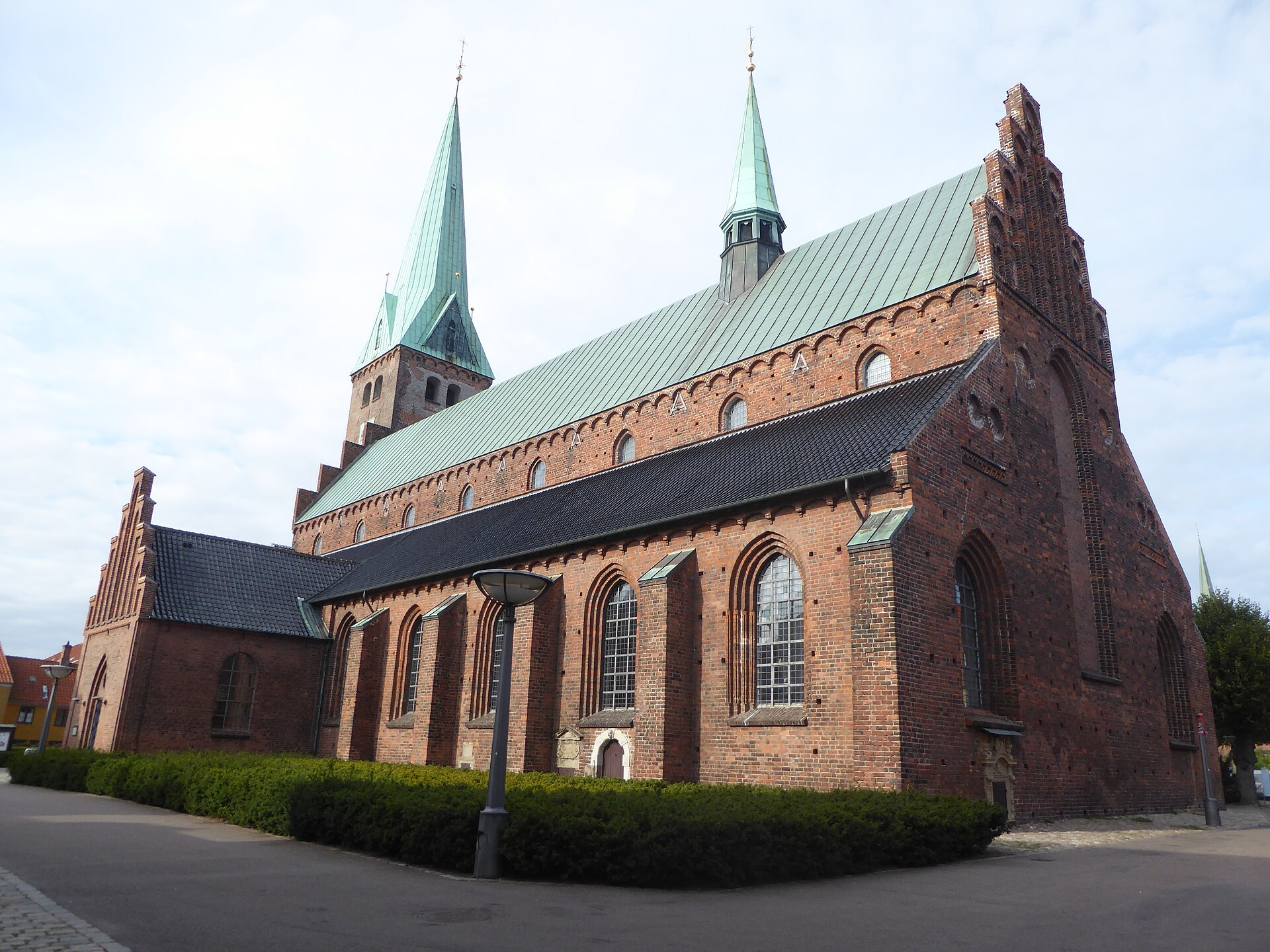
St. Olaf’s Church in Hillerød is one of those rare places that feels untouched by the centuries, as if the Middle Ages still linger in its quiet corners. Built in the early 1500s, it sits on a gentle rise in the heart of the town, its red-brick walls and steeply pitched roof a familiar silhouette against the Danish sky. There’s nothing ostentatious about its appearance—just the simple, sturdy lines of a building meant to serve, not to impress. Yet that very unpretentiousness makes it all the more compelling. It doesn’t demand attention; it earns it, drawing you in with the promise of something deeper than grand facades or ornate carvings.
Step inside, and the layers of history become immediately apparent. The vaulted ceilings, painted in the 17th century, tell biblical stories in a style that feels almost folk-art naive—bold colors, uncomplicated figures, and faces that look startlingly human. The altarpiece, a later Baroque addition, stands in contrast to the Gothic arches and columns that still define much of the interior. The pulpit, carved with the figures of the evangelists, is another quiet marvel, its details worn smooth by time and touch. It’s easy to imagine the voices that once filled this space, the words of sermons echoing off the stone walls centuries ago.
Hillerød itself was little more than a village when St. Olaf’s was first built, but the church quickly became a cornerstone of community life. Baptisms, weddings, and funerals took place here, binding generations of townspeople to its walls. By the 17th century, the town’s fortunes had changed dramatically with the construction of Frederiksborg Castle, and the church found itself at the center of royal attention. Christian IV, Denmark’s builder-king, was known to attend services here, and it’s said that he personally commissioned the ceiling frescoes, adding a touch of grandeur to the otherwise modest interior.
What makes St. Olaf’s unusual is that it has never been frozen in time as a museum piece. It remains an active parish church, where locals gather for Sunday services just as they have for hundreds of years. There’s a warmth here that’s often missing in more famous historic sites—a sense of continuity, of lives lived in the same space across generations. In the summer, the doors are often open to visitors, and it’s worth lingering on one of the wooden pews to take in the small details: the worn gravestones set into the floor, the faded coats of arms on the walls, the way the light filters through the old glass.
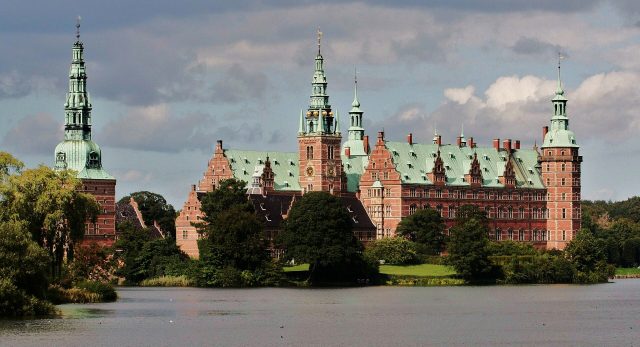
Outside, a small park surrounds the church, a peaceful spot where townspeople come to sit on benches or let their children play. From here, the view stretches toward Frederiksborg Castle, its spires rising across the lake. The two landmarks seem to exist in conversation with each other—one a symbol of spiritual life, the other of worldly power. It’s not hard to picture the scene centuries ago, when townsfolk would walk from the church to the castle, moving between the sacred and the secular in the rhythm of daily life.
St. Olaf’s doesn’t announce itself with fanfare. There are no gilded domes or towering columns, no crowds of tourists snapping photos. Instead, its beauty lies in its authenticity, in the way it has resisted becoming a relic. In an age when so many historic sites feel like stage sets for visitors, this church remains firmly rooted in the present. It’s still a place where people come to mark the milestones of their lives, where the past isn’t just preserved but lived.
That might be why it feels so alive. You don’t visit St. Olaf’s to check a box on a sightseeing list; you come to sit quietly, to listen to the silence, and to let the weight of centuries settle around you. It’s the kind of place that stays with you long after you’ve left, not because of what it shows you, but because of what it makes you feel.