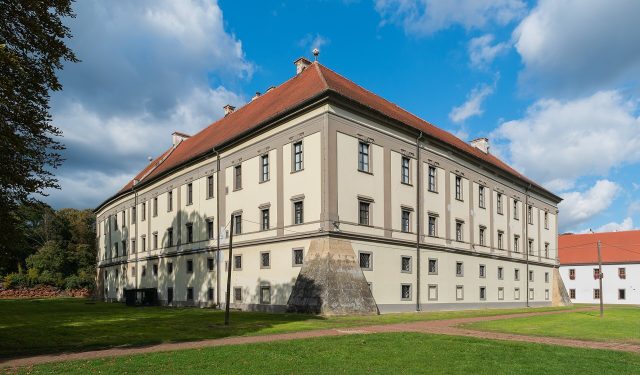
Čakovec Castle stands quietly in the heart of northern Croatia, a place where the past lingers in the stones and the air carries the weight of centuries. It doesn’t dominate the skyline like some grand fortress, nor does it overwhelm with opulence. Instead, it feels like a natural part of the town, as if it has always been there, watching over the streets and the slow flow of the Mura River nearby. The castle’s presence is understated, but its history is anything but—layered with power struggles, cultural shifts, and the quiet resilience of a region that has seen empires rise and fall.
The earliest records of a fortification here date back to the 13th century, when a wooden watchtower guarded the river crossings. Over time, it evolved into a more substantial structure, its walls thickening and its purpose shifting from mere defense to a symbol of authority. The most significant transformations came in the 16th century under the Zrinski family, one of Croatia’s most influential noble dynasties. They reshaped the castle into the form it largely retains today—sturdy, functional, and unpretentious, with a central courtyard surrounded by residential and utility buildings. The Zrinskis didn’t build for show; they built to last, and their practical approach is still visible in the castle’s design.
Walking through the castle, you notice how the architecture tells a story of adaptation. Gothic arches blend into Renaissance windows, and later Baroque touches appear in unexpected corners. This mix isn’t the result of a single vision but of centuries of modifications, each owner leaving their mark. The main tower, the tallest part of the complex, was both a lookout and a statement. From its top, you can see the rolling hills of Međimurje, a view that once served a strategic purpose but now offers a peaceful panorama. The tower’s thick walls and narrow staircases feel intimate, as if they were built for people rather than for grandeur.
Inside, the castle’s rooms are modest but evocative. The grand knight’s hall, with its coats of arms and faded murals, hints at the gatherings that once took place here—feasts, negotiations, and perhaps even secret meetings. The museum collection is small but carefully curated, focusing on the everyday objects that filled the lives of the castle’s inhabitants: weapons, tools, and household items that speak more of routine than of legend. There’s no attempt to dazzle with spectacle; instead, the exhibits feel like fragments of real lives, preserved by time.
The Zrinski family’s fate is inseparable from the castle’s history. In the 17th century, they became central figures in a failed conspiracy against the Habsburgs, a rebellion that ended in executions and the confiscation of their lands. The castle, once a hub of power, became a silent witness to their downfall. This period left a lasting imprint on Croatia’s national memory, turning the Zrinskis into symbols of defiance and tragedy. Their story is still told here, not with dramatic flourishes, but with the quiet weight of history.
Today, the castle is more than a museum. It’s a living space where the past and present intersect. During the summer, the courtyard comes alive with concerts, theater performances, and medieval fairs. These events aren’t grand productions but rather gatherings that feel organic to the place—local musicians playing folk tunes, artisans selling handmade goods, and visitors trying their hand at archery or sampling traditional dishes. The atmosphere is relaxed, almost familial, as if the castle has simply opened its doors to the town.
Čakovec itself is a quiet place, far from the tourist crowds of the Adriatic coast. The town moves at its own pace, with narrow streets lined with cafés where old men play chess and the scent of strong Croatian coffee lingers in the air. The local market is a good place to wander, with stalls selling fresh produce, homemade cheeses, and honey. The Mura River, just a short walk from the castle, offers a different kind of escape. In summer, people rent small boats or simply sit by the water, watching the current carry away the hours.
What makes Čakovec Castle special isn’t its size or its fame, but its authenticity. There’s no need for embellishment here—the history is compelling enough on its own. The castle doesn’t demand attention; it invites curiosity. You can spend an hour or an afternoon exploring its rooms, climbing the tower, or sitting in the courtyard, imagining the lives that unfolded within these walls. For those who know where to look, it’s a window into Central Europe’s past, a place where history feels tangible rather than distant. And for everyone else, it’s a pleasant surprise—a reminder that some of the most interesting stories aren’t always the loudest.