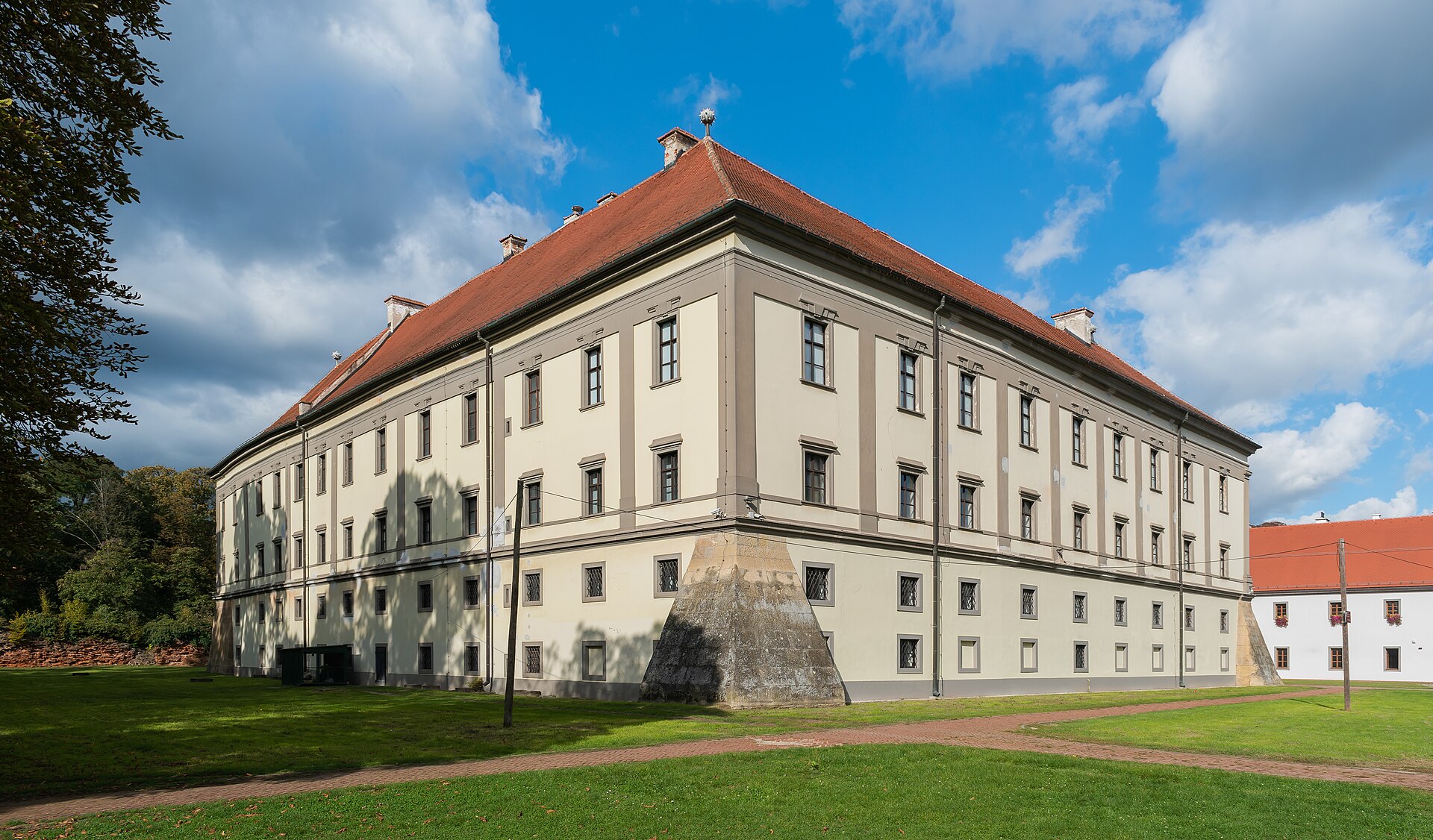
Čakovec’s Međimurje Museum isn’t just a collection of artifacts—it’s a quiet conversation with the past of Croatia’s northernmost region. Tucked between the Mura and Drava rivers, Međimurje has always been a crossroads of cultures, and the museum captures that layered identity without fanfare. There are no grand halls or flashy displays here, just the weight of real stories told through objects that once belonged to the people who shaped this land. Every photograph, tool, or handwritten document feels like a fragment of someone’s life, preserved not for spectacle, but for memory.
The museum occupies a historic palace built in the 18th century for the Feštetić family, and the building itself is part of the experience. The architecture blends Baroque elegance with neoclassical restraint, its high ceilings and ornate stucco still carrying the echoes of aristocratic life. The rooms, once lived in, now house exhibits, yet the sense of history lingers in the details—the carved fireplaces, the worn stone steps, the way light falls through tall windows. The basement holds remnants of medieval fortifications, a reminder that Čakovec was once a strategic stronghold, caught between empires. It’s easy to imagine the town’s past lives unfolding within these walls: merchants haggling in the square, soldiers patrolling the ramparts, families gathering in these very rooms.
The museum’s exhibits trace Međimurje’s history from its earliest days to the present. The archaeological section offers a glimpse into the distant past, with tools from the Neolithic era, Roman coins, and everyday items left behind by Slavic tribes. One of the most intriguing parts of the collection focuses on the Latobici, a Celtic tribe that once called this region home. Their influence is visible in reconstructed dwellings and tools, offering a tangible connection to a way of life that thrived here over two thousand years ago. It’s a rare chance to see how the land’s first inhabitants adapted to its rivers and forests, shaping the culture that would follow.
A separate hall is dedicated to the Middle Ages, when Čakovec grew into a bustling center of trade and craftsmanship. The exhibits here include documents, seals, and weapons, but also the simpler objects that reveal daily life: pottery, farming tools, and clothing. Međimurje spent centuries under Hungarian rule, and that legacy is visible in everything from rare books written in the local Međimurje dialect to traditional costumes embroidered with intricate patterns. The dialect, still spoken in some villages today, is a living link to the region’s past, and the museum preserves it alongside the physical artifacts.
The ethnographic collection is where the museum truly comes alive. Here, the focus shifts to the rhythms of rural life, with displays of wooden plows, clay pots, and looms that tell the story of generations of farmers and artisans. The reconstructed Međimurje homes are particularly striking—low-ceilinged, with built-in benches warmed by wood stoves and furniture adorned with hand-carved designs. These weren’t just functional spaces; they were canvases for creativity, where even the simplest objects were decorated with care. The embroidery, woodwork, and painted ceramics on display reveal a deep appreciation for beauty in everyday life, passed down through families for centuries.
Međimurje was once known for its skilled craftspeople, and the museum pays tribute to that tradition with a collection of pottery, metalwork, and textiles. The region’s potters were especially renowned, producing vibrant, hand-painted ceramics that were both practical and artistic. Blacksmiths forged tools and decorative ironwork, while weavers created linen fabrics with geometric patterns unique to the area. One of the most delicate crafts on display is lace-making, a skill that has been preserved in some villages and is still practiced today. The museum’s exhibits show how these traditions evolved, adapting to new materials and tastes while retaining their local character.
The museum doesn’t shy away from more recent history, either. Exhibits on the 19th and 20th centuries document the region’s transformations through photographs, personal letters, and household items. There are school notebooks from the Austro-Hungarian era, military uniforms from World War II, and tools from the early days of industrialization. These objects tell the story of ordinary people navigating war, political change, and economic shifts. One display features a collection of family albums, their faded photographs offering a glimpse into private lives—weddings, harvests, children playing in the streets. It’s a reminder that history isn’t just about grand events, but about the small, personal moments that shape a community.
While the museum is rooted in the past, it also engages with the present. Temporary exhibitions often highlight contemporary artists, photographers, or craftspeople from Međimurje, bridging the gap between tradition and modernity. The museum hosts lectures, workshops, and discussions, sometimes inviting local residents to share their own stories. The staff are approachable and knowledgeable, happy to fill in the gaps or point out details that might otherwise go unnoticed. There’s no rush here—visitors are encouraged to linger, to ask questions, to let the exhibits unfold at their own pace.
What makes the Međimurje Museum special is its ability to make history feel intimate. This isn’t a place for sweeping narratives or dramatic reenactments; it’s a space for quiet reflection, where the past is preserved in the small, human details. Međimurje itself is often overlooked by travelers, but that’s part of its charm. The region’s history is one of resilience and adaptation, shaped by its geography and its people. The museum doesn’t just tell that story—it lets you feel it, in the grain of a wooden plow, the stitches of an embroidered blouse, or the faded ink of a handwritten letter. For those willing to slow down, it offers a deeper understanding of what makes this corner of Croatia unique.