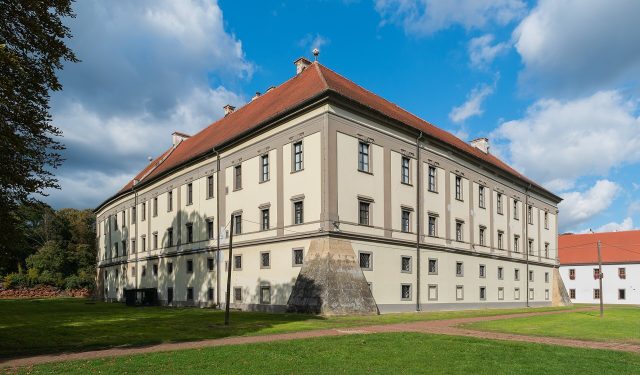
Čakovec’s Zrinski Park is one of those rare places where history isn’t confined to museum walls or dusty plaques but lingers in the quiet rustle of leaves and the dappled shade of ancient trees. Tucked in the heart of the city, it feels like a green refuge that has somehow preserved the spirit of an era when these lands were ruled by one of Croatia’s most powerful families. Unlike crowded tourist hotspots, the park doesn’t demand attention—it simply exists, woven into the daily lives of locals who come here to escape, reflect, or just take a slow walk under the canopy of centuries-old oaks and lindens.
The park takes its name from the Zrinski family, a dynasty whose influence shaped Croatian history for generations. In the 16th and 17th centuries, they were more than just noble landowners; they were defenders of these territories against Ottoman advances, and Čakovec—then a small fortified town—served as one of their key residences. The park likely began as a private retreat for the family and their guests, a place where they could step away from the weight of politics and war. Today, little remains of the original estate’s grandeur, but the park itself retains a quiet dignity, as if the very air carries echoes of the past.
Walking along its winding paths, it’s easy to imagine the footsteps of those who came before—generals, poets, and ordinary people who once strolled these same alleys. The trees here are older than the park itself, their gnarled trunks and sprawling branches forming a natural archive of time. In summer, their dense foliage offers respite from the heat, while autumn turns the ground into a golden carpet of crunching leaves. Winter brings a hush, the snow softening the edges of the paths, and only the occasional visitor breaks the stillness.
At the heart of the park lies a small pond, its dark waters reflecting the sky and the surrounding greenery like a mirror. The pond adds a sense of tranquility, its surface occasionally rippling with the movements of ducks or the breeze. In warmer months, it becomes a gathering spot—people sit on benches with books, feed the birds, or simply watch the play of light on the water. When spring arrives, the air fills with the scent of blooming shrubs, and the whole park seems to exhale, slowing time to a gentle rhythm.
Near the pond stands a modest monument to Nikola Zrinski, one of the family’s most celebrated figures. A warrior and a poet, he embodies the dual legacy of the Zrinskis—both as defenders of their land and as patrons of culture. The statue is unassuming, free of pomp, yet striking in its simplicity. The bronze figure gazes into the distance, as if keeping watch over the park and those who wander its paths.
What makes Zrinski Park special is its unpretentiousness. There are no rigid rules here, no signs scolding visitors for stepping off the path or taking photos. Instead, the park invites you to linger—to sit on a bench, let children run across the grass, or share a quiet moment with a friend. It’s a place where the past and present coexist effortlessly. Elderly locals feed pigeons on the lawns, teenagers spread out picnic blankets, and office workers take their lunch breaks under the trees. Each person finds their own reason to return.
The park is at its most atmospheric in the early evening, when the streetlights cast a warm glow over the paths and the shadows stretch long across the ground. This is when Čakovec’s residents come in greatest numbers—some on their way home from work, others walking their dogs, and a few just seeking a breath of fresh air. The park doesn’t strive for perfection; the paths are slightly uneven, the grass grows a little wild in places, and the branches of the oldest trees dip low to the ground. But this imperfection is part of its charm, a reminder that nature and history don’t need manicured edges to be beautiful.
In recent years, the park has become a venue for small community events. Summer brings open-air concerts, while winter sees the arrival of a modest Christmas market. Yet even during these gatherings, the park retains its peaceful character. It adapts to the rhythm of the moment without losing its essence, a quiet constant in a changing world.
Zrinski Park isn’t the kind of place that dazzles with grand monuments or breathtaking views. Its magic lies in its ability to make you feel connected—to the past, to the people around you, and to the simple, unhurried beauty of a moment. Whether you come to read, to think, or just to sit and watch the seasons change, the park offers something rare: a sense of belonging. And perhaps that’s why, no matter how many times you visit, it always feels like coming home.