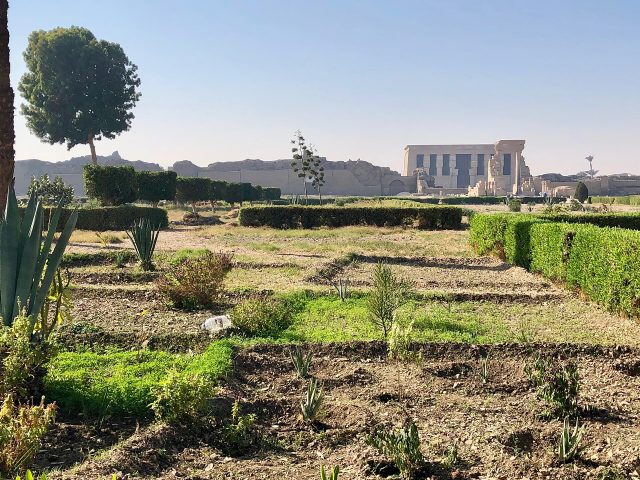
Dendera is one of those rare places in Egypt where the weight of centuries settles gently on your shoulders. Tucked away on the west bank of the Nile, a short distance from Luxor, it lies just beyond the well-trodden paths of most travelers. There are no crowds here, no tour groups jostling for space, no guides competing to be heard over one another. Instead, the only sounds are the rustle of wind through the palm groves and the distant echo of footsteps on ancient stone. The temple complex is not as vast as Karnak or as imposing as Luxor, but that is part of its quiet power. It doesn’t demand attention with sheer scale; it invites you to look closer, to imagine the lives, beliefs, and rituals of people who walked these same paths two thousand years ago.
The history of Dendera stretches back into Egypt’s distant past, though much of what remains today dates to the Ptolemaic and Roman periods. Excavations suggest that sacred sites stood here as early as the Old Kingdom, if not before. The main temple, dedicated to the goddess Hathor, was constructed in the first century BCE, though its completion spanned generations. Hathor, the goddess of love, music, and the sky, was revered here as a protector of women and a guardian of pharaohs. Often depicted as a cow or a woman with cow’s horns crowned by a solar disk, she embodied fertility, joy, and divine presence. In Dendera, she was not just a distant deity but a living force, her spirit woven into the very stones of the temple.
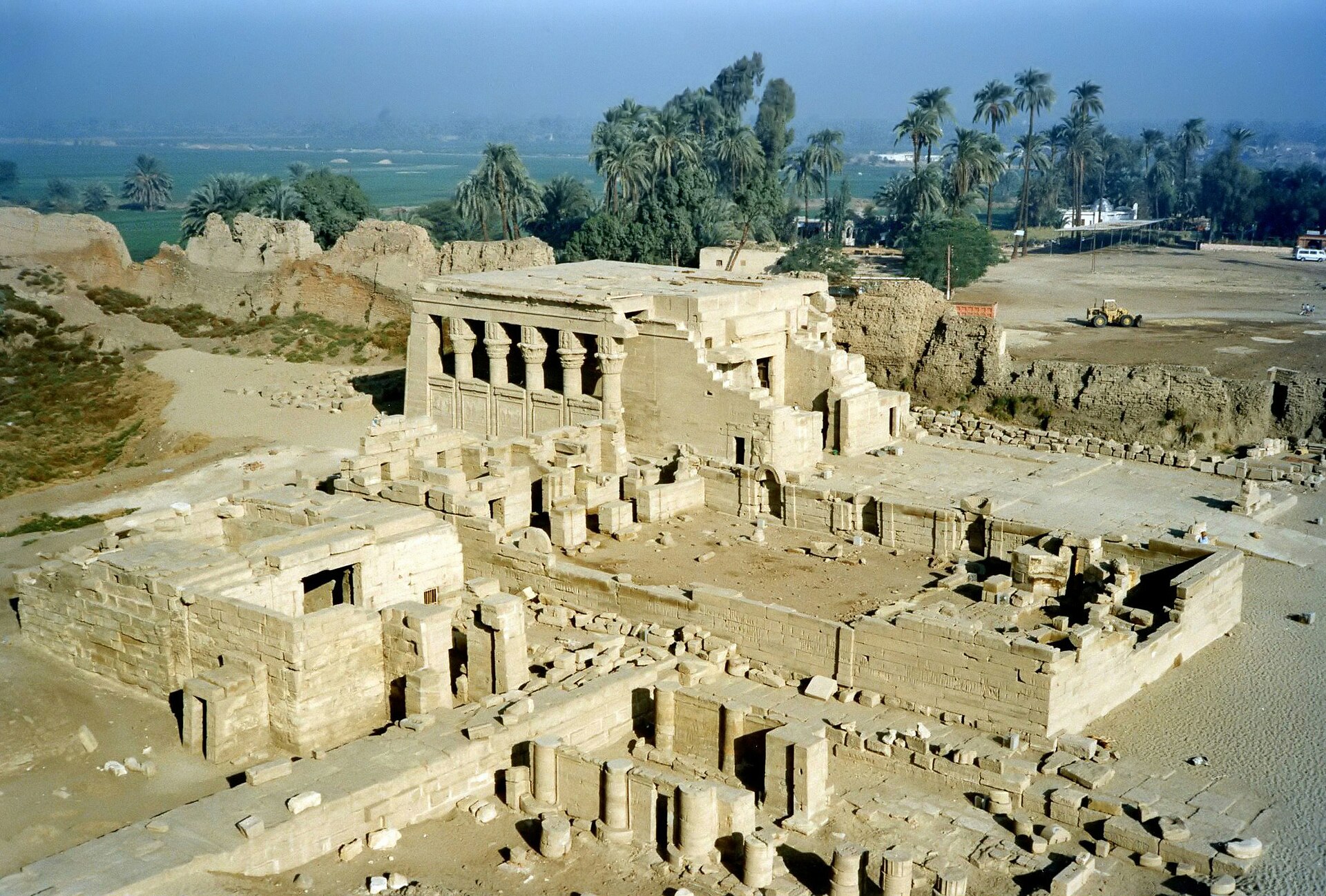
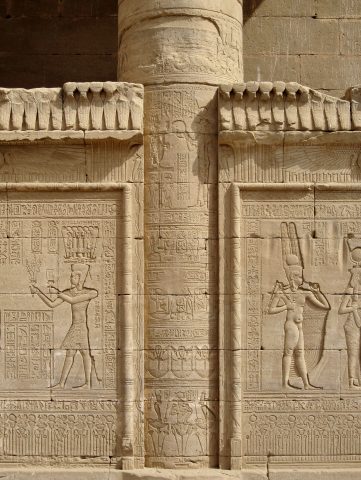
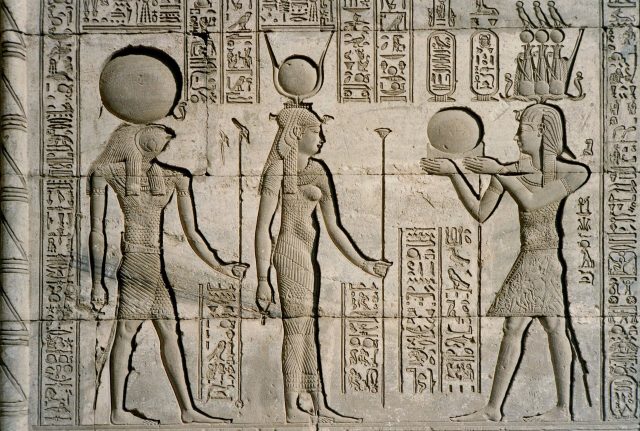
The architecture of the complex blends Egyptian tradition with Greco-Roman influences in a way that feels both harmonious and unexpected. The entrance is framed by massive pylons, leading to a spacious courtyard surrounded by columns. These columns are not as towering as those in Karnak, but their capitals are carved with the face of Hathor—soft, feminine features gazing in all four directions. The effect is striking; depending on the light, the faces seem to shift between warmth and solemnity, as if watching over those who enter. Inside, the chambers are remarkably well-preserved. The ceilings are adorned with astronomical scenes, where gods and celestial symbols intertwine among stars and planets. The walls are covered in intricate reliefs depicting rituals, festivals, and myths tied to Hathor. The hypostyle hall, with its twelve columns, is particularly impressive, each one carved with scenes of offerings and prayers.
One of the most famous features of Dendera is the so-called Dendera Zodiac, a ceiling relief that once depicted the night sky with its constellations. For a long time, it was believed to be the oldest known star map, though scholars later determined it was more symbolic than astronomically precise. Still, the zodiac became the subject of fascination and debate. In the early 19th century, there were even attempts to remove it and transport it to France, though it ultimately remained in Egypt. Today, the original is housed in the Cairo Museum, but the chamber where it once was still holds a sense of wonder. Standing beneath the star-studded ceiling, it’s easy to imagine priests gazing upward, interpreting the will of the gods.
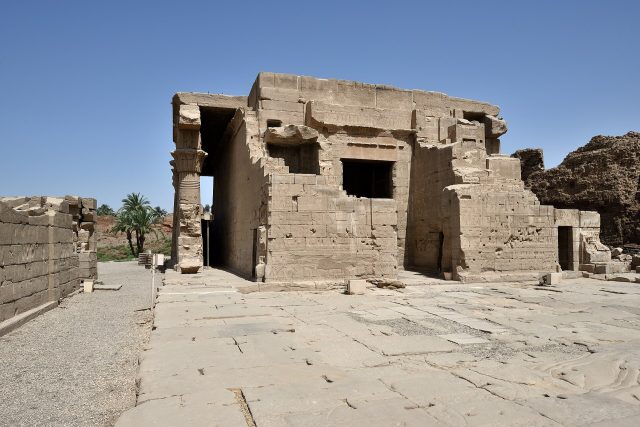
Beyond the main temple, the complex includes other structures, each with its own purpose. To the west lies the sanctuary of Isis, a small but elegant building where rituals honoring the goddess of magic and motherhood were performed. Nearby are the remains of a Christian basilica, built in the early centuries CE when Egypt had already embraced a new faith. This juxtaposition serves as a reminder that Dendera was not just a center of pagan worship but a place where different eras and beliefs intersected. Further on, the sacred lake, where priests once purified themselves before rituals, now lies dry, though its stone edges still hint at the ceremonies that once took place here.
What lingers most about Dendera is its atmosphere—a quiet, almost timeless quality that stays with you long after you leave. Unlike many ancient sites, it hasn’t been overly restored or cluttered with modern additions. There are no bright signs, no reconstructed facades, no attempts to make it more "tourist-friendly." The stones here remember the hands that placed them, and the walls seem to echo with the voices of those who once prayed within them. In the late afternoon, when the sun dips behind the palms and shadows stretch long across the courtyard, time feels suspended. You could spend hours wandering the grounds, tracing the carvings with your fingers, or simply sitting on the temple steps, listening to the wind whisper through the dry grass.
Dendera isn’t a place for those seeking excitement or instant gratification. It doesn’t offer grand spectacles or easy answers. Instead, it rewards patience and curiosity, offering a glimpse into a world where gods, stars, and eternity were as real as the stones beneath your feet. There are no distractions here—no vendors, no crowds, no pressure to move on to the next attraction. Just the temple, the sand, the sky, and the silence. And if you’re lucky, you might leave with the sense that you’ve touched something deeper than ruins, something that connects the past to the present in a way few places can.