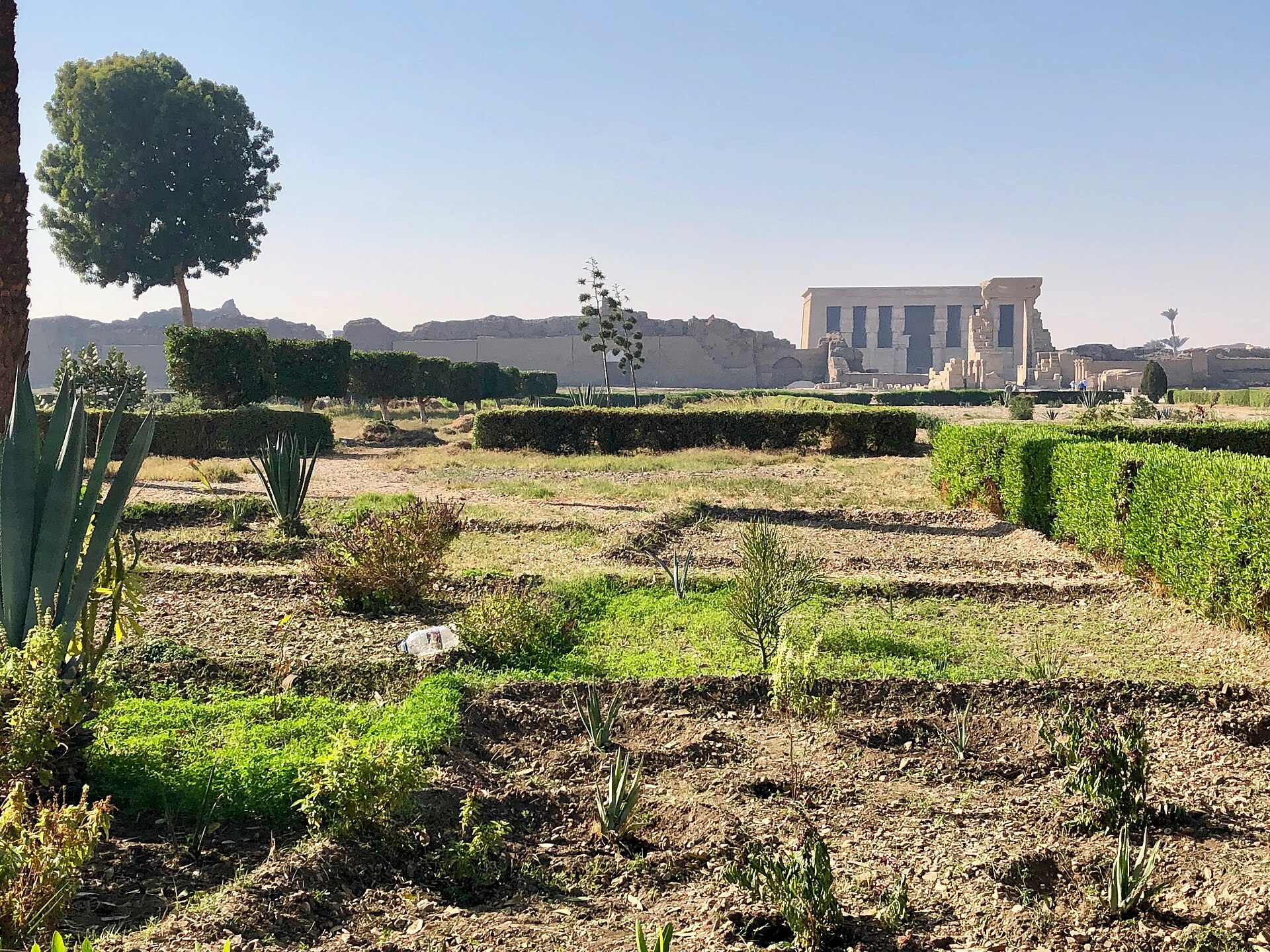
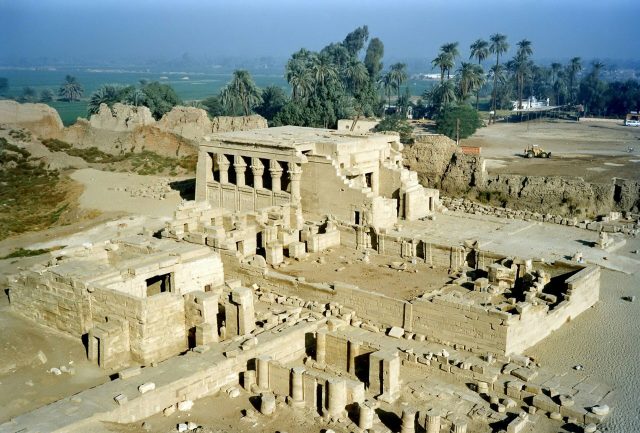
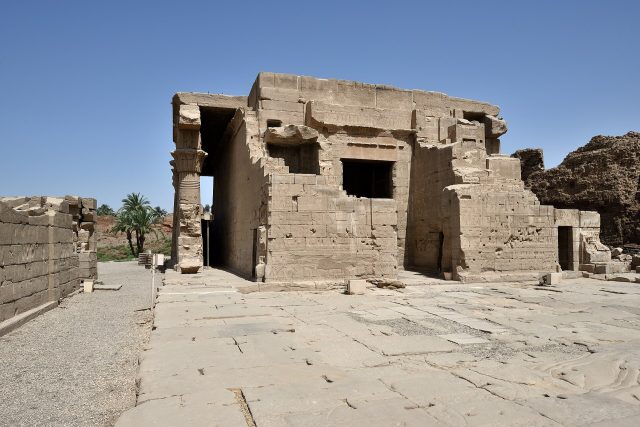
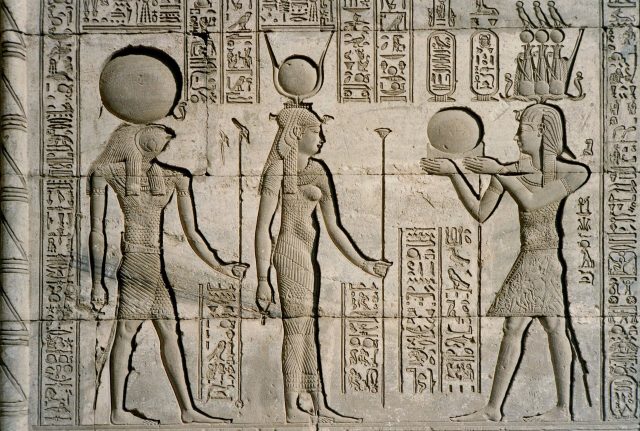
Dendera sits quietly on the west bank of the Nile, a couple of hours north of Luxor. Unlike the crowded temples of Karnak or the monumental grandeur of Abu Simbel, this small town feels untouched by the rush of modern tourism. Even the locals don’t always rush to point visitors toward its main attraction, the Temple of Hathor. Perhaps because this isn’t a place of pilgrimage in the usual sense—it’s more like a silent witness to history, its atmosphere preserved almost intact. The temple stands on the edge of town, surrounded by palm groves and mud-brick houses, as if time here has slowed to a gentle pace.
The temple is dedicated to Hathor, one of ancient Egypt’s most revered goddesses. Her name means "House of Horus," and she was often depicted as a celestial cow, a protector of pharaohs, and the goddess of love, music, and joy. Dendera was one of her most important cult centers, where festivals in her honor were celebrated with great devotion. The temple we see today was built during the Ptolemaic and Roman periods, but earlier sanctuaries stood on this site long before—possibly as far back as the Old Kingdom. Archaeologists have uncovered traces of older structures, though the current building is the result of centuries of additions and renovations.
What makes the Temple of Hathor remarkable isn’t its size, but its harmony and attention to detail. Unlike the vast colonnades of Karnak, everything here feels human in scale. The main entrance leads into a hypostyle hall with twenty-four columns, each crowned with a capital shaped like the face of Hathor. The goddess’s heads gaze in different directions, as if watching over every visitor. The ceiling is adorned with astronomical scenes, including zodiac constellations depicted as gods and animals. One of the most famous features is the Dendera Zodiac, which once decorated the ceiling of an inner chamber. The original now resides in the Louvre, but a replica remains in place.
Beyond the hypostyle hall, the temple opens into more intimate spaces—sanctuaries, corridors, and staircases leading to the roof. Each room had its own purpose. The sanctuary of Hathor once housed her statue, where priests offered gifts. Side chambers stored sacred texts and ritual objects. The roof, reached by a narrow stone staircase, was used for ceremonies tied to the solar cycle. From the upper terrace, the view stretches over the Nile, the surrounding fields, and distant hills. In ancient times, this was likely a place to observe the sunrise and sunset, marking important celestial events.
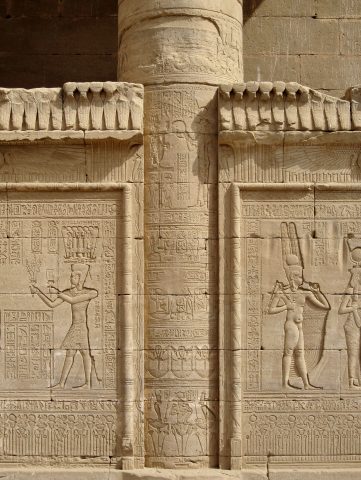
One of the temple’s most intriguing features is its crypt—a series of underground chambers accessed by tight passageways. These hidden rooms held the most sacred relics, accessible only to the initiated. The walls are covered with reliefs depicting gods, pharaohs, and ritual scenes. Some scholars believe these chambers may have been used for mysteries tied to Hathor’s cult. Today, the crypt is open to visitors, though a flashlight is helpful—the dim light makes the carvings feel even more enigmatic.
The Temple of Hathor didn’t fall into disuse immediately after the decline of ancient Egyptian civilization. During Roman times, it remained in use, and later, when Christianity spread, part of the temple was converted into a church. Coptic crosses can still be seen carved into the walls, overlapping ancient reliefs. This layering of history is a reminder that the site never truly faded—it simply took on new forms. By the Middle Ages, sand had buried much of the temple, and it wasn’t until the 19th century that European archaeologists began uncovering it. Today, it stands exposed to the elements, yet remarkably well-preserved thanks to Egypt’s dry climate.
Visiting the Temple of Hathor feels less like a typical tourist stop and more like stepping into the past. There are no crowds, no vendors pushing souvenirs. You can wander through the halls, study the carvings, or sit on the stone steps, listening to the wind rustle through the palms. Occasionally, a local farmer passes by with a donkey, heading to the fields, or children play in the shade of the columns. To them, the temple is just another part of daily life, as familiar as the river or the sky.
Dendera and its temple are places where history isn’t just learned—it’s felt. Here, you can almost imagine the priests lighting lamps in the sanctuary, the sound of hymns to Hathor echoing through the halls, or pharaohs seeking the goddess’s blessing. The temple doesn’t try to impress with sheer scale; it simply exists, quiet, dignified, and slightly mysterious. And perhaps that’s its greatest strength.