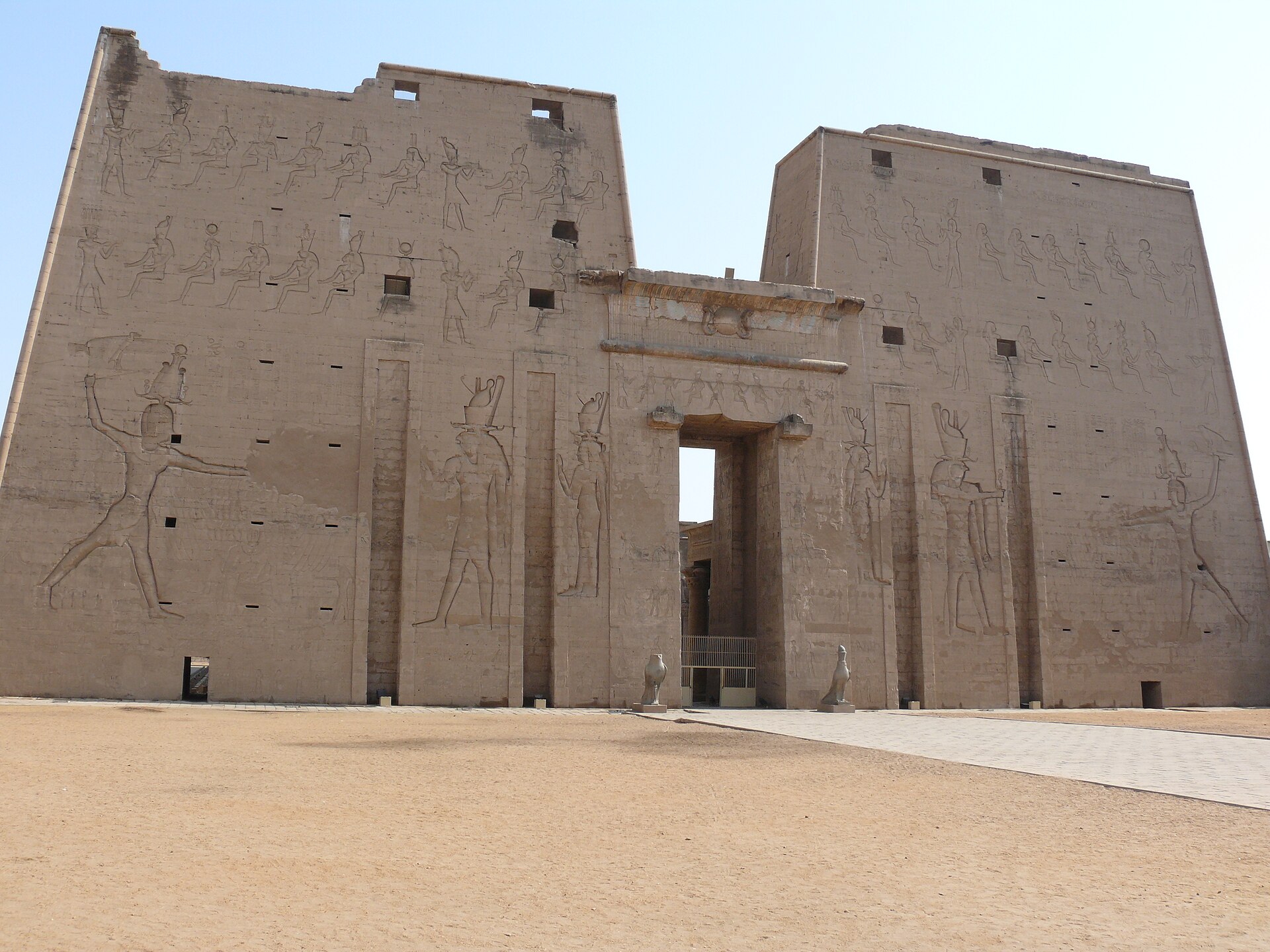
The Temple of Horus in Edfu is one of the few places where history feels close enough to touch. Built between the 3rd and 1st centuries BCE, its walls and columns remain nearly untouched, carrying the stories of a civilization that thrived over two millennia ago. Dedicated to Horus—the falcon-headed god of the sky, kingship, and protection—the temple shows how ancient Egyptians connected their spiritual and political lives. Here, the past isn’t just preserved; it lingers in the quiet, in the way light moves across stone as the day fades.
Edfu, once called Djeba, was never insignificant. In antiquity, it was a key religious center in Upper Egypt. The Ptolemies, a dynasty of Greek rulers, oversaw its construction, yet the temple follows traditional Egyptian design. It wasn’t just a place of worship; it was a political statement. By honoring Horus and the old gods, the Ptolemies tied their rule to Egypt’s ancient traditions, seeking acceptance from their subjects.
The temple’s size is striking. The first pylon, carved with scenes of the pharaoh defeating enemies, greets visitors. Beyond it lies a vast courtyard, once filled with pilgrims, now open to the sky. Inside, a maze of halls and chambers served specific rituals. The hypostyle hall, with its towering columns topped by lotus and papyrus capitals, stands out. Dim light filters through high windows, casting shadows, while the scent of old stone fills the air—echoes of incense, prayers, and offerings.
The walls tell stories. Reliefs depict Horus’s victory over Set, the coronation of pharaohs, and divine worship. One key scene shows the "Feast of the Beautiful Meeting," when Horus’s statue from Edfu met Hathor’s from Dendera. This ritual symbolized renewal and cosmic harmony. Though colors have faded, traces of pigment remain, hinting at the vibrancy that once covered every surface. Even now, the carvings reveal the skill of the artisans who carved them.
The temple survived Egypt’s shift to Christianity. While other sanctuaries were repurposed or destroyed, this one endured, though its sacred role faded. Locals later used it as housing, leaving soot and Coptic graffiti. In the 19th century, European scholars cleared the debris and began studying it. These layers—pharaonic, Roman, Christian—are still visible, showing how the site has always been more than ruins.
Edfu is quiet today. The Nile’s currents and farming cycles set its pace. The temple is part of Nile cruise itineraries but sees fewer crowds than Karnak or Abu Simbel. You can walk its halls almost alone, hearing only footsteps and the wind through narrow windows. Beyond the temple, palm groves and sugarcane fields stretch toward the Libyan Desert. The landscape feels unchanged, as if the temple has always stood here, watching the river flow.
What makes the Temple of Horus special isn’t just its preservation. It shows how religion and power shaped ancient Egypt. The Ptolemies, ruling a foreign land, understood this. By building in the old style, they wove themselves into Egypt’s myths, ensuring their legacy would last alongside the gods they honored.
Stand in the temple’s shadow. Imagine processions filling the courts, priests chanting, myrrh scenting the air. The past isn’t distant here—it’s in the worn steps, the hieroglyphs, the way light falls at dusk. Egypt’s most famous monuments tell only part of the story. Places like Edfu reveal the rest: a land where every temple, carving, and ritual had meaning. If you’re lucky, you might feel it too, standing where the ancients stood as the sun sets over the Nile.