The Nile in Edfu doesn’t feel like water. It moves the city instead of just passing through. On the western bank, away from Luxor or Aswan, time slows. The river and the wind set the pace.
Edfu’s waterfront shows how people live here. In the mornings, fishermen bring in their catch. Vendors arrange tomatoes, onions, and dates on wooden tables. Women wash clothes by the shore, using the same spots their families have used for generations.
Feluccas sail past. Their sails look like wings. Across the river, sugarcane fields and palm groves stretch into the distance. The water is brown, but that same silt made these lands rich enough to feed a civilization for thousands of years.
The buildings along the river are made of clay bricks and stone. Their walls are weathered, their colors faded. Some have cracked steps leading to the water. Others have balconies with wooden railings, once painted bright blue or green. There are no hotels here—just homes, a few cafés, and shops selling sugar, tea, and soap.
Stone walls line the shore. They’re worn down in places but still hold back the river when it rises.
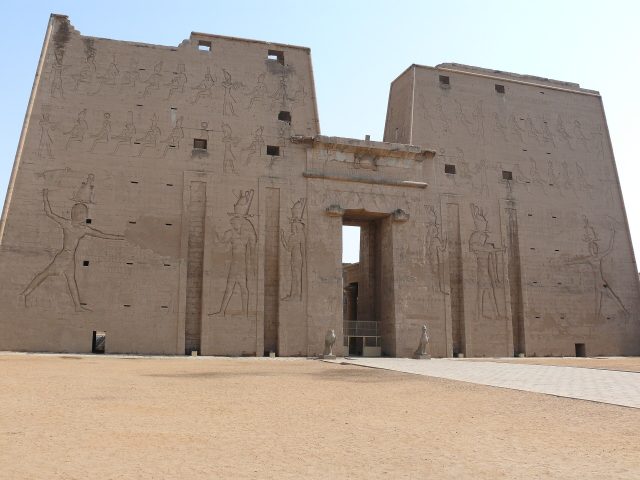
Edfu’s history is tied to the Nile. The city is known for the Temple of Horus, but the river has always been its center. In ancient times, Edfu was a trading hub. Goods from Nubia and Upper Egypt passed through here. The river carried them, and the waterfront was where people met. Today, the same docks remain. The same feluccas sail. The same rituals continue.
At sunset, the waterfront changes. The sky turns pink and orange. The river reflects the city’s lights. People come out to walk. Some sit on the stone walls, talking. Others drink tea in cafés where the air smells of bread and cardamom. Children play near the water, floating small boats made of reeds. Older men watch, remembering when they did the same.
Edfu’s waterfront isn’t for tourists. There are no souvenir stands or guides calling out. Just the river, the people, and the sounds of water and gulls. You can sit for hours watching feluccas pass, fishermen repair their nets, or women carry baskets of bread on their heads.
Edfu isn’t like Cairo or Luxor. There are no grand buildings or crowded markets. That’s why it feels real. The waterfront isn’t a postcard—it’s where people work, eat, and live. The river gives them water for their fields, fish for their meals, and jobs for their hands.
If you come to Edfu, don’t go straight to the temple. Walk along the river first. Sit in a café. Drink tea. Watch the water. Maybe here, away from the noise, you’ll see Egypt as it is—not the one in guidebooks, but the one that moves with the river’s slow rhythm.