Karnak is a place where history feels alive, not just preserved in stone but woven into the very air. Among its vast complex of temples, the Temple of Khonsu often goes unnoticed by those rushing toward the grander structures. Yet this quieter corner of the site holds its own kind of magic—one that reveals itself slowly, without the crowds or the overwhelming scale of the Great Hypostyle Hall. Here, the past isn’t just remembered; it lingers in the stillness, in the way sunlight filters through the columns, casting long shadows over carvings that have witnessed centuries of devotion.
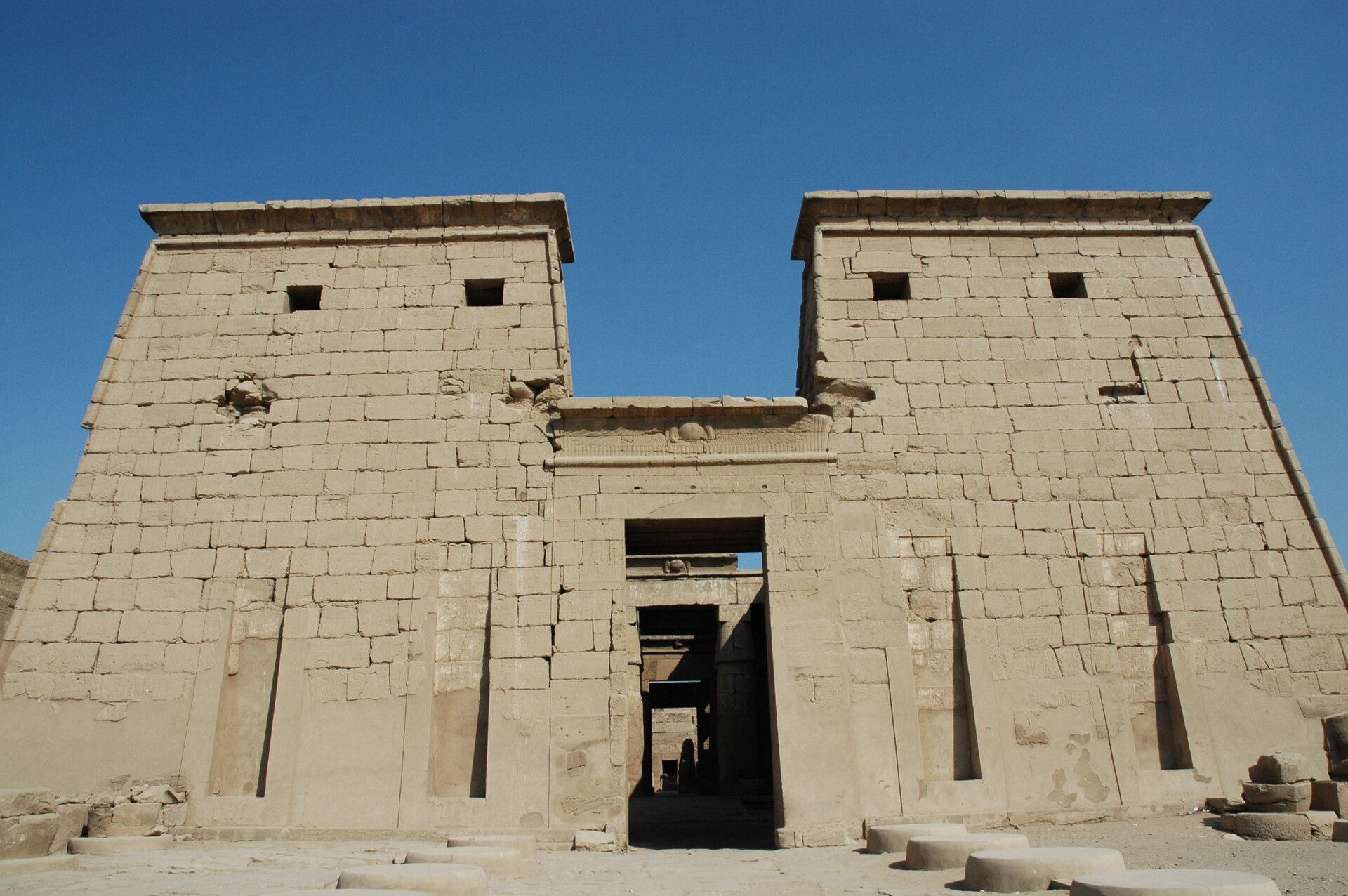
Dedicated to Khonsu, the moon god and son of Amun and Mut, the temple was built during the New Kingdom, a period when Egyptian religion and architecture reached their peak. Khonsu was more than a lunar deity; he embodied time, healing, and protection, his presence invoked in rituals that sought balance between the earthly and divine. The temple’s design follows the classic progression of Egyptian sacred spaces—from the imposing pylon at the entrance to the open courtyard, then the hypostyle hall, where columns rise like a forest of stone, and finally the inner sanctuary, reserved for priests and the pharaoh. Each step inward was a journey toward the sacred, a physical and spiritual narrowing of the world to the divine.
What makes the Temple of Khonsu distinct is its relative completeness. Unlike many structures in Karnak, which were expanded and altered by successive rulers over centuries, this temple retains much of its original vision. It was commissioned by Ramesses III, one of the last great pharaohs, and though later additions were made, they didn’t erase the temple’s core identity. The walls are covered in reliefs depicting Khonsu in his various forms—sometimes as a child with the sidelock of youth, a symbol of his eternal nature, other times as a mature deity overseeing rituals. These carvings aren’t just decorative; they tell stories of offerings, processions, and the interplay between gods and mortals.
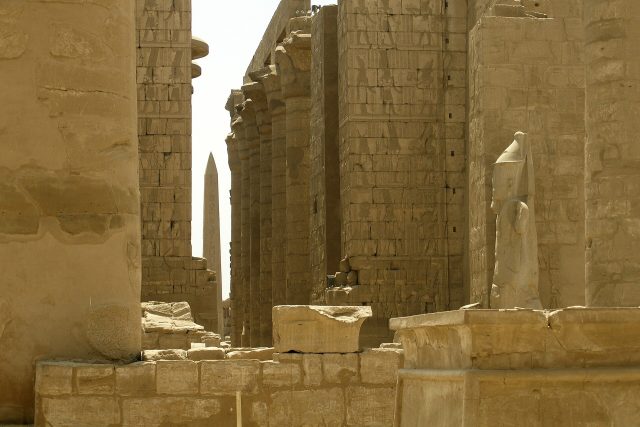
Walking through the temple today, it’s easy to imagine the hushed voices of priests, the scent of incense, the flicker of torchlight on painted walls. Time has worn away much of the color that once made the reliefs vibrant, but traces remain—hints of blue, red, and green that suggest how vivid the temple must have been in its prime. The hypostyle hall, in particular, plays with light and shadow in a way that feels deliberate, as if the architects understood how the shifting sun would animate the carvings, making the gods appear almost alive. In the early morning or late afternoon, when the angle of the light is just right, the reliefs seem to breathe, their details emerging from the stone as if waking from a long slumber.
Beyond its religious significance, the temple also offers a glimpse into the practical side of ancient Egyptian life. In later periods, it served as a repository for sacred texts and medical papyri, a reminder that these spaces were not just for worship but for knowledge. The temple’s dual role—both spiritual and scholarly—reflects the Egyptians’ belief in the interconnectedness of all things, where healing, time, and divinity were threads in the same tapestry. Even the way the temple is oriented, aligned with celestial events, speaks to a culture that saw the cosmos as an extension of the earthly realm.
For modern visitors, the Temple of Khonsu is a place of quiet discovery. While the main avenues of Karnak can feel like a grand procession of history, here the experience is more intimate. There’s time to notice the small things: the way a column’s base has been worn smooth by millennia of footsteps, the faint outlines of hieroglyphs that tell stories now half-forgotten, the cracks in the stone that hint at the temple’s age. It’s a reminder that history isn’t just about the grand gestures but the details—the hands that carved these walls, the eyes that once read these inscriptions, the lives that unfolded within these sacred spaces.
What sets the Temple of Khonsu apart from other sites in Egypt is its ability to make the past feel immediate. In Luxor or the Valley of the Kings, the sheer volume of visitors can create a sense of distance, as if the ancient world is something to be observed rather than experienced. Here, the absence of crowds allows for a different kind of connection. The temple doesn’t demand attention; it invites it. You might find yourself lingering in the hypostyle hall, tracing the outlines of a relief with your fingers, or sitting in the courtyard, listening to the wind move through the columns. It’s the kind of place where you can almost hear the echoes of the past—not as a roar, but as a whisper.
Karnak itself is a labyrinth of history, a place where every stone has a story. The Temple of Khonsu is one of those stories that doesn’t shout for attention but rewards those who take the time to listen. It’s not the most famous part of the complex, nor the most photographed, but that’s part of its charm. Here, the grandeur of ancient Egypt is distilled into something more personal, more human. The temple doesn’t just show you history; it lets you feel it. And in a place as layered as Karnak, that’s a rare gift. If you find yourself wandering its paths, don’t rush past the quieter corners. The Temple of Khonsu might just be the moment when the past feels closest.