Karnak is one of those rare places where the weight of history presses down not as a burden, but as an invitation. Stretching across the east bank of the Nile, this vast temple complex was shaped over two thousand years by pharaohs, priests, and laborers who left behind more than just stone—they left the echoes of a civilization that once defined the world. Unlike a museum where artifacts are neatly arranged behind glass, Karnak is a living archive, its ruins still charged with the rituals, power struggles, and daily devotion of ancient Egypt. Here, the past isn’t preserved; it lingers, waiting to be rediscovered in the cracks of weathered columns or the shadows of half-erased carvings.
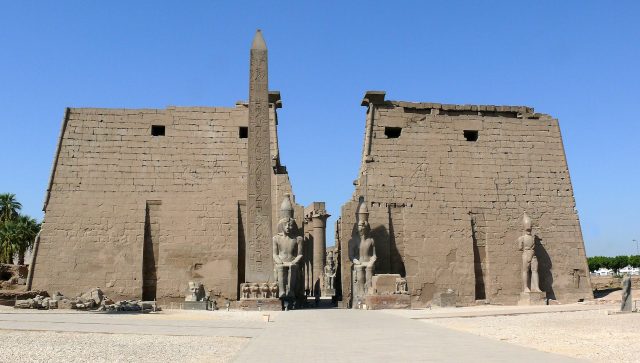
At the heart of Karnak stands the Temple of Amun-Ra, the supreme god of Thebes, whose construction began around 2000 BCE during the Middle Kingdom. But it was the New Kingdom, when Thebes rose as Egypt’s religious and political center, that transformed the site into the sprawling monument we see today. Each ruler left their mark: Thutmose I and Thutmose III expanded the halls, Hatshepsut erected towering obelisks, and Ramses II adorned the walls with reliefs celebrating his military campaigns. The result is a maze of courtyards, sanctuaries, and colonnades where architecture becomes a language of power and piety. The temple wasn’t just a place of worship; it was a statement, a physical manifestation of the pharaoh’s divine authority and the gods’ favor.
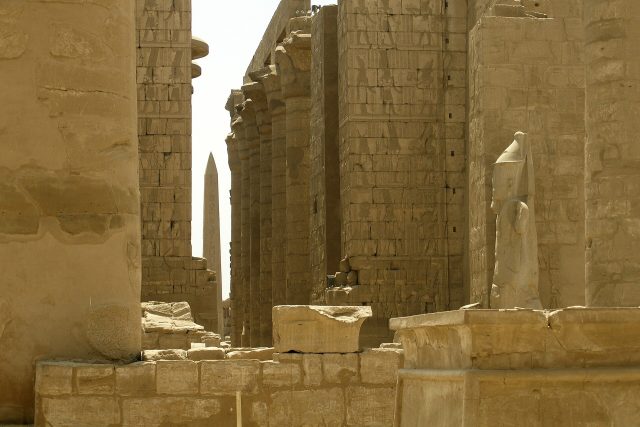
The Great Hypostyle Hall, built under Seti I and Ramses II, is Karnak’s most breathtaking achievement. Walking beneath its forest of 134 columns—some as tall as twenty meters—feels like stepping into another world. The columns, their capitals carved to resemble blooming papyrus, once supported a ceiling painted with stars, fragments of which still cling to the stone. The hall was designed to overwhelm, its scale a deliberate reminder of the gods’ grandeur and the pharaoh’s role as their earthly representative. During the annual Opet Festival, priests would carry the statue of Amun through this space in a procession so elaborate it could take days. Even now, the play of light through the hall’s few remaining openings creates a sense of movement, as if the shadows themselves are part of the ritual.
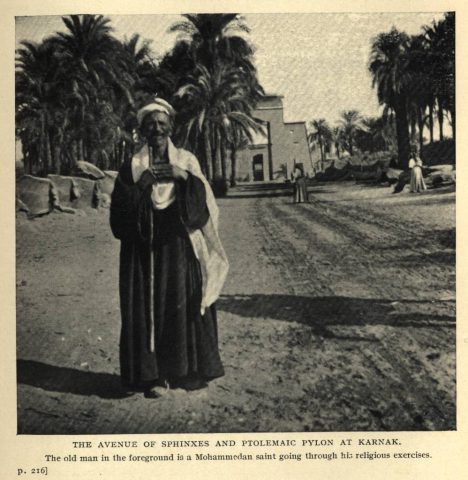
Beyond the temple’s core, the Avenue of Sphinxes offers a glimpse of Karnak’s original grandeur. This processional path once stretched all the way to Luxor Temple, a distance of nearly three kilometers, lined with ram-headed sphinxes symbolizing Amun’s protection. The sphinxes, with their curved horns and regal expressions, were more than decorative—they were guardians, their paws often cradling statues of pharaohs. Today, only a portion of the avenue remains, but it’s enough to imagine the spectacle of religious festivals, when thousands would march along this sacred route, carrying offerings and chanting hymns. The Nile’s annual floods have worn away much of the original path, yet the sphinxes that survive still command reverence, their stone faces worn smooth by time.
Karnak was never just the domain of Amun. The complex includes smaller temples dedicated to Mut, the goddess wife of Amun, and their son Khonsu, as well as shrines to Montu, the falcon-headed god of war. The Temple of Mut, encircled by a sacred lake, was once a vital religious center, its rituals intertwined with those of Amun’s temple. The lake itself, dug during the reign of Thutmose III, was used for purification ceremonies and symbolized the primordial waters from which the world was born. Today, its still surface reflects the ruins and the sky, a quiet counterpoint to the bustle of the main temple. Nearby, the remnants of Montu’s temple and other minor sanctuaries hint at the complexity of Egypt’s religious landscape, where gods and their cults evolved over centuries, sometimes merging, sometimes competing for prominence.
The sacred lake is one of Karnak’s most atmospheric spots, especially at dusk when the crowds thin and the air cools. In ancient times, priests would bathe in its waters before performing rituals, and the lake’s edges were lined with storerooms and living quarters for the temple staff. Now, only the foundations remain, but the sense of tranquility persists. The silence is broken only by the occasional cry of a bird or the distant murmur of a tour group. It’s easy to picture the scene thousands of years ago: the flicker of oil lamps, the scent of incense, the murmur of prayers rising into the night. The lake’s waters, once central to the temple’s spiritual life, now serve as a mirror, reflecting not just the ruins but the passage of time itself.
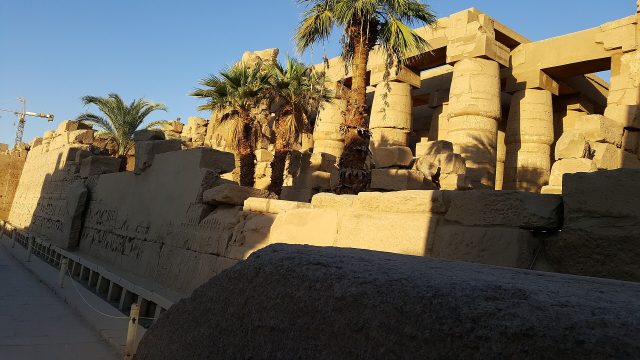
Karnak’s story didn’t end with the pharaohs. Even as Egypt’s power waned, the temple complex remained a place of worship. During the Late Period and under Ptolemaic rule, new structures were added, though with less ambition than before. When the Romans arrived, they repurposed parts of the site, and later, Christian communities converted some of the temples into churches. By the Middle Ages, Karnak was largely buried under sand, its glory forgotten until the 19th century, when archaeologists began uncovering its secrets. Restoration work continues today, a delicate balance between preserving what remains and allowing the site to breathe. The challenge is to keep Karnak from becoming a relic frozen in time, to let it retain the sense of a place that was, and still is, alive.
Visiting Karnak is less about ticking off sights and more about surrendering to the experience. There’s no hushed reverence here, no velvet ropes keeping you at a distance. The wind carries the scent of dust and dry grass, the sun bakes the stone until it radiates heat, and the shadows of the columns stretch long across the ground. Occasionally, a guide’s voice rises above the murmur of visitors, explaining the meaning of a hieroglyph or the engineering behind the towering columns. But even without those explanations, Karnak speaks. It speaks in the way the light filters through the Hypostyle Hall, in the silence of the sacred lake, in the sheer scale of the ruins that dwarf the people wandering among them. There’s a sense of timelessness here, as if the temple complex exists slightly out of step with the modern world.
The best time to explore Karnak is early morning or late afternoon, when the light is soft and the heat less oppressive. At these hours, the site feels almost private, the crowds dispersed, the stones still cool to the touch. It’s then that you can wander without hurry, pausing to trace the carvings on an obelisk or sit on a low wall, watching the shadows shift across the courtyard. Karnak demands patience. To truly understand it, you need to let the place work on you—to imagine the processions, the prayers, the centuries of human effort that went into its construction. Only then does the magic of the site reveal itself, not as a collection of ruins, but as a doorway to another era, one that still has the power to move those who walk its paths.