Tianmenshan Temple: Where the Mountain Meets the Sacred
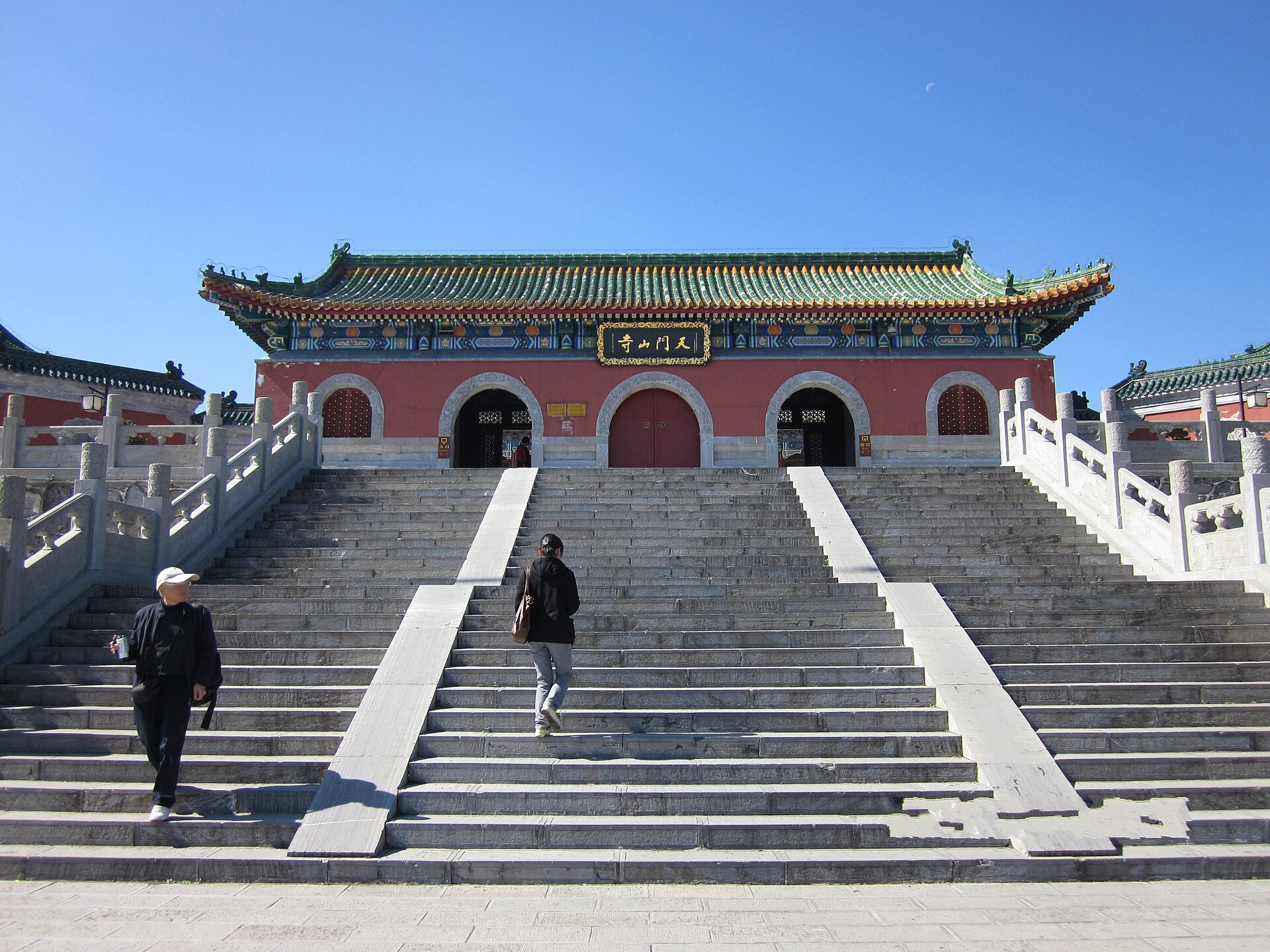
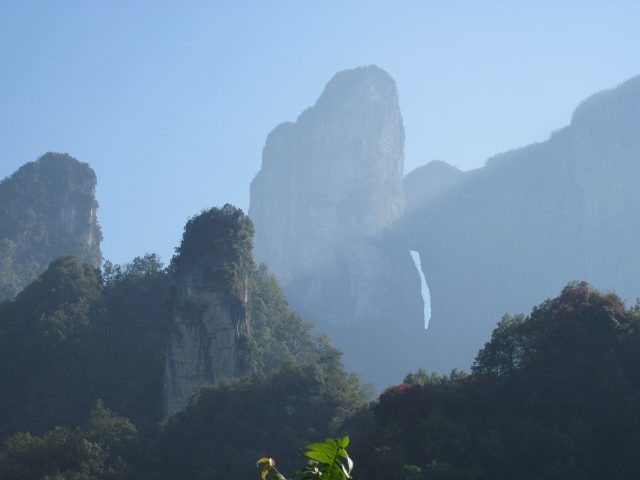
Tianmenshan Temple clings to the slopes of Heaven’s Gate Mountain. The mountain’s colossal natural arch—a gaping hole in the rock—dominates the landscape. For centuries, Buddhists, Daoists, and travelers have been drawn here, sensing something sacred in the way the cliffs rise from the earth. The temple’s origins trace back to the Tang Dynasty, but its present form took shape under the Qing, when the buildings still standing today were constructed. It was never meant to rival city temples in scale; instead, it grew organically, shaped by the land and the beliefs of those who came.
The architecture follows the mountain’s contours. Roofs curve upward at the edges, adorned with carvings of dragons and phoenixes to ward off misfortune. Stone steps wind past wooden panels etched with Buddhist sutras and Daoist tales. There are no gilded halls or towering statues—just a quiet harmony between human craftsmanship and the raw power of the cliffs. The wind carries the scent of pine, and the distant sound of prayer wheels turning lingers in the air.
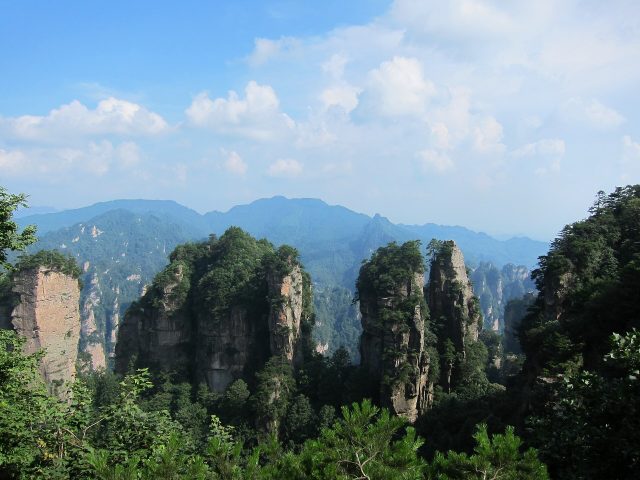
Reaching the temple is part of the journey. The cable car from the mountain’s base is one of the longest in the world. Glass cabins glide over deep gorges, revealing layers of green forest and jagged rock. If you prefer walking, a trail winds through the cliffs, passing small pavilions where travelers pause. Along the way, you might see pilgrims murmuring prayers, monks in simple robes, or hikers soaking in the silence. The mountain sets the rhythm, and everyone moves at their own pace.
Tianmenshan Temple is more than a place of worship. During festivals like Chinese New Year or the Lantern Festival, it comes alive with lights, incense, and the deep resonance of temple bells. On ordinary days, the stillness is broken only by the rustle of prayer flags or the call of a bird. The air feels lighter, as if the altitude has stripped away the noise of the outside world. It’s a place to pause, to reflect, or to sit and watch clouds drift between the peaks.
The mountain’s natural arch holds special significance. Some believe passing through it brings good fortune. Legends speak of immortals who once appeared here, and visitors still leave coins and written wishes at its base. The temple feels like a threshold between the earthly and the divine, where boundaries blur. Even those who aren’t religious often feel something intangible here—a sense of awe, or the quiet certainty that this place has been sacred for centuries.
Tianmenshan has become a popular destination, yet the temple retains its authenticity. Monks follow daily rituals, and locals treat traditions with care. There are no souvenir stalls or flashy attractions—just the temple, the mountain, and time moving slowly. That simplicity is its appeal. In a world that moves too quickly, it offers stillness, a chance to step away from the noise.
Why do people keep coming back?
Maybe it’s the way the temple insists on being noticed—not with spectacle, but with presence. The mountain, the wind through the trees, the quiet. It’s not about entertainment. It’s about something deeper, something that lingers long after you leave. All it takes is a moment of stillness to understand why.