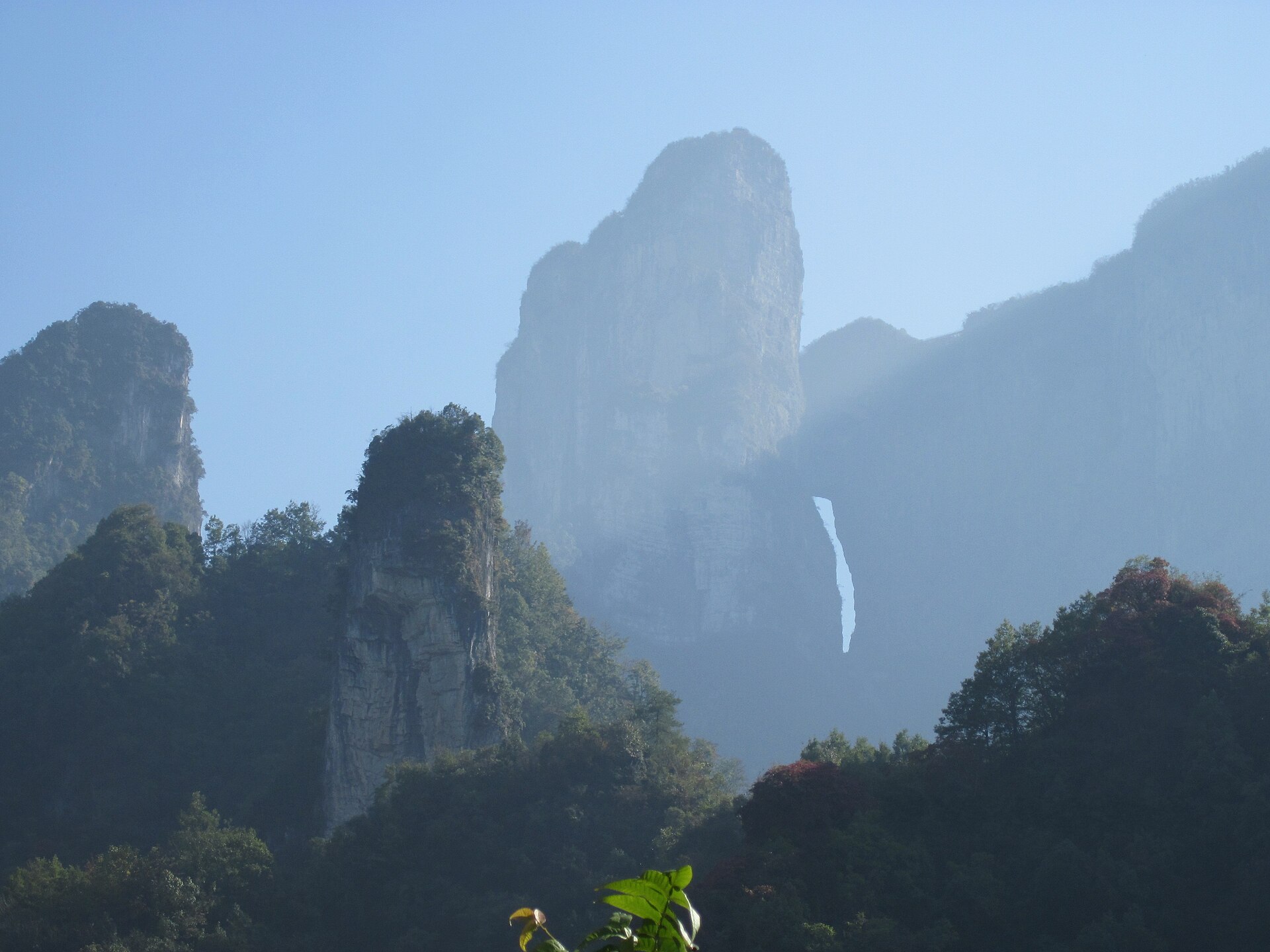
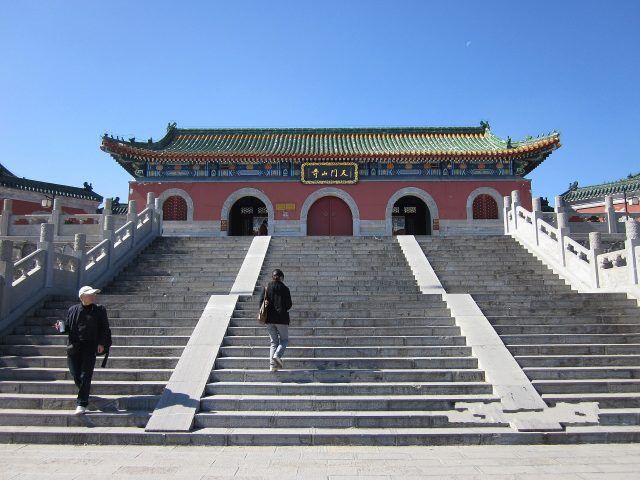
Tianmen Mountain rises from the mist like a gateway to another world, its sheer cliffs and dense forests forming a landscape that feels both ancient and untouched. The name, which translates to Heaven’s Gate, isn’t just poetic—it describes the massive natural arch carved into the limestone, a feature so striking it seems to belong more to myth than reality. The mountain is part of Zhangjiajie National Park, a place where the earth’s raw beauty is on full display, with towering sandstone pillars and deep ravines that stretch as far as the eye can see.
The legends surrounding Tianmen Mountain are as dramatic as its scenery. Local folklore tells of a lightning strike that split the mountain open, creating the arch in an instant. Daoist tradition holds the site sacred, believing it to be a place where heaven and earth connect. Pilgrims have visited for centuries, drawn by the idea of harmony between humans and nature. The first pagoda was built here in the seventh century, and during the Ming Dynasty, a temple dedicated to the mountain god stood near the summit. Though little remains of these structures today, the sense of reverence lingers, especially in the quiet moments when the wind rustles through the trees and the clouds drift through the arch.
Reaching the top is part of the experience. The cable car ride is an adventure in itself, one of the longest in the world, lifting passengers over a thousand meters above the valley floor. As the car climbs, the landscape unfolds below—dense forests clinging to steep slopes, jagged peaks piercing the sky, and the occasional glimpse of a winding river far below. For those who prefer to ascend on foot, the 999-step staircase offers a different kind of challenge. The steps are narrow, worn smooth by centuries of use, and the climb is steep, but the reward is worth the effort. With each step, the arch grows larger, and the view becomes more breathtaking, until finally, you stand beneath the towering opening, looking out at the world from what feels like the edge of the sky.
The arch itself is a marvel of natural erosion. Over countless years, wind and rain have sculpted the limestone into a perfect frame, 130 meters high and over 50 meters wide. On clear days, the sky seems to pour through the opening, creating an almost surreal contrast with the rugged rock. In ancient times, this was a place of ritual, where offerings were left for the mountain spirits. Today, it’s a popular spot for photographs, though even amid the chatter of visitors, there’s a sense of something greater at work—a quiet power that makes the place feel alive.
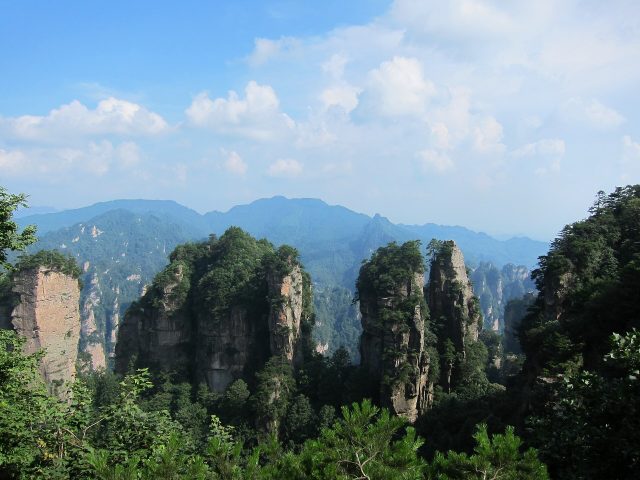
From the summit, the view is nothing short of spectacular. The famous sandstone pillars of Zhangjiajie stretch out in every direction, their sharp peaks rising like the spires of a forgotten city. In the distance, mountain ranges roll into the horizon, their slopes covered in deep green forests. On a clear day, the curves of the river below glint in the sunlight, winding through the valleys like a silver thread. The air is crisp and clean, carrying the scent of pine and damp earth, and the only sounds are the calls of birds and the whisper of the wind through the trees. It’s easy to lose track of time here, to sit and watch as the light shifts across the landscape, painting the cliffs in shades of gold and amber.
Tianmen Mountain has also become a stage for human creativity. In 2007, a festival of hot air balloons saw dozens of colorful spheres drift through the arch, a surreal sight against the natural backdrop. A few years later, a French pianist performed a concert on the summit, his music echoing across the valleys below. These moments transform the mountain from a static landscape into something dynamic, a place where nature and art intersect in unexpected ways.
What makes Tianmen Mountain unforgettable isn’t just its beauty, but the way it makes you feel. There’s a stillness here that’s hard to find in the modern world, a sense of being small in the face of something vast and enduring. The crowds thin out in the early morning or late afternoon, leaving only the mountain, the sky, and the quiet. Even if you don’t believe in the legends, it’s hard not to feel the weight of history in the air, the sense that this place has been witness to centuries of human longing and wonder.
The best time to visit is at dawn, when the valleys below are still wrapped in mist and the first light of the sun spills over the peaks. The landscape takes on an almost dreamlike quality, with clouds drifting up the slopes like smoke. As the day progresses, the colors shift—soft pinks and oranges at sunrise, the deep greens of midday, the golden hues of late afternoon. By evening, the cliffs glow in the fading light, and the arch becomes a silhouette against the darkening sky. It’s a place that changes with the hours, offering something new with every visit.
Leaving Tianmen Mountain is never easy. There’s a sense of reluctance, as if the arch really does lead somewhere beyond the ordinary, and stepping away means returning to the familiar. The mountain leaves an impression that lingers long after you’ve descended—of time measured not in minutes, but in the slow erosion of stone, the shifting of clouds, the quiet persistence of nature. It’s a reminder of how small we are, and yet how deeply we’re connected to the world around us. Whether you spend a few hours or a full day here, the memory stays with you, a quiet echo of a place where the earth feels alive.