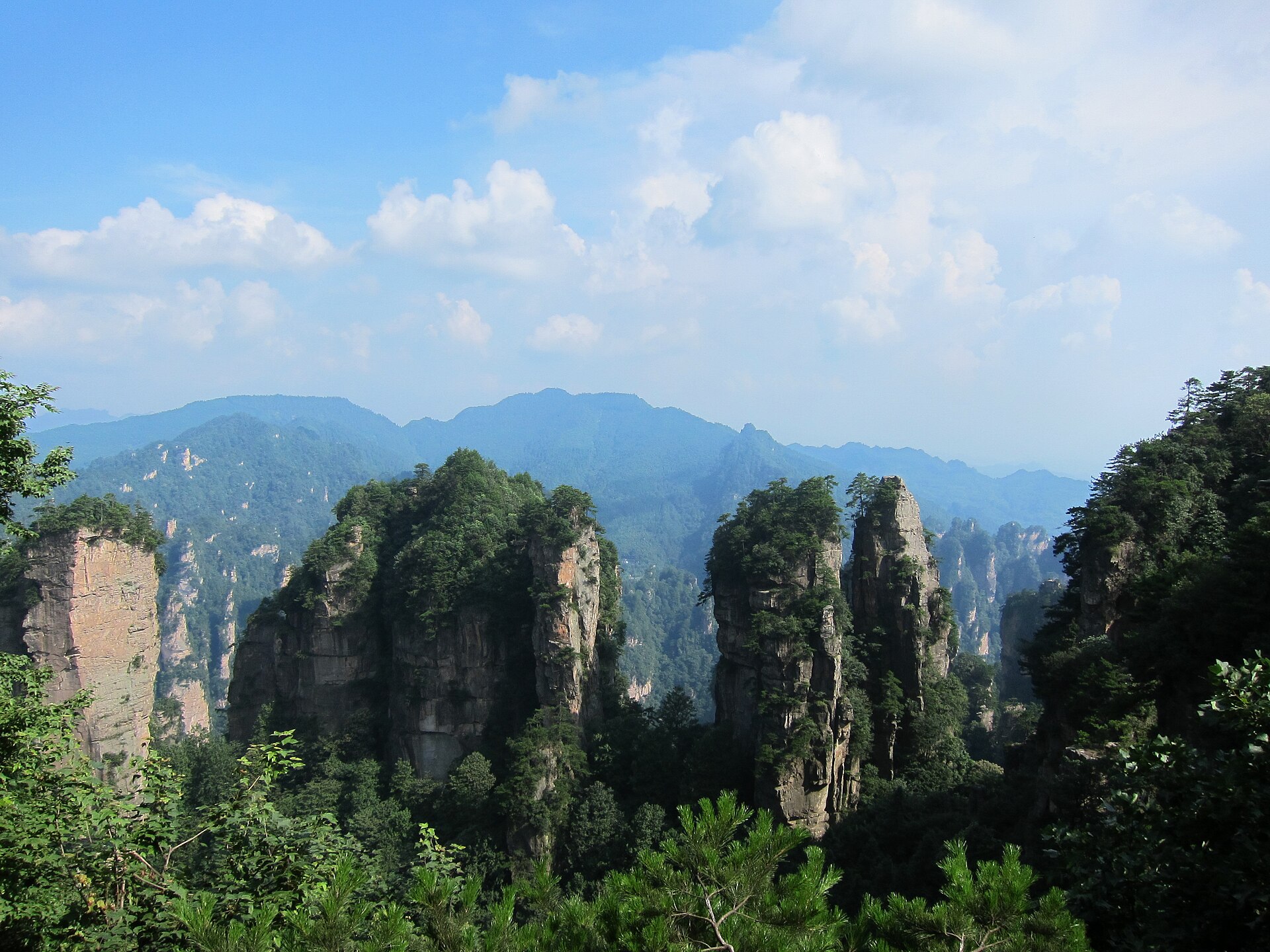
Zhangjiajie National Forest Park feels like a place where nature decided to break free from convention, shaping the earth into something almost unreal. The towering sandstone pillars rise sharply from the ground, their jagged forms frozen in time, while deep gorges hide beneath dense canopies of green. The landscape is so striking that it inspired the floating mountains in *Avatar*, a detail that often surprises visitors who recognize its otherworldly beauty. Located in Hunan Province, the park is a world apart from the familiar rhythms of China’s cities, offering a sense of stepping into a different era—or even a different planet.
The park’s history is as layered as its geology. For centuries, these mountains were known only to the local Tujia and Miao communities, who considered the peaks sacred and lived in their shadow without much outside attention. It wasn’t until the late 20th century that the Chinese government began developing the area for tourism, building paths and infrastructure to make the rugged terrain accessible. Before that, the region was remote and largely unexplored, its dramatic rock formations shrouded in local legends. Even today, the descendants of those early inhabitants live in nearby villages, preserving traditions that have endured for generations.
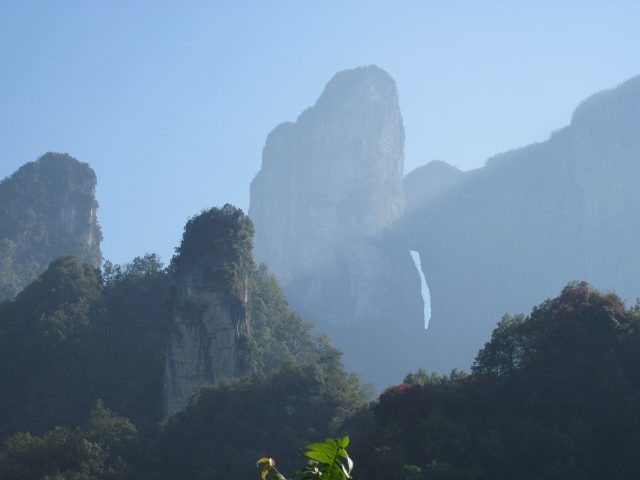
The most famous feature of the park is its quartz sandstone pillars, formed over 380 million years by wind, water, and tectonic shifts. Erosion carved the rock into thousands of columns, some reaching heights of over 300 meters. The most iconic of these is the Southern Sky Column, a 350-meter spire that dominates the skyline. From its summit, the view stretches across endless forests and mountain ranges, with the distant curves of the Li River visible on clear days. The sheer scale of the landscape makes it easy to forget the presence of other visitors, leaving a sense of solitude amid the grandeur.
Beyond the rocks, the park is a haven for biodiversity. Ancient ginkgo and dawn redwood trees, often called living fossils, thrive in the dense forests, while rare animals like the South China tiger and golden snub-nosed monkey move through the undergrowth. Sightings are rare—they tend to avoid the well-trodden paths—but the park’s birdlife is abundant, their calls echoing through the valleys. The air is thick with the scent of damp earth and pine, especially after rain, when the mist clings to the rock faces and softens the outlines of the peaks.
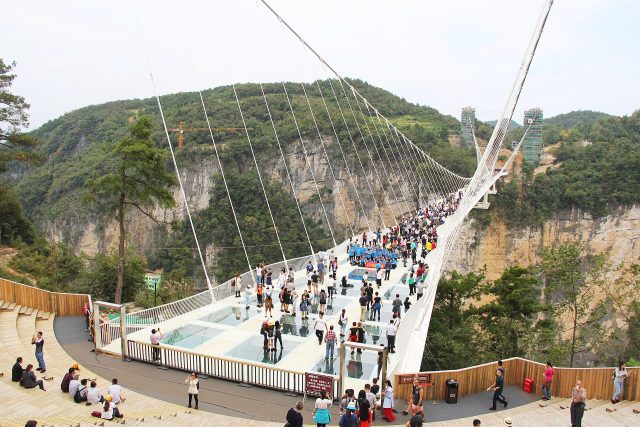
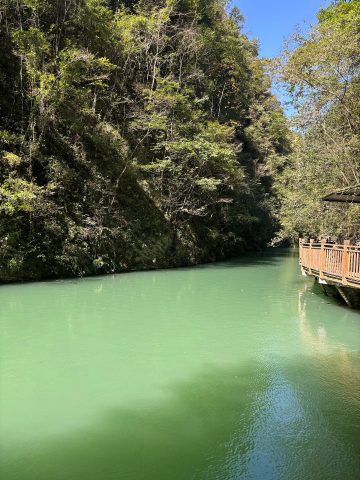
Most visitors enter the park through the main gate at Yuanjiajie, where the most popular trails begin. The Thousand Peaks viewing platform offers a sweeping panorama of the sandstone columns, their sheer walls rising like natural skyscrapers. For those who prefer not to hike, a cable car whisks passengers up to 1,000 meters in minutes, though many choose to walk, stopping at hidden waterfalls or narrow bridges spanning the gorges. The park’s trails vary in difficulty, each revealing a different facet of the landscape. The Golden Whip Stream route follows a river lined with reflections of the cliffs, while the path to the Golden Spire leads through dense forest to one of the tallest pillars. Adventurous visitors can cross glass walkways suspended high above the ground, though even without them, the park’s natural drama is enough to leave a lasting impression.
The experience of Zhangjiajie changes with the seasons. Spring brings blooming wildflowers and the fresh scent of new growth, while autumn turns the forests into a blaze of red and gold, contrasting sharply with the gray rock. Summer offers cooler temperatures than the lowlands, though humidity can make the air feel heavy. Winter is quieter, with occasional frost dusting the peaks, transforming them into something out of a fairy tale. Even on overcast days, the park retains its mystique—the mist curling between the pillars adds a layer of intrigue, making the landscape feel even more surreal.
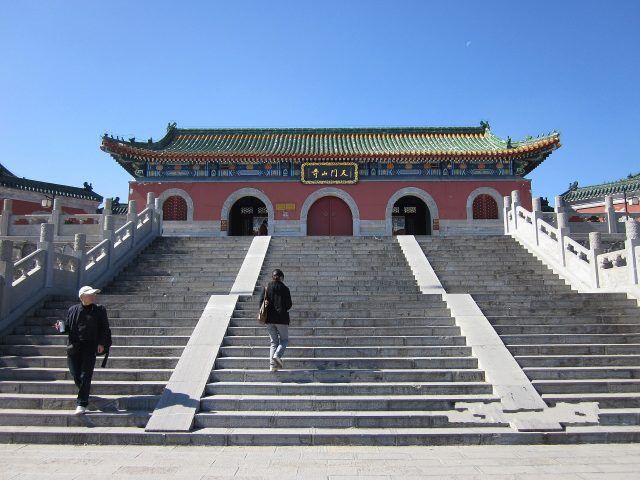
Cultural touches are woven into the natural surroundings. The Yuanjue Temple, perched on a mountainside, is a small but striking structure dedicated to the mountain god, offering a quiet place to reflect with a view over the valley. Nearby villages provide a glimpse into local life, where Tujia and Miao communities still practice traditional farming and crafts. Visitors can sample regional dishes like spicy wild herb stews or flatbreads cooked over open fires, and during festivals, the villages come alive with music and dance. These moments of human connection add depth to the experience, reminding travelers that the park is not just a wilderness but a living landscape.
What makes Zhangjiajie truly special is its ability to evoke both awe and tranquility. There are no crowds jostling for space, no commercialized distractions—just the quiet rhythm of nature. The only sounds are the rustle of leaves, the distant call of birds, and the occasional murmur of other visitors. It’s a place where time seems to slow, where the sheer scale of the scenery puts everyday concerns into perspective. Whether you’re hiking to a viewpoint, crossing a suspension bridge, or simply sitting by a stream, the park leaves an indelible mark, a reminder of the earth’s capacity for raw, untamed beauty.