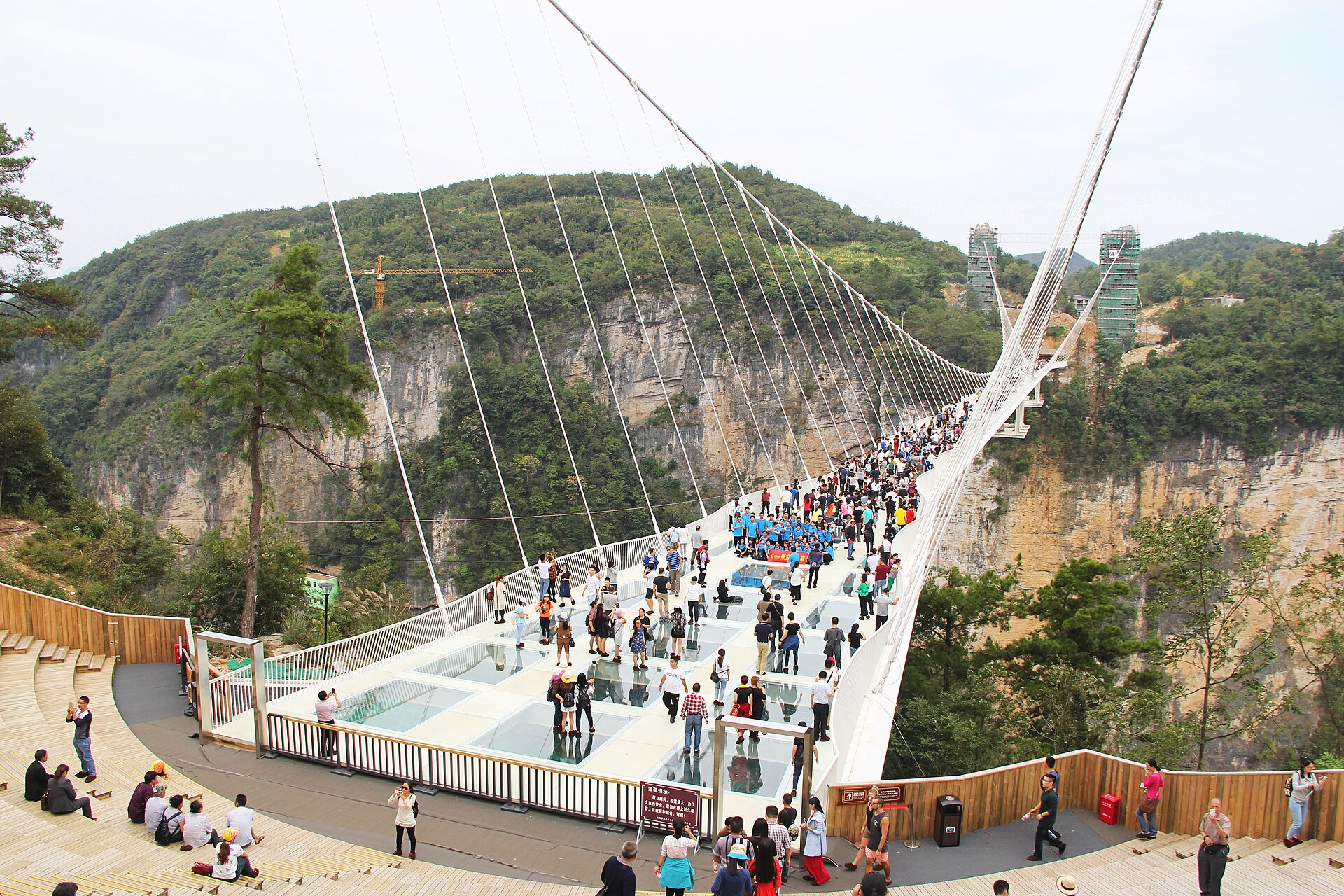
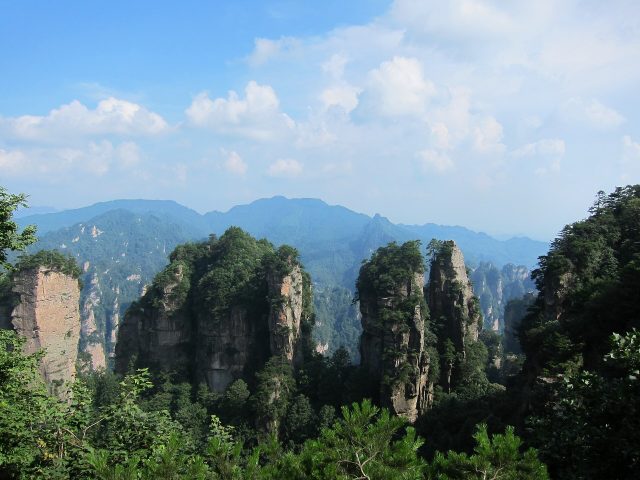
Zhangjiajie’s glass bridge isn’t the kind of place you believe exists until you stand on it. Suspended nearly a thousand feet above a jagged canyon in the national park, it stretches between two cliffs like a fragile thread, its transparent walkway dissolving into the air beneath your feet. The bridge isn’t just an engineering feat—it’s a deliberate contrast, a modern intrusion into a landscape that has been sculpted by time itself. For millions of years, wind and water have carved the park’s signature sandstone pillars into surreal spires, some towering hundreds of feet high, their shapes so otherworldly they inspired the floating mountains of *Avatar*. The bridge doesn’t compete with this ancient beauty; it simply offers a new way to see it.
Construction began in 2014 and took just two years, a remarkably short time for a structure of this scale. At 1,410 feet long and 20 feet wide, the bridge can hold several hundred people at once, though its real marvel lies in what it’s made of. The deck is composed of three layers of tempered glass, each nearly two inches thick, designed to support the weight of 800 visitors. Engineers claim it can withstand earthquakes and hurricane-force winds, but for anyone stepping onto it, those reassurances often feel distant. The glass, no matter how strong, still gives slightly underfoot, a subtle flex that reminds you just how high you are.
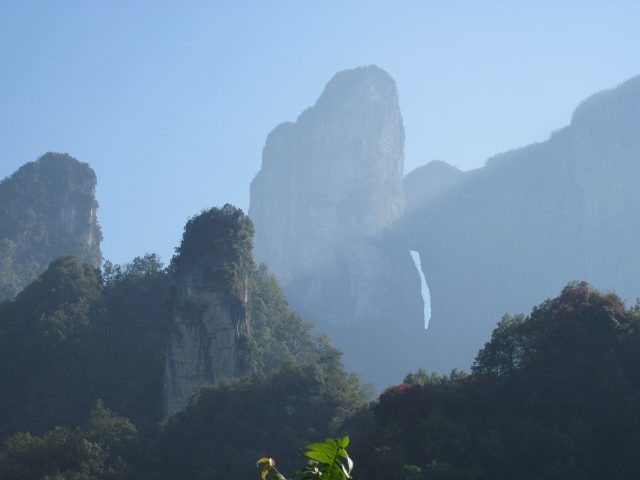
The bridge is part of Zhangjiajie National Forest Park, a place where geology reads like a storybook. The park’s quartz-sandstone pillars, some of the tallest in the world, rise like natural skyscrapers from the valley floor, their surfaces weathered into jagged ridges and smooth curves. The tallest, known as the Southern Sky Column, stands over 4,000 feet high—so imposing that it earned its own name in the *Avatar* films. From the bridge, these formations take on a different character. The usual perspective, looking up at them from below, is flipped; now, you’re level with their peaks, gazing across at their sheer faces as if you could reach out and touch them. On clear days, the view extends for miles, the green of the forest bleeding into the hazy blue of distant ridges, with the occasional glint of a river winding through the valley far below.
For many, the bridge is as much a psychological challenge as a physical one. Even those who don’t fear heights often find themselves gripping the handrails a little tighter than usual. The glass, though thick and reinforced, never quite loses its illusion of fragility. Some visitors walk quickly, eyes fixed on the opposite cliff, while others pause to press their palms against the surface, as if testing its reality. At night, the bridge is lit from within, its lights reflecting off the glass to create the impression of floating in midair. The effect is eerie, almost dreamlike, as if the structure has detached from the earth entirely.
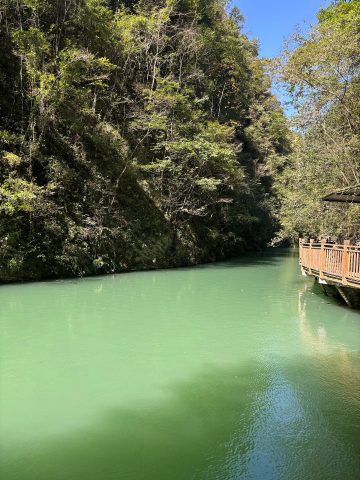
The area around the bridge is dotted with viewing platforms, each offering a slightly different angle on the park’s dramatic scenery. Photographers often linger here, trying to capture the bridge’s delicate silhouette against the backdrop of the cliffs. Some travelers come solely for the bridge, while others use it as a starting point for longer hikes through the park. The trails vary in difficulty, winding past hidden waterfalls, caves, and small temples tucked into the folds of the mountains. One of the most popular routes leads to the Golden Whip Stream, a narrow waterway that cuts through the valley, its banks lined with lush vegetation and towering rock formations.
The bridge has become more than just a tourist attraction—it’s a stage for human daring. Couples pose for wedding photos on the glass, their reflections merging with the abyss below. Brands have used it as a backdrop for advertisements, and artists have staged temporary installations, playing with the contrast between man-made and natural. Yet the park’s management keeps a tight rein on access. Visitor numbers are capped, and safety briefings are mandatory before stepping onto the bridge. For those who prefer their thrills without the vertigo, there’s a nearby metal walkway that offers the same views without the stomach-dropping transparency.
Zhangjiajie is a place where nature and human ambition seem locked in a quiet competition. The glass bridge doesn’t try to outdo the landscape; it simply adds another layer to it. There’s no pretense of blending in—the bridge’s sleek, modern lines stand out against the raw, weathered rock—but it doesn’t feel out of place either. Instead, it acts as a kind of mediator, a way to experience the park’s grandeur from a perspective that would have been unimaginable just a few decades ago. It doesn’t diminish the magic of the place; if anything, it deepens it, offering a reminder of how small we are in the face of time, and how bold we can be in our attempts to meet it.