Zhangjiajie Grand Canyon
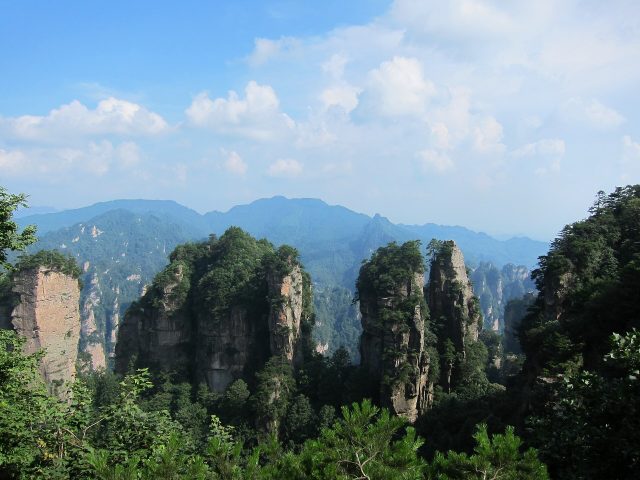
The earth splits open here, not gently, but with the force of something raw and unplanned. Part of Zhangjiajie National Forest Park in Hunan Province, the canyon is often overlooked next to the park’s sandstone pillars—those jagged spires that became the floating mountains in *Avatar*. But the canyon doesn’t compete. It offers something else: a tangle of gorges, rivers, and forests that don’t feel like China, or anywhere else.
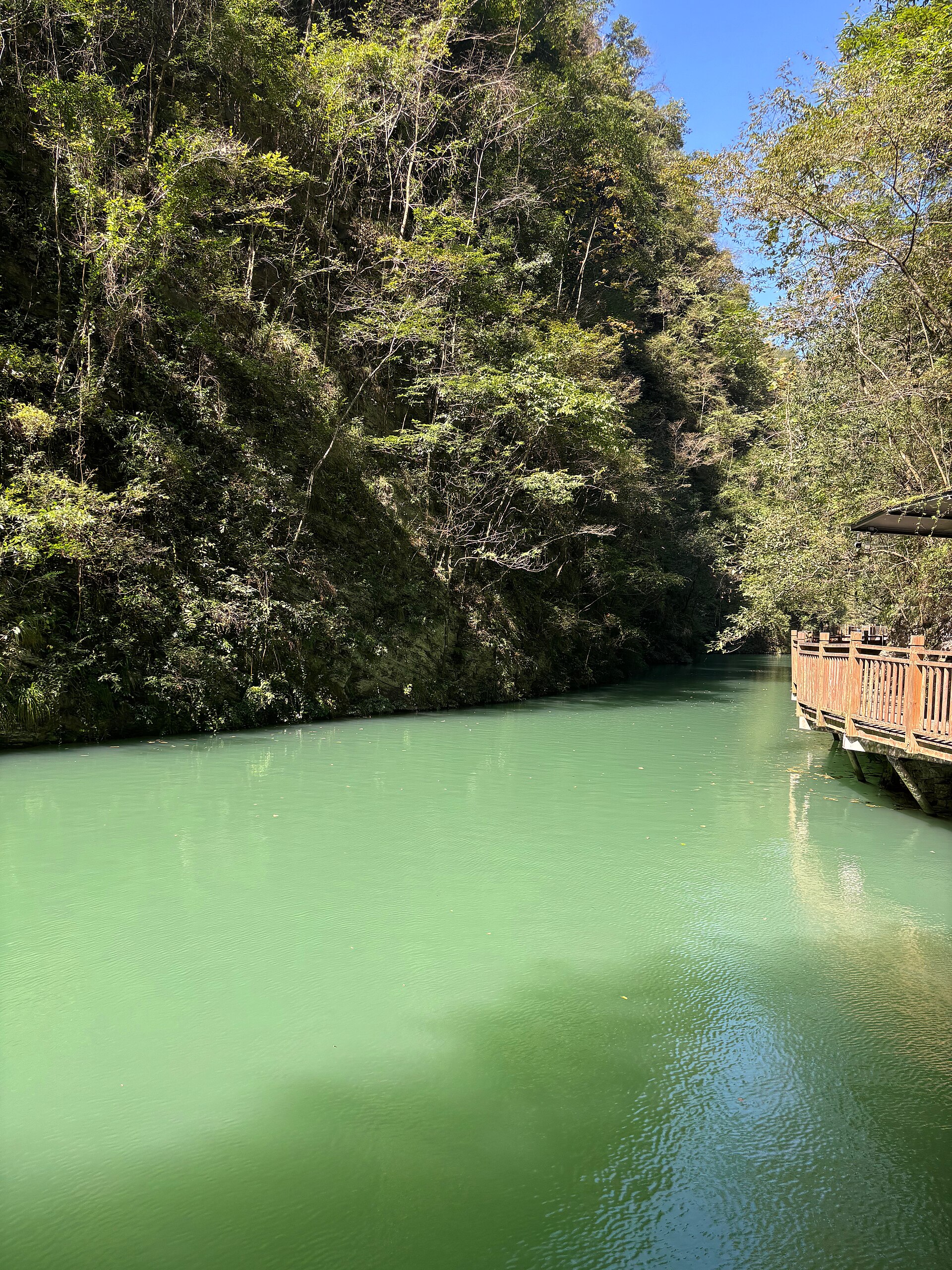
The canyon runs for kilometers, its walls dropping as deep as 300 meters in places. The cliffs aren’t just tall; they’re old, worn by water and wind into shapes that look like half-finished sculptures. Moss and lichen blur their edges. In some spots, the walls nearly touch, blocking the sun. In others, they pull apart to reveal valleys dense with bamboo and pine. The river below moves unpredictably—calm over smooth stones one moment, crashing into waterfalls the next, filling the air with spray.
People have lived here for centuries. The Tujia and Miao communities shaped the canyon’s stories long before tourists arrived. Their myths describe mountain spirits and heroes whose deeds are carved into the stone. Before modern trails, the canyon was a place few entered. Even now, with walkways and viewpoints, it feels remote. The air is cooler than on the ridges above, thick with the smell of wet earth and pine. The only sounds are the river and the occasional bird.
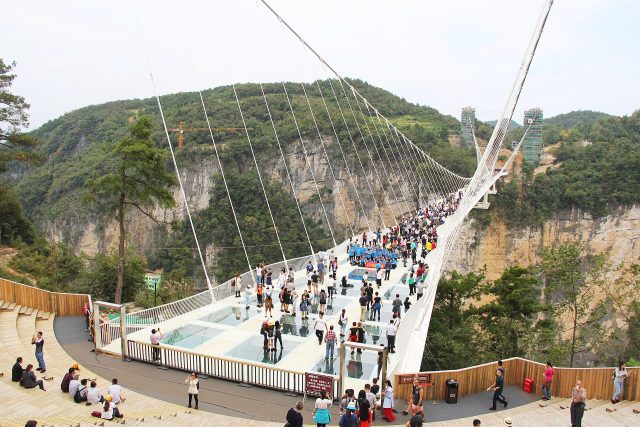
The glass bridge is the canyon’s most famous feature. It hangs 300 meters above the valley floor, a thin line of glass and steel between two cliffs. Walking across isn’t easy—most people pause before stepping onto the transparent surface, where the drop is visible beneath their feet. Those who cross see the canyon spread out below, a view that feels like floating. From the ground, the bridge looks fragile, a thread against the sky.
The trails follow the land’s shape. Wooden walkways and stone steps curve along the cliffs, and railings are painted to blend in. In some places, the path clings to the rock so closely you can touch it. In others, it narrows to a ledge with empty space on one side. The walk isn’t just about reaching a viewpoint. It’s about moving through a place that feels both ancient and alive.
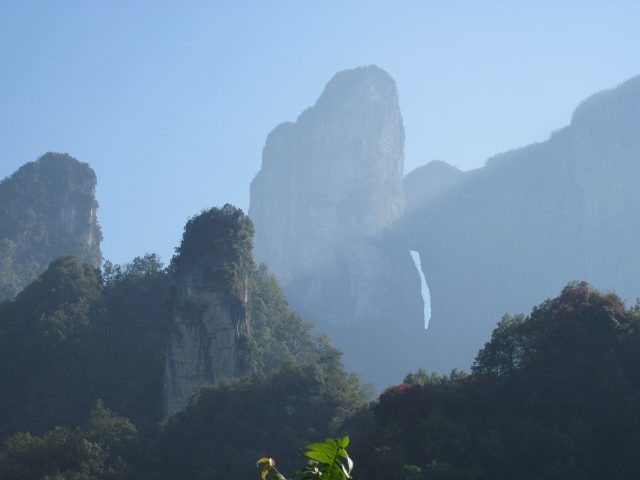
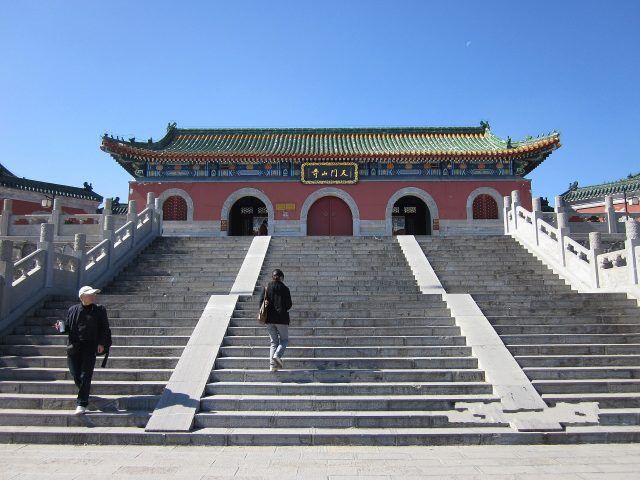
The canyon has other details. Pools of clear water appear where the river slows. Caves, once shelters for travelers or hermits, hide in the cliffs. Small temples sit among the trees. One of the most atmospheric spots is the path to Tianmen Temple, climbing the mountainside with views across the canyon. On clear days, the distant peaks fade into blue haze. It’s easy to see why this place was once sacred, used for rituals to call rain or ward off evil.
This isn’t a place you rush through. Even in peak season, the canyon feels quiet if you avoid the main trails. Time moves differently here—slower, governed by the river and the wind. A walk might take a few hours or a full day. The pace is yours.
What stays with you isn’t just the scenery. It’s the sense of stepping into a place where modern rules don’t apply. The canyon carries history—the myths of the Tujia and Miao, the slow work of water on stone—but it also has the glass bridge and the paths. It’s a rare mix: a landscape that feels untouched but alive. You can stand on a transparent platform high above the valley or sit by the river and feel, for a moment, like time has stopped.