The Temple of Ptah in Karnak is one of those rare places where the weight of centuries feels almost tangible. Unlike the grander temples dedicated to Amun or Mut, it doesn’t demand attention with towering columns or vast courtyards. Instead, it offers something quieter—a chance to step away from the crowds and into a space where history lingers in the weathered stone. There’s no rush here, no jostling for the best photograph. Just the slow, steady presence of a place that has witnessed millennia of devotion.
Ptah was no ordinary god. Revered as the creator of the world, the patron of craftsmen and architects, he embodied the power of thought and speech to shape reality. In the Egyptian pantheon, he stood apart—not as a distant, all-powerful figure, but as a deity intimately connected to human skill and labor. The temple in Karnak was where priests maintained this connection, performing rituals and offering prayers to sustain the cosmic order. While other temples in the complex celebrated more widely worshipped gods, Ptah’s sanctuary remained modest, tucked away behind thick walls, as if preserving its sacred purpose from the noise of the outside world.
The architecture of the temple reflects this understated significance. The entrance is narrow, framed by columns topped with lotus blossoms—a motif that appears throughout Egyptian art, symbolizing rebirth and the sun’s daily journey. Beyond it lies a small courtyard, once home to statues of pharaohs and priests, now empty but for the echoes of their presence. The inner sanctuary holds the altar, its walls adorned with reliefs of Ptah in his traditional form: wrapped in a tight-fitting robe, crowned with a tall headdress, and holding the tools of creation. There are no elaborate murals here, no grand narratives carved into the stone. Instead, each line feels deliberate, as if every detail was meant to carry meaning beyond the visible.
Like many ancient sites, the Temple of Ptah wasn’t built all at once. It evolved over centuries, each era leaving its mark. The earliest records date back to the New Kingdom, when pharaohs sought to strengthen Ptah’s cult in Thebes, the religious heart of Egypt. Later, during the Ptolemaic period, the temple was expanded, its halls redesigned in a style that blended Egyptian tradition with Greek influences. These layers of history make the temple feel like a conversation between different ages—one where the past isn’t static but alive, shaped by the hands of those who came before.
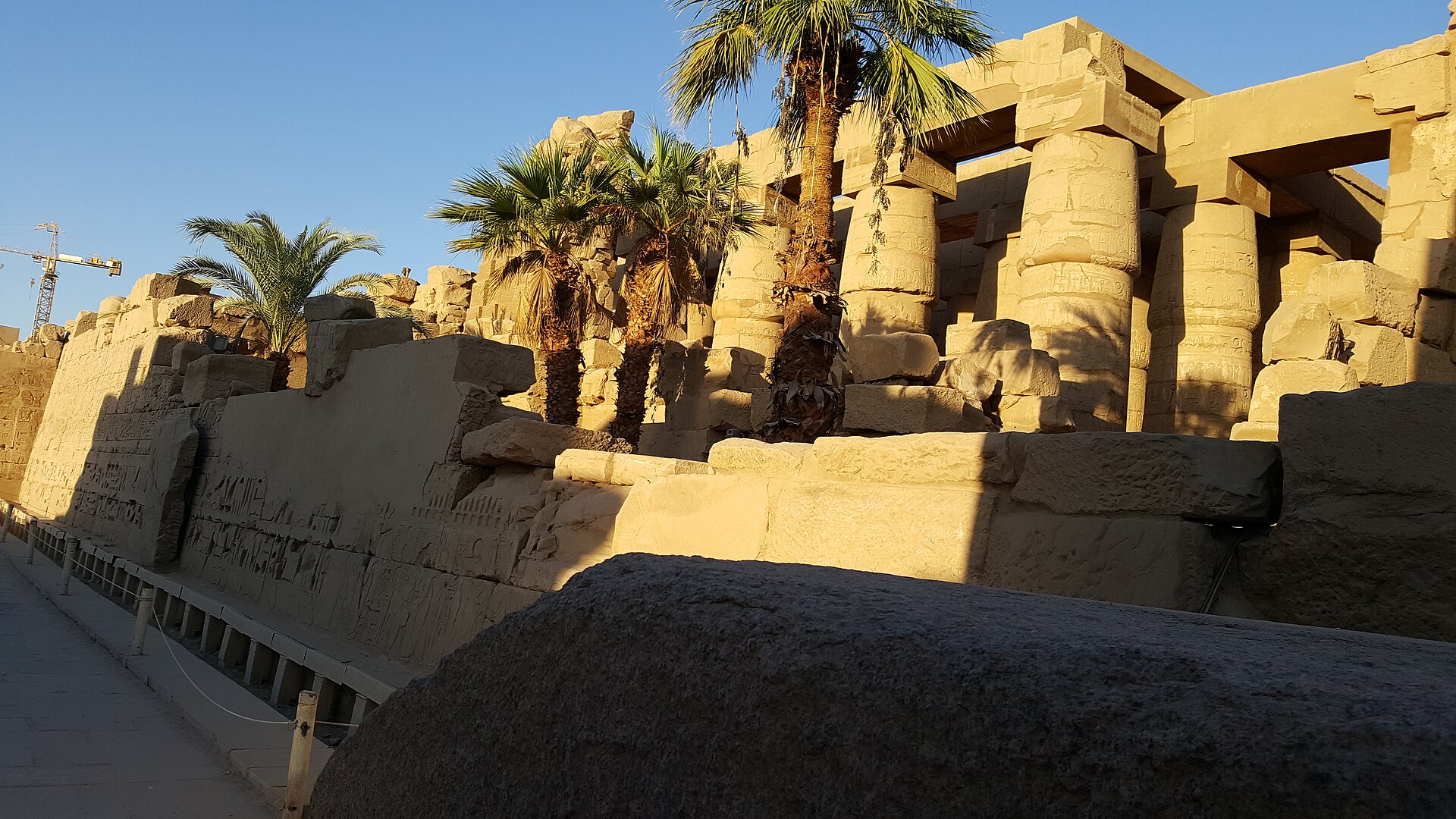
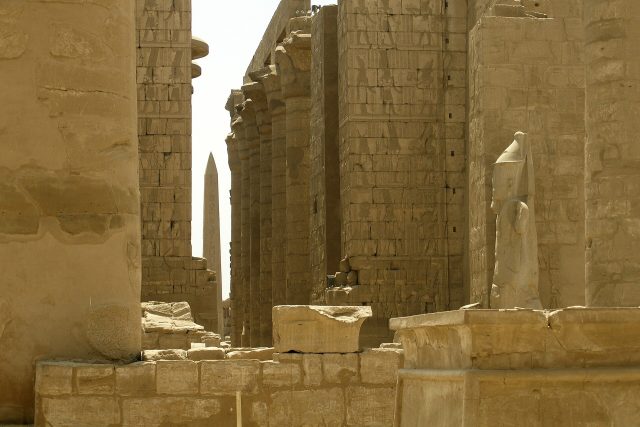
Today, the temple remains one of Karnak’s quieter corners. While tourists flock to the Great Hypostyle Hall or the Avenue of Sphinxes, the Temple of Ptah offers a different kind of experience. There’s time here to notice the small things: the niches in the walls where statues of lesser gods once stood, the faint traces of soot from torches lit during nighttime rituals, the way the sunlight slants through the columns at certain hours. The stones retain the warmth of the day, and the shadows stretch across the ground just as they must have done thousands of years ago.
Karnak itself is a vast, overwhelming place—a city of temples where every structure tells a story. But the Temple of Ptah feels more like a private reflection than a public spectacle. It doesn’t try to impress with scale or grandeur. Instead, it invites you to consider the people who built it, who worshipped here, who believed in something greater than themselves. There are no towering obelisks or colossal statues, but there is something far more compelling: a sense of authenticity, the kind that’s often lost in places overrun by tourism.
Visiting the temple is a reminder that this wasn’t just a monument—it was a living space. Priests chanted prayers here, pharaohs presented offerings, and ordinary people came seeking blessings. Now, all that remains is stone and sand, but if you listen closely, you might still catch the faintest echo of those voices. That’s why the Temple of Ptah draws those who aren’t just looking for a spectacle, but for a connection to something real. It’s a place where the past doesn’t feel distant, but strangely, almost uncomfortably close.