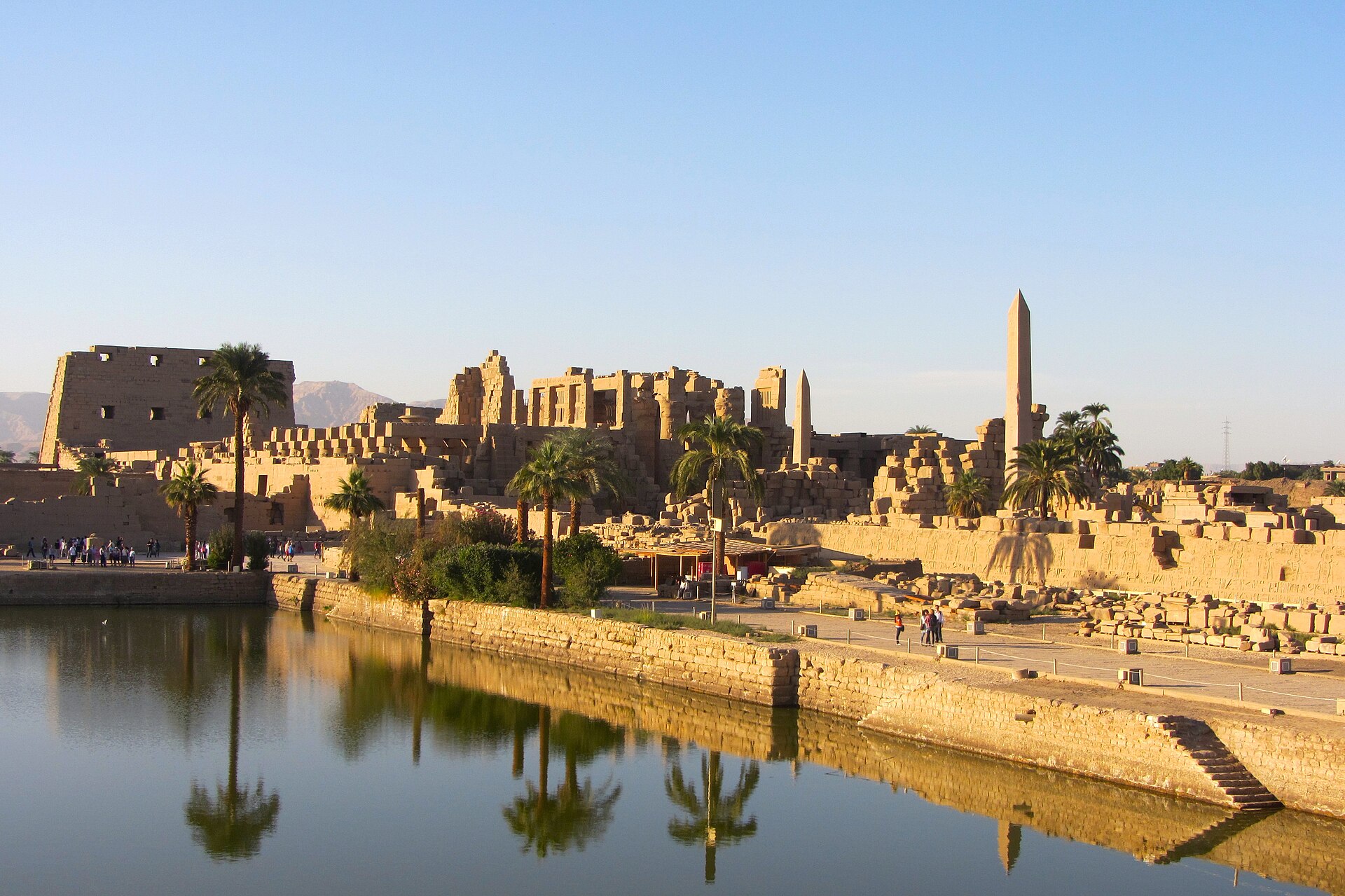
The Temple of Opet sits within the Karnak complex. Fewer tourists visit it than the sanctuaries of Amun or Mut, but its atmosphere is just as strong. This was where myth and ritual met, where ceremonies shaped ancient Egypt’s identity. The temple honored Opet, a goddess of fertility and royal protection, and played a key role in the Opet Festival. During the festival, the statue of Amun traveled from Karnak to Luxor, symbolizing the bond between gods and pharaohs.
Thutmose III started construction, though the temple we see today took shape later, under the Ramesside kings. It follows the axial layout of New Kingdom temples—columns, a hypostyle hall, inner sanctuaries—but with irregularities that show its long evolution. Some chambers were added later, fitting into existing structures. The architecture served a purpose: every stone reinforced the pharaoh’s divine authority.
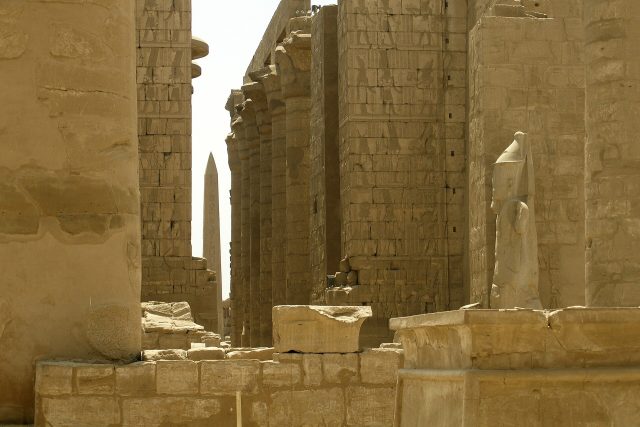
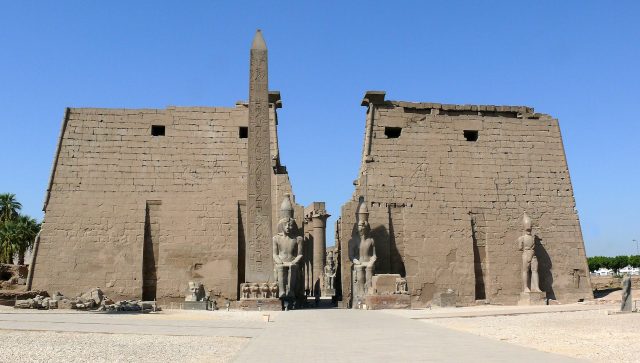
The entrance has towering pylons, their surfaces carved with reliefs of kings honoring the gods. Inside the first courtyard, the hypostyle hall stands with rows of columns. The air is cool, the silence broken only by footsteps. The walls show scenes of offerings, prayers, and the goddess Opet. These carvings were more than decoration—they recorded devotion and sought the gods’ favor.
The sanctuary, once home to Opet’s statue, is small. Its walls carry carvings, its ceiling astronomical symbols. The Egyptians believed Opet renewed nature each year. During the Opet Festival, Amun’s statue traveled to Luxor and back, reinforcing the pharaoh’s legitimacy. The sanctuary was where prayers were whispered and offerings made.
Fewer visitors come here than to the larger temples nearby. The stone is worn, the colors faded, but that feels honest. There are no modern reconstructions, no attempts to hide the past. You see cracks, half-erased inscriptions, traces of paint on the stone. The temple asks for patience. Its stories unfold slowly if you pay attention.
Karnak is vast, but the Temple of Opet offers something quieter. It shows the daily life of ancient religion. Walking through its halls, you wonder about the people who once filled this space—priests, pharaohs, laborers. The temple was part of their world, where the sacred and the ordinary met. You can almost hear the prayers, the rustle of robes, the chant of hymns.
The Temple of Opet is not just another tourist stop. It lets you step away from modern life and think about what lasts. The temple has stood for thousands of years. It will likely stand for thousands more, a witness to those who built it and those who visit.