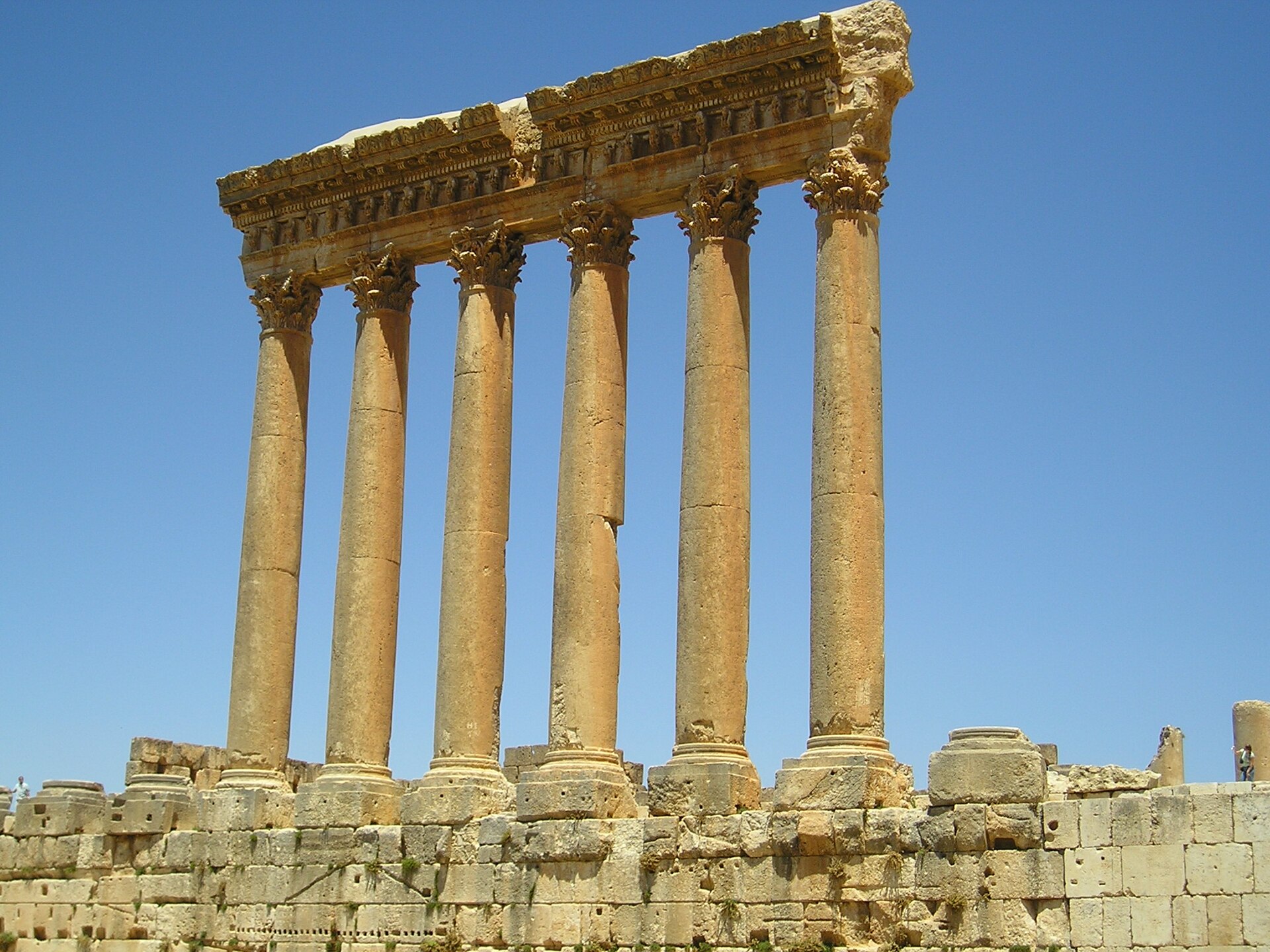
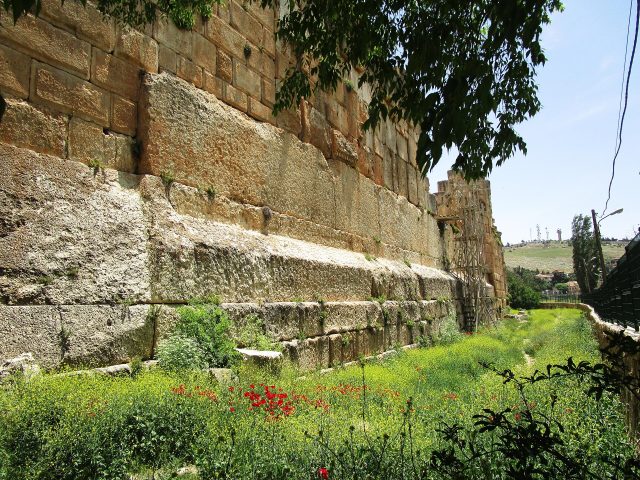
Baalbek’s Temple of Mercury stands as one of the lesser-known yet intriguing remnants of Lebanon’s ancient past, tucked away in the shadows of the more famous Roman ruins nearby. Unlike the grand Temple of Jupiter or the well-preserved Temple of Bacchus, this structure is often overlooked by visitors, though its history is no less fascinating. The temple was dedicated to Mercury, the Roman god of commerce, travel, and communication, a deity whose influence was deeply felt in the bustling trade routes that once passed through this region. What remains today are fragments of columns and foundations, but even in their partial state, they offer a glimpse into the religious and cultural life of the city during its Roman heyday.
The temple’s origins trace back to the first or second century AD, a period when Baalbek—then known as Heliopolis—was a thriving religious and commercial hub under Roman rule. The city’s strategic location in the Beqaa Valley made it a natural crossroads for merchants, pilgrims, and soldiers moving between the Mediterranean coast and the interior of the Levant. Mercury, as the patron of travelers and traders, was a fitting deity for a place like Baalbek, where wealth and ideas flowed as freely as the goods exchanged in its markets. The temple’s construction reflects the Roman practice of syncretism, blending local traditions with imperial cults, a testament to the cultural fusion that defined the region.
Architecturally, the Temple of Mercury was modest compared to its neighbors, but its design still followed the classical Roman style. The surviving elements suggest a rectangular structure with a portico of columns, likely Corinthian in order, though time and earthquakes have left little more than scattered stones. What makes this site particularly interesting is its position within the larger complex of Baalbek’s ruins. It sits slightly apart from the main temple precinct, almost as if it were an afterthought, yet its placement near the city’s ancient entrance hints at its role in welcoming visitors. Pilgrims arriving in Baalbek would have passed by this temple, perhaps pausing to offer a prayer for safe travels or successful trade before entering the sacred grounds of Jupiter.
The decline of the Temple of Mercury mirrors the broader fate of Baalbek itself. By the time Christianity took hold in the region, many of the old pagan temples were repurposed or abandoned. The temple’s stones were likely quarried for later construction, a common practice in antiquity that left few structures untouched. Unlike the Temple of Bacchus, which was incorporated into a Byzantine church, or the Temple of Jupiter, which became a fortress, the Temple of Mercury faded into obscurity. Its remnants were buried under layers of earth and debris until modern archaeologists began uncovering them in the 19th and 20th centuries. Today, it stands as a quiet counterpart to the more dramatic ruins nearby, a reminder that even in a city of giants, smaller stories deserve attention.
Visiting the Temple of Mercury today is a different experience from exploring the grander temples of Baalbek. There are no towering columns or intricate carvings to marvel at, just a scattering of stones and the faint outline of what once was. Yet this very simplicity invites a different kind of reflection. Standing among the ruins, it’s easy to imagine the merchants and travelers who once gathered here, the rituals performed in Mercury’s honor, and the slow passage of time that has worn away so much of the past. The temple’s location, slightly removed from the main tourist path, also means that visitors often have the site to themselves, a rare moment of solitude in a place usually crowded with history enthusiasts.
The surrounding landscape adds to the atmosphere. Baalbek sits in the Beqaa Valley, a fertile plain framed by the snow-capped peaks of the Lebanon and Anti-Lebanon mountains. The contrast between the ancient stones and the natural beauty of the valley is striking, especially in the early morning or late afternoon when the light softens the harsh edges of the ruins. The Temple of Mercury, though small, benefits from this setting, its modest remains blending into the earth as if they’ve always been part of the land. It’s a place where history feels tangible, not just because of the stones underfoot, but because of the stories they silently hold.
For those interested in the layers of history that define Baalbek, the Temple of Mercury offers a subtle but meaningful counterpoint to the city’s more famous monuments. It speaks to the everyday lives of the people who lived here—the traders, the travelers, the worshippers—rather than the grand narratives of emperors and gods. In a way, it’s a more human scale of history, one that doesn’t demand awe but instead invites quiet contemplation. The temple may not be the most impressive ruin in Baalbek, but it’s one of the most evocative, a small piece of the past that lingers in the present.
The site also serves as a reminder of how much of Baalbek’s history remains hidden. Excavations continue to reveal new details about the city’s past, and the Temple of Mercury is no exception. Archaeologists have uncovered evidence of earlier structures beneath the Roman remains, suggesting that the site was sacred long before the Romans arrived. This layering of history is what makes Baalbek so compelling—it’s not just a Roman city, but a place where Phoenician, Hellenistic, and Byzantine influences all left their mark. The Temple of Mercury, though modest, is a part of that complex tapestry, a thread connecting the many eras that have shaped this remarkable place.
Visiting the Temple of Mercury is best done as part of a broader exploration of Baalbek. The site is small enough that it doesn’t require much time, but its significance lies in its context. Seeing it alongside the Temple of Jupiter and the Temple of Bacchus provides a fuller picture of how the city functioned as a religious center, with each temple serving a different purpose and community. The contrast between the grandeur of Jupiter’s sanctuary and the intimacy of Mercury’s shrine is striking, a reminder that ancient cities were as diverse in their spiritual life as they were in their architecture. For those willing to look beyond the obvious, the Temple of Mercury offers a quieter, more personal connection to the past.