Baalbek is a place where the weight of history presses against the present, not as a relic to be admired from a distance, but as something alive and breathing. Nestled in Lebanon’s Bekaa Valley, the city is best known for its Roman ruins, which stand among the most ambitious ever built outside Italy. Yet Baalbek is more than an archaeological site—it’s a living city where ancient stones and modern life exist side by side. The temples rise above the rooftops of homes, their columns casting long shadows over streets where children play and vendors sell fresh produce. Here, the past isn’t confined to textbooks; it’s part of the air, the light, the rhythm of daily life.
The story of Baalbek begins long before the Romans arrived. The site was originally a Phoenician settlement dedicated to Baal, the god of storms and fertility, from whom the city takes its name. Later, under Greek rule, it became known as Heliopolis, the "City of the Sun," a name that hinted at its sacred significance. But it was the Romans who transformed Baalbek into a monumental religious complex, one that would reflect the grandeur of their empire. Construction began in the first century AD and spanned generations, with each new structure pushing the limits of engineering and artistry. The result was a sanctuary dedicated to Jupiter Heliopolitanus, a fusion of Roman power and local tradition.
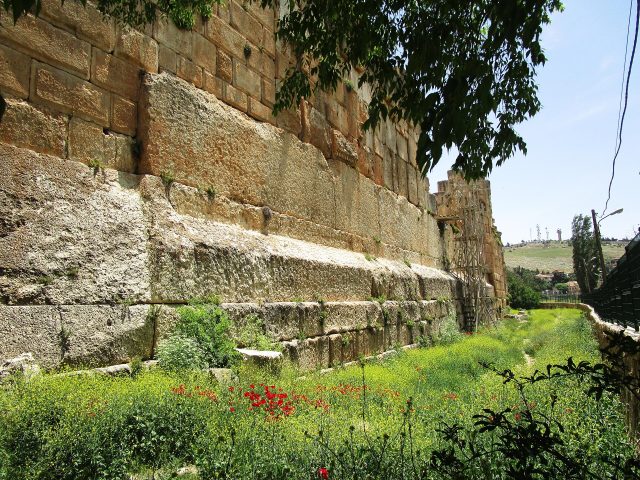
The most striking remnant of this era is the Temple of Jupiter, its six towering columns still standing after two millennia. Each column, over twenty meters high, is a testament to the skill of Roman builders, though the sheer scale of the project raises questions that still puzzle historians. How were blocks weighing hundreds of tons quarried, transported, and lifted into place? The most famous of these, the "Stone of the Pregnant Woman," lies abandoned in a nearby quarry, a thousand-ton monolith that was never moved. Its presence is a humbling reminder of the ambition—and the limits—of ancient engineering.
Adjacent to the Temple of Jupiter is the Temple of Bacchus, one of the best-preserved Roman temples in the world. Despite its name, it wasn’t solely dedicated to the god of wine but also to the cult of fertility, a reflection of the region’s agricultural roots. The temple’s intricate carvings and well-preserved friezes depict scenes from mythology, their details still sharp enough to tell stories of gods and heroes. Though smaller than the Temple of Jupiter, its proportions and craftsmanship make it equally impressive. Walking through its portico, it’s easy to imagine the rituals that once took place here, the smoke of sacrifices rising into the sky.
Not far from these grand structures is the Temple of Venus, a smaller but no less intriguing site. Over the centuries, it was repurposed multiple times—first as a Byzantine church, then as a mosque—each transformation leaving its mark on the stones. This layering of history is what makes Baalbek feel so alive. The ruins aren’t static; they’ve been absorbed into the fabric of different cultures, each one adding a new chapter to their story. The city has always been a place of convergence, where religions, empires, and traditions overlap.
Today, Baalbek is home to tens of thousands of people, and life moves around the ruins as if they’ve always been there. The markets buzz with activity, selling everything from spices to handmade crafts, while cafés serve strong Arabic coffee and plates of mezze. In the summer, the city hosts the Baalbek International Festival, a celebration of music and performance held against the backdrop of the ancient temples. The contrast is striking—orchestras playing classical symphonies where priests once chanted, or jazz musicians improvising beneath the same stars that watched over Roman legions. It’s a reminder that while empires rise and fall, art endures.
Yet Baalbek’s story isn’t just one of grandeur and festivals. The city has weathered its share of hardship—civil war, occupation, economic instability—each leaving scars on the land and its people. Despite this, the warmth of the locals is unmistakable. Visitors are often struck by how effortlessly the past and present coexist here. A conversation with a shopkeeper might drift from the price of olives to the history of the temples, as if both are equally relevant to the day’s business. The ruins, in their silent permanence, seem to offer a kind of reassurance—that no matter how turbulent the times, life goes on.
Walking through Baalbek is like stepping into a different rhythm of time. The ruins demand slow, deliberate attention. You might spend an hour tracing the grooves of a weathered column, or sitting on a fallen stone to watch the sunlight shift across the courtyard. As evening approaches, the stones take on a golden hue, and the shadows stretch long and thin. In those moments, the centuries collapse. The voices of the past aren’t entirely gone; they’re woven into the wind, the rustle of leaves, the distant call to prayer. Baalbek doesn’t just preserve history—it lets you feel it, in the quiet spaces between the stones.