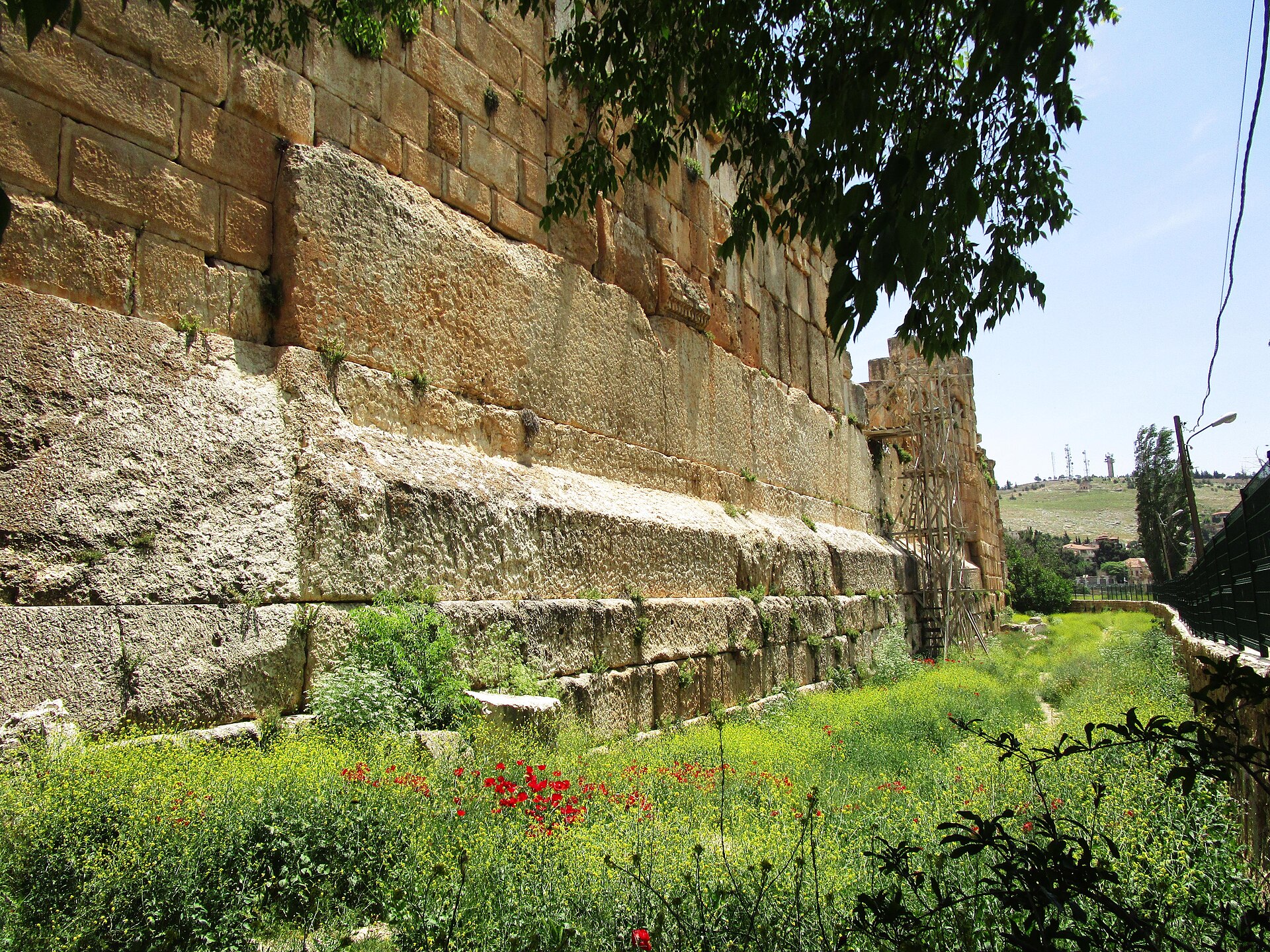
Baalbek is a place where time seems to stand still, its stones whispering stories of empires long gone and gods once worshipped under these same skies. Nestled in the Beqaa Valley, the ruins of this ancient city rise from the earth like a monument to human ambition, a testament to the ingenuity and sheer will of those who built it. Among its most striking features is the Trilithon, three colossal stone blocks that lie at the base of the Temple of Jupiter, each weighing hundreds of tons. Even now, their presence defies explanation, a silent challenge to modern understanding of ancient engineering.
The history of Baalbek stretches back millennia, its origins rooted in the days of Phoenicia, when the land was known for its devotion to Baal, the god of sun and fertility. Over time, the city evolved, absorbing the influences of successive civilizations. When the Romans arrived, they transformed Baalbek into a grand religious center, dedicating it to Jupiter Heliopolitanus. The temple complex, constructed between the 1st and 3rd centuries AD, became one of the largest in the Roman Empire. The Trilithon, part of the massive terrace that supported these temples, takes its name from the three enormous blocks that form its lowest course. Each stone weighs around 800 tons, and the method by which they were quarried, transported, and precisely placed remains one of history’s enduring mysteries.
The architecture of Baalbek is as awe-inspiring as it is harmonious. The Temple of Jupiter, once surrounded by a colonnade of 54 granite columns, was a marvel of proportion and grandeur. Today, only six of those columns remain standing, yet they still convey a sense of the temple’s former magnificence. Nearby, the Temple of Bacchus stands in far better condition, its intricate carvings and towering porticoes offering a glimpse into the skill of its builders. The smaller Temple of Venus, with its unusual circular design, adds another layer of elegance to the site. The Trilithon, meanwhile, serves as a reminder of the foundation upon which all this beauty was built—a foundation so precise and enduring that it has withstood the test of centuries.
Walking through Baalbek is like stepping into another era. In the early morning, when the first light touches the ruins, the stones glow with a warm, golden hue, and the shadows of the columns stretch long across the ground. The air is quiet, and it’s easy to imagine the footsteps of priests, the murmur of pilgrims, and the scent of incense that once filled these spaces. By midday, the site comes alive with visitors, their voices blending with the rustle of the wind as they explore the vast complex. Yet even in the busiest moments, there are corners where solitude can still be found, where the weight of history feels almost tangible.
Standing beside the Trilithon, it’s impossible not to feel a sense of wonder. The blocks are not perfectly aligned—time has left its marks in the form of cracks and chips—but this only adds to their authenticity. They seem to defy logic, a puzzle that has baffled historians and engineers for generations. How were these stones moved? Some theories suggest the use of earthen ramps, wooden rollers, or complex pulley systems, but none fully explain the feat. The mystery lingers, a reminder of how much we still have to learn about the past.
Baalbek is more than just an archaeological site; it’s a crossroads of cultures. Over the centuries, it absorbed the influences of Phoenicians, Greeks, Romans, and Byzantines, each leaving their mark on the city. After the fall of Rome, Baalbek continued to thrive. The Byzantines built a basilica within the temple complex, and later, during the Arab conquest, the site was fortified. The ruins today are a layered record of these transformations, a physical manifestation of how beliefs, technologies, and artistic styles evolved over time.
There’s something about Baalbek that lingers in the memory long after you’ve left. Perhaps it’s the way the ruins seem to exist outside of time, untouched by the rush of the modern world. The stones hold a silence that feels ancient, as if they’ve absorbed the voices of every person who has ever walked among them. In the evening, when the sun dips below the hills, the ruins take on a soft, rosy glow, and the air cools. It’s in these moments that the scale of human achievement—and its fragility—becomes most apparent. Baalbek isn’t just a collection of ruins; it’s a place where history feels alive, where the past is almost within reach.
Today, Baalbek remains a symbol of Lebanon’s rich and complex heritage. The city around the ruins is very much alive, with bustling markets, children playing in the streets, and locals who speak proudly of their history. Yet the ruins themselves serve as a reminder of the importance of preserving the past. They are not just stones; they are pages of a story that is still being written. Every visitor who comes here becomes part of that story, if only for a moment, drawn into the mystery and grandeur of a place that has stood for thousands of years.