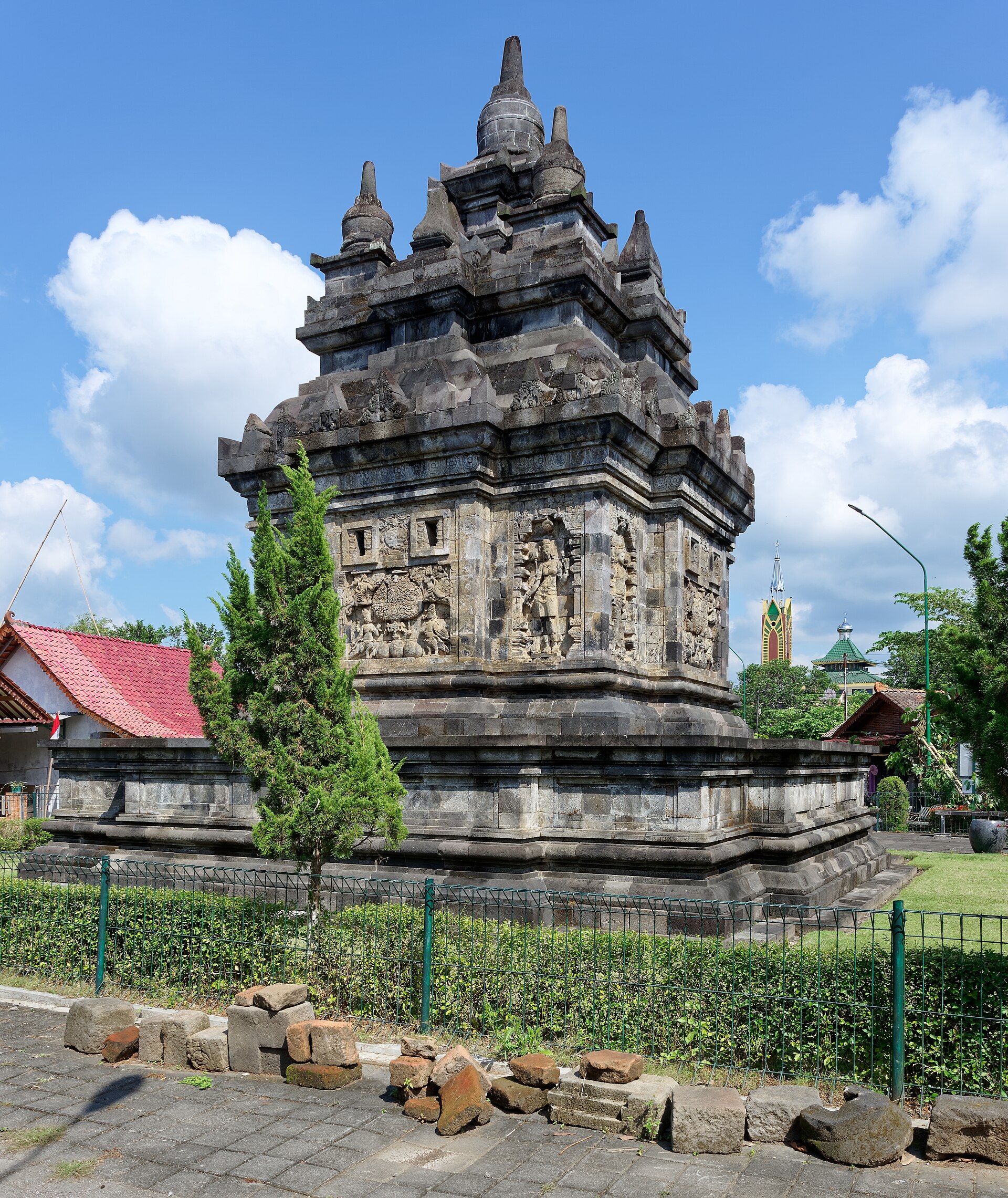
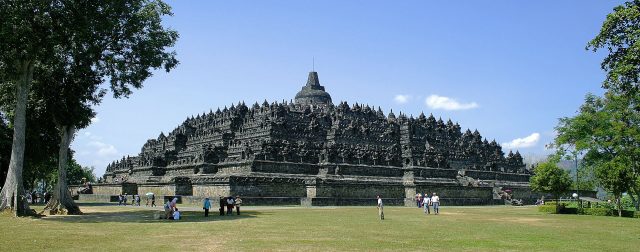
Mendut Temple sits quietly on the Kedu Plain, surrounded by rice fields and gentle hills that rise toward the horizon. Built in the early ninth century under the Sailendra dynasty, it is one of Java’s oldest Buddhist sanctuaries. The centuries have left their mark, yet the temple’s stone walls remain remarkably intact—solid yet graceful, as if shaped from clay rather than carved from volcanic tuff. Though modest in size, standing just twenty-six meters tall, its proportions are flawless: a square base, tiered body, and pointed summit crowned with a stupa. Unlike the sprawling Borobudur nearby, Mendut doesn’t overwhelm with scale. Instead, it offers something rarer—a sense of intimacy, as if stepping into a space still held sacred by those who built it over a thousand years ago.
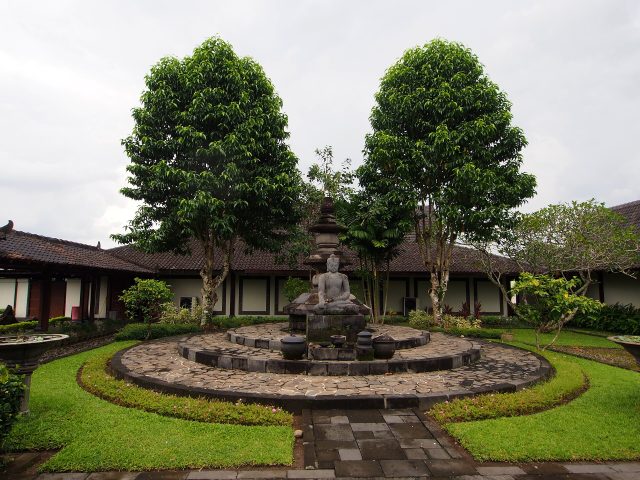
The temple’s architecture is simple but deliberate, every detail carrying weight. Three main niches once housed Buddha statues, though only the central one remains today: the Dhyani Buddha Vairocana, seated in lotus position. Carved from a single block of stone, the figure exudes stillness—hands resting in a gesture of wisdom, eyes half-closed, as if observing the world without judgment. Flanking him are Avalokiteshvara and Vajrapani, bodhisattvas of compassion and power, their postures more dynamic yet equally expressive. The temple walls are adorned with reliefs depicting jataka tales—stories of the Buddha’s past lives—but time has worn many of them smooth, leaving only fragments of their original narratives.
Mendut hasn’t always stood as it does now. After the Sailendra dynasty declined, the temple fell into disrepair, buried beneath earth and overgrown by jungle. It wasn’t until the early 20th century that Dutch archaeologists began excavations, slowly uncovering the moss-covered stones. Restoration took decades, and even today, the temple bears the marks of age—not from neglect, but from the slow passage of time. Cracks spider through the stone, edges have softened, and the weathered surfaces give it the quiet dignity of an ancient manuscript, its pages worn but still holding their stories.
For locals, Mendut is more than a historical site; it remains a living place of worship. The temple sees few crowds outside of Vesak, the Buddhist festival in May, when thousands of pilgrims walk from Mendut to Borobudur, carrying lanterns through the night. On ordinary days, the temple is peaceful, its stone steps often empty. Visitors can sit for hours, watching sunlight shift across the walls, illuminating the faces of bodhisattvas or the delicate curls of faded carvings.
A small park surrounds the temple, shaded by towering trees where the heat of the day feels distant. There are no souvenir stalls or noisy cafes, just the quiet rustle of leaves and the occasional call of birds. Sometimes, schoolchildren pass by on their way home, or farmers carry baskets of fruit, but they move through without lingering, as if sensing this isn’t a place for haste. The air itself feels different here—thick with the scent of earth and grass, underlaid with the faint aroma of incense still burned at the temple’s base.
Mendut doesn’t demand attention. It doesn’t try to impress or overwhelm like other Javanese monuments, where grandeur can feel imposing. Instead, it invites stillness. There are no vast reliefs or dizzying staircases, just the quiet presence of stone that has stood for centuries. Perhaps that’s why it draws those who seek not entertainment, but a moment of reflection—a place to sit, to think, or simply to share silence with the ancient walls.