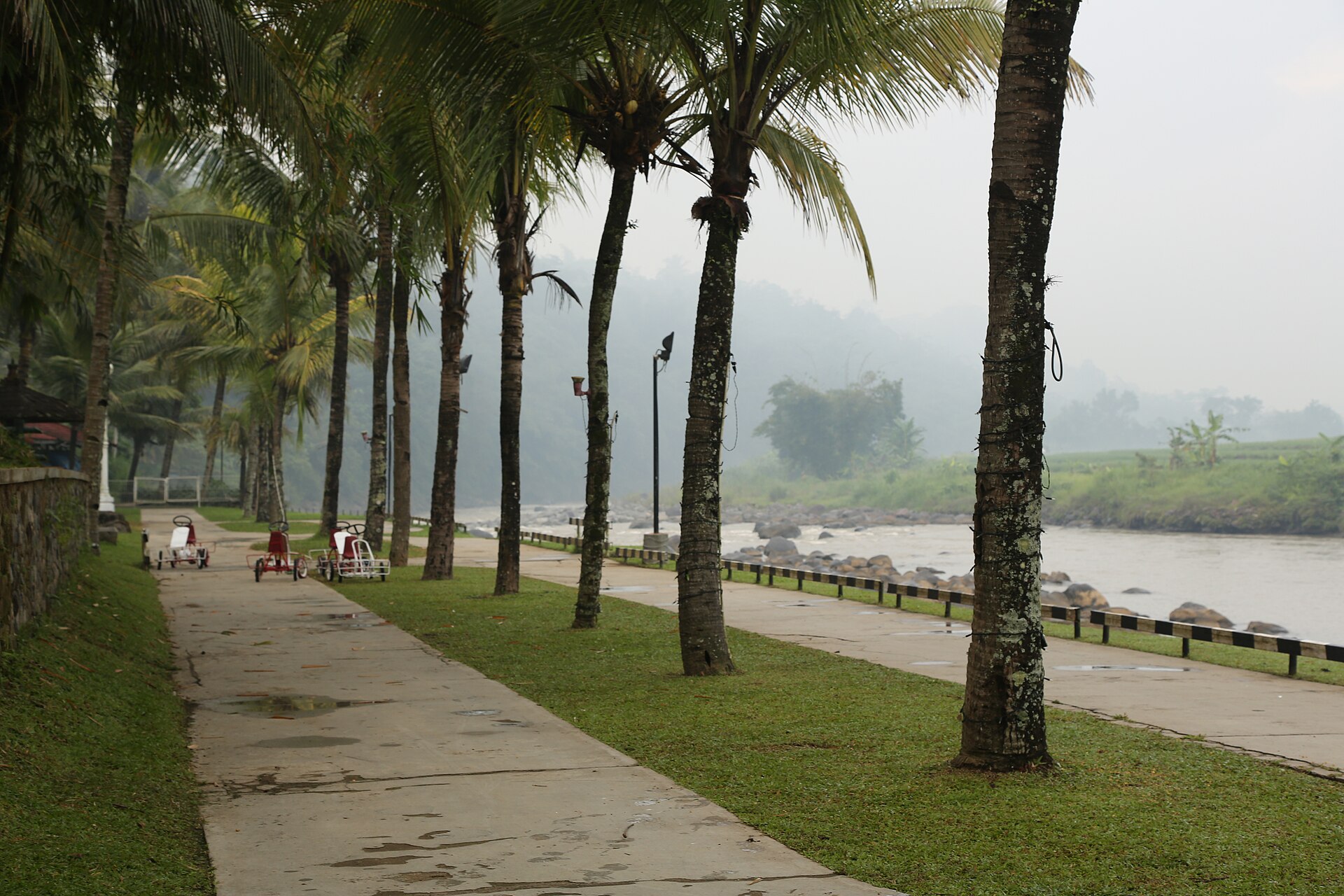
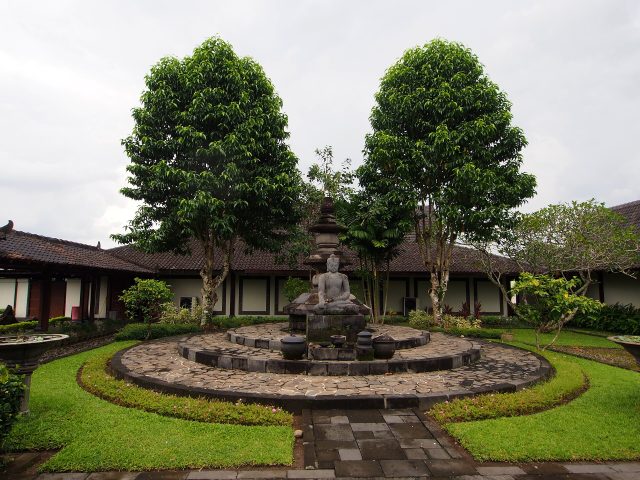
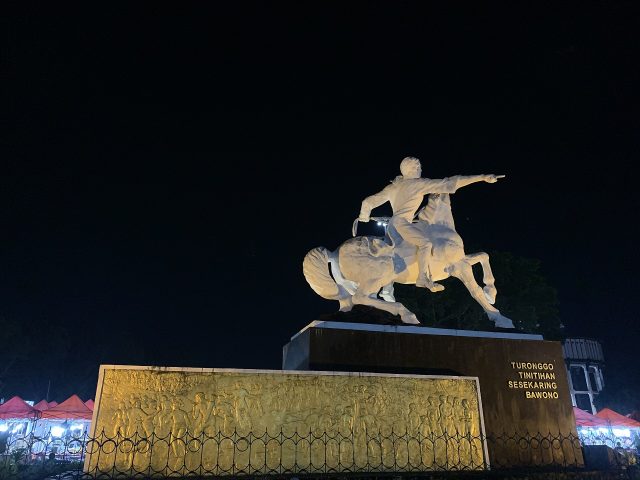
Trigunadi Park is one of those quiet corners of Magelang where people come not for excitement or crowds, but for a moment of stillness. Tucked away on the edge of the city, where the urban bustle slowly gives way to rural landscapes, the park feels like a place where time moves just a little slower. It isn’t large, but its well-kept paths, shady groves, and small ponds create an intimate atmosphere—almost as if it were someone’s private garden, generously left open for anyone to enjoy.
The park’s history is woven into the fabric of Magelang itself. During the colonial era, this land was part of sprawling plantations, later transformed into a public space in the mid-20th century. The name Trigunadi refers to the three hills that once dominated the area, though their outlines have long since softened as the city expanded around them. Today, the park remains a green refuge amid the urban sprawl, a reminder of the land’s quieter past.
There’s nothing grand about the park’s design. No towering monuments or ornate structures stand here—just a few simple pavilions with traditional Javanese roofs, offering shelter from the sun or rain. Wooden benches line the paths, and a modest stage at the center occasionally hosts local events: small concerts, theater performances, or community gatherings. Everything is understated, yet carefully arranged, fostering a sense of calm that feels almost deliberate.
What makes Trigunadi special is its greenery. The park is home to both native and introduced plants, their leaves and blooms shifting with the seasons. During the rainy months, the air is thick with the scent of damp earth and flowering trees, while in the dry season, the shade of tall canopies becomes a welcome escape from the heat. Families often come here for picnics, children chase each other along the paths, and older visitors sit quietly, soaking in the quiet rhythm of the place.
This isn’t the kind of park that draws tourists in droves. There are no souvenir stalls, no guided tours, no crowds jostling for the best photo spots. Instead, it’s a place where you can glimpse the unhurried pace of life in a small Javanese city. On any given day, you might see elderly men playing chess under a tree, students lounging on the grass with books, or young couples strolling hand in hand. The atmosphere is unpretentious, almost familial, as if the park belongs to everyone and no one at the same time.
One of the park’s quiet pleasures is the way it frames the landscape beyond Magelang. From certain vantage points, the view opens up to rice fields stretching toward the horizon, with the silhouettes of volcanoes rising in the distance. On clear days, Merapi and Merbabu loom like silent guardians over the city, a reminder of Java’s volatile beauty. The park sits at the crossroads of nature and urban life, a small but meaningful connection to the island’s deeper rhythms.
Trigunadi isn’t a place for grand adventures or Instagram-worthy moments. It’s somewhere to pause, to breathe, and to realize that sometimes the most meaningful experiences aren’t about seeing more, but about feeling more. There’s nothing forced or artificial here—just the simple, unadorned charm of a place that has been loved by generations. That’s why locals keep coming back, why they care for it, and why it feels like home.