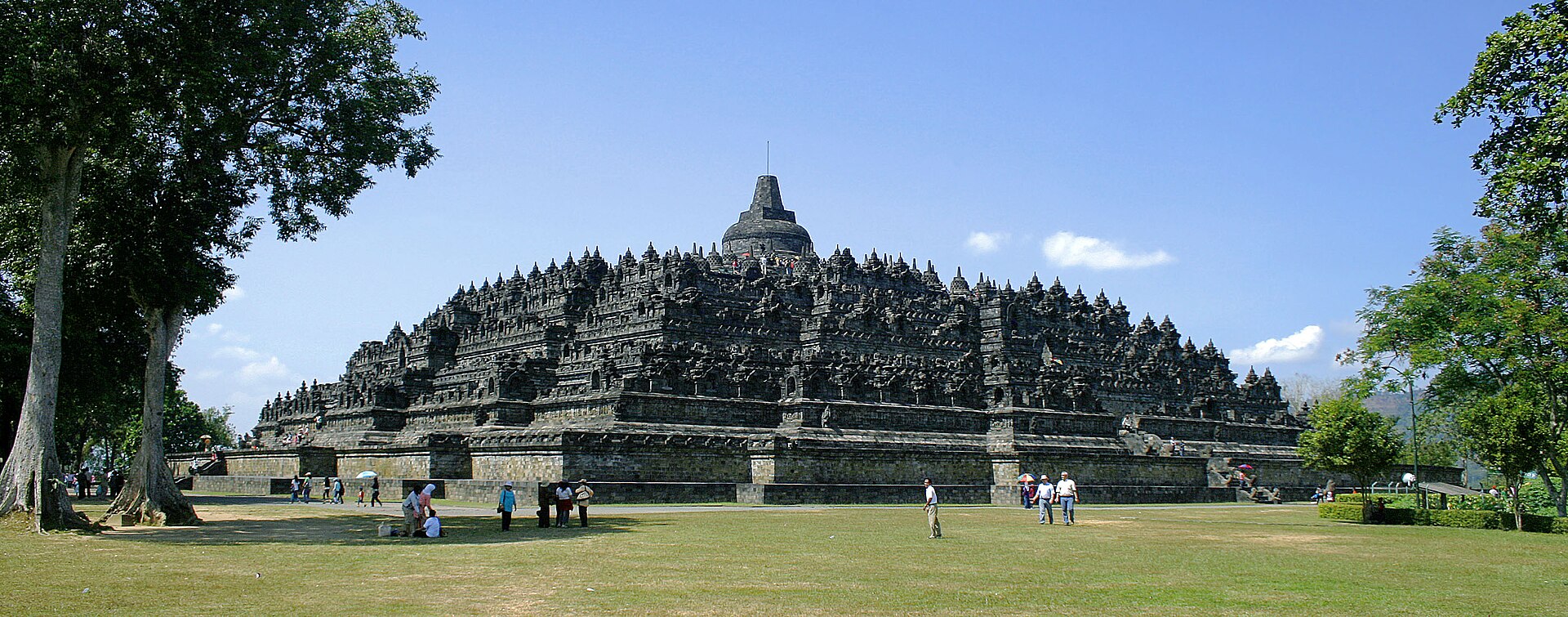
Borobudur is more than a temple—it’s one of Southeast Asia’s most extraordinary architectural and spiritual landmarks. Rising from the lush hills of central Java, not far from the city of Magelang, this massive stone monument feels like a frozen moment in time, a physical manifestation of Buddhist cosmology carved into the earth. Built between the 8th and 9th centuries under the Sailendra dynasty, it spent centuries lost beneath layers of volcanic ash and jungle before European explorers rediscovered it in the early 1800s. Today, it draws pilgrims and travelers from across the world, though even those who don’t follow Buddhism can’t help but feel its quiet, almost mystical pull.
What makes Borobudur unique is its design—a mountain of stone symbolizing the path to enlightenment. The structure unfolds in nine tiers: six square terraces at the base, three circular ones at the top, and a central stupa crowning the summit. Every level is adorned with intricate reliefs depicting the life of the Buddha, Jataka tales, and other sacred Buddhist texts. Over two thousand panels and nearly five hundred Buddha statues are embedded into the walls and stupas, each one a silent witness to centuries of devotion. Walking the terraces feels like a meditation in motion, each step bringing you closer to the summit, where the surrounding rice fields and distant volcanoes stretch out like a living painting.
Sunrise at Borobudur is an experience unlike any other. As the first light breaks through the morning mist, the stone stupas glow with a soft, golden hue, their shadows stretching across the ancient carvings as if breathing life into them. Many visitors come specifically for this moment, to watch the temple awaken alongside the landscape. It’s easy to imagine monks and pilgrims from a thousand years ago circling the stupas in quiet procession, following the tradition of pradakshina, their footsteps echoing the same path taken today.
Though ancient, Borobudur remains a living spiritual site. Every May, during the Vesak festival, thousands gather here to celebrate the Buddha’s birth, enlightenment, and passing into Nirvana. Monks and devotees fill the temple grounds for a nighttime torchlit procession, and at dawn, hundreds of paper lanterns drift into the sky. Even outside of Vesak, the temple carries a sense of reverence—the stillness broken only by the rustle of leaves and the distant murmur of prayers creates an atmosphere of deep calm.
Borobudur’s history is as layered as its architecture. After the decline of the Sailendra dynasty and the spread of Islam across Java, the temple was abandoned, swallowed by the jungle until 1814, when British governor Thomas Stamford Raffles stumbled upon it during his rule over the island. Early excavations followed, but full restoration didn’t begin until the 20th century, with UNESCO’s support. Now a World Heritage Site, the temple is carefully preserved, its stones constantly monitored to ensure they endure for future generations.
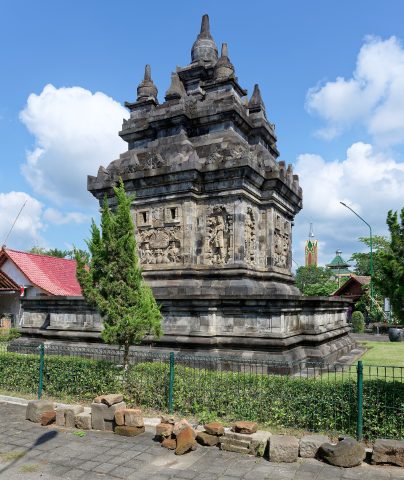
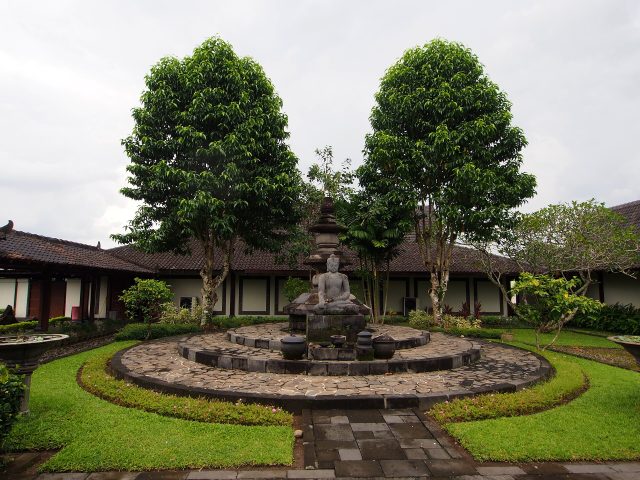
The area around Borobudur holds its own treasures. Nearby, the smaller temples of Mendut and Pawon form a pilgrimage route with Borobudur at its heart. Mendut, though modest in size, houses a towering three-meter Buddha statue, one of Java’s most revered. Pawon, partially in ruins, still dazzles with its delicate carvings. Traveling between these sites by bicycle or on foot offers a chance to take in the landscape, with the ever-present silhouette of Mount Merapi looming on the horizon.
For many, Borobudur is more than a tourist stop—it’s a place to pause. Unlike crowded landmarks, it retains a sense of quiet, even during peak seasons. The air hums with the sounds of birds and the whisper of wind through the trees, a reminder of the temple’s enduring stillness. Perhaps that’s why visitors return again and again, drawn not just by its grandeur, but by the way it invites reflection, a rare moment of connection beyond the rush of daily life.
If you visit, come early in the morning or late in the afternoon, when the light is soft and the heat less intense. Don’t rush to see every relief—there are too many to take in at once. Instead, pick a few stories that speak to you and study them closely, tracing the hands of the artisans who carved them centuries ago. Then find a spot on one of the terraces, look out at the distant mountains, and let the place settle into you. Borobudur asks for nothing but your attention and respect, and in return, it offers something far greater—a quiet, timeless wisdom that lingers long after you’ve left.