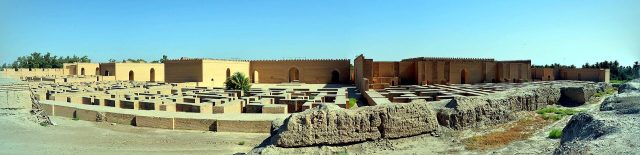
The ruins of Esagila, once the heart of ancient Babylon, stand as a quiet testament to a civilization that shaped the course of human history. This was no ordinary temple—it was the spiritual and political nucleus of one of the world’s first great cities, a place where the divine and the earthly intersected in the most literal sense. Dedicated to Marduk, the patron deity of Babylon, Esagila was more than a house of worship; it was the physical embodiment of the city’s power, its myths, and its ambitions. Even in decay, the remnants of its foundations hint at the grandeur that once defined it, a grandeur that mirrored the rise and fall of an empire.
Marduk was not just a god in the Babylonian pantheon—he was the force that brought order to chaos, the deity who, according to legend, defeated the primordial waters of Tiamat to create the world. Esagila was his earthly home, the center of a religious system that permeated every aspect of Babylonian life. Here, priests performed rituals that were believed to sustain the cosmos, kings sought divine favor before battle, and scribes recorded the laws and omens that governed society. The temple’s significance peaked during the reigns of Hammurabi and Nebuchadnezzar II, when Babylon was at its zenith, and Esagila functioned as both a religious sanctuary and an administrative hub. It was where the fate of the city—and, by extension, the known world—was decided.
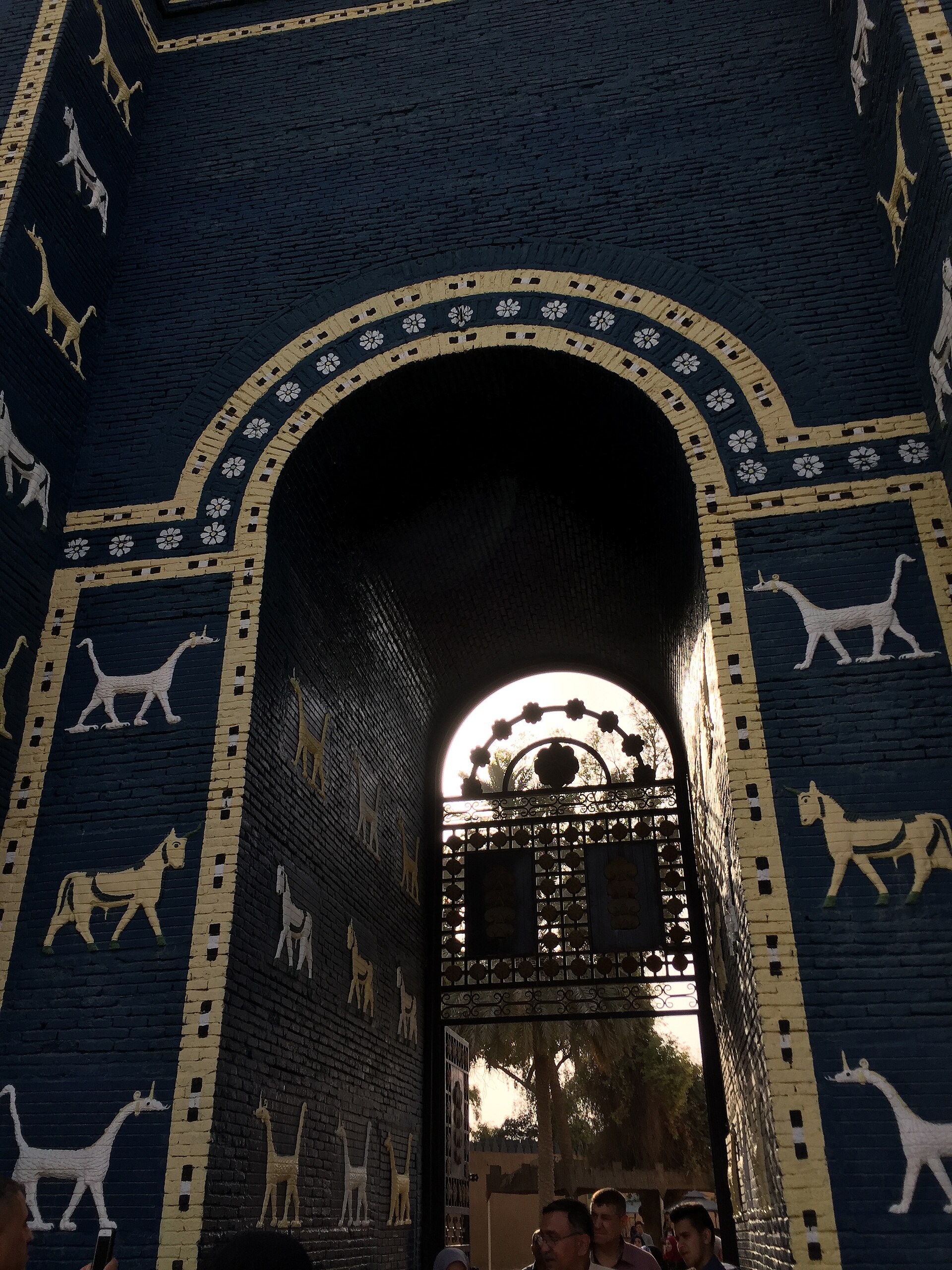
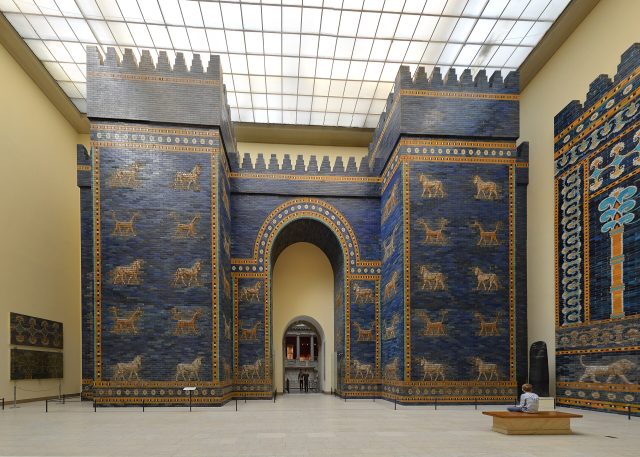
The architecture of Esagila was designed to inspire awe. The temple complex included not only the main sanctuary but also the Etemenanki ziggurat, the fabled Tower of Babel, which was said to reach toward the heavens. Built from fired brick and adorned with glazed tiles in vibrant hues, the structures were a marvel of engineering and artistry. Reliefs and inscriptions covered the walls, celebrating the gods and the kings who honored them. Inside, colossal statues of Marduk and other deities stood guard over treasuries filled with offerings from rulers and pilgrims alike. Though little remains today beyond scattered foundations and fragments of walls, the scale of the original construction is still palpable. The sheer ambition of the builders is evident in the way the temple dominated the city’s skyline, a constant reminder of the divine authority that sanctioned Babylon’s rule.
Esagila’s history is inseparable from that of Babylon itself. The earliest records of the temple date back to the third millennium BCE, but it flourished most spectacularly during the Neo-Babylonian period, when the city became the capital of an empire that stretched across Mesopotamia. Even after Babylon fell to the Persians, the temple endured, though its influence waned as new religions and cultures took hold. By the time the city was abandoned, Esagila had already been stripped of its treasures, its stones repurposed for other buildings. What remains today is a shadow of its former self, yet even that shadow carries the weight of centuries.
The site now lies within the archaeological zone of modern-day Iraq, near the city of Hillah. For historians and travelers drawn to the cradle of civilization, it is a place of profound significance. Walking among the ruins, it’s easy to imagine the temple as it once was—a bustling center of devotion, where the air hummed with the chants of priests and the murmur of pilgrims. Nearby, the remnants of Nebuchadnezzar’s palace and the Ishtar Gate offer further context, painting a picture of a city that was as much a marvel of its time as Rome or Athens. Together, these ruins tell a story of ambition, faith, and the inevitable passage of time.
Visiting Esagila is more than an exercise in historical curiosity; it’s a moment of reflection on how civilizations rise and fall, how beliefs evolve, and how even the most monumental achievements can fade into dust. The temple was a symbol of order in a world that often felt chaotic, a place where the divine was made tangible. Today, the silence of the ruins speaks volumes about the fragility of human endeavors. The stones that once bore the weight of empires now lie scattered, their stories preserved only in ancient texts and the imagination of those who stand among them.
For anyone seeking to understand Mesopotamia, Esagila is indispensable. It was not merely a temple but a microcosm of Babylonian thought—a place where religion, politics, and daily life converged. The rituals performed here were meant to maintain cosmic balance, the laws inscribed within its walls were believed to be divinely ordained, and the kings who knelt before Marduk’s statue did so in the belief that their authority came from the gods. In this way, Esagila encapsulated the essence of Babylonian civilization, where the sacred and the secular were one and the same. Even now, the ruins serve as a bridge between past and present, a reminder that the questions of power, faith, and meaning that preoccupied the Babylonians are still very much alive today.