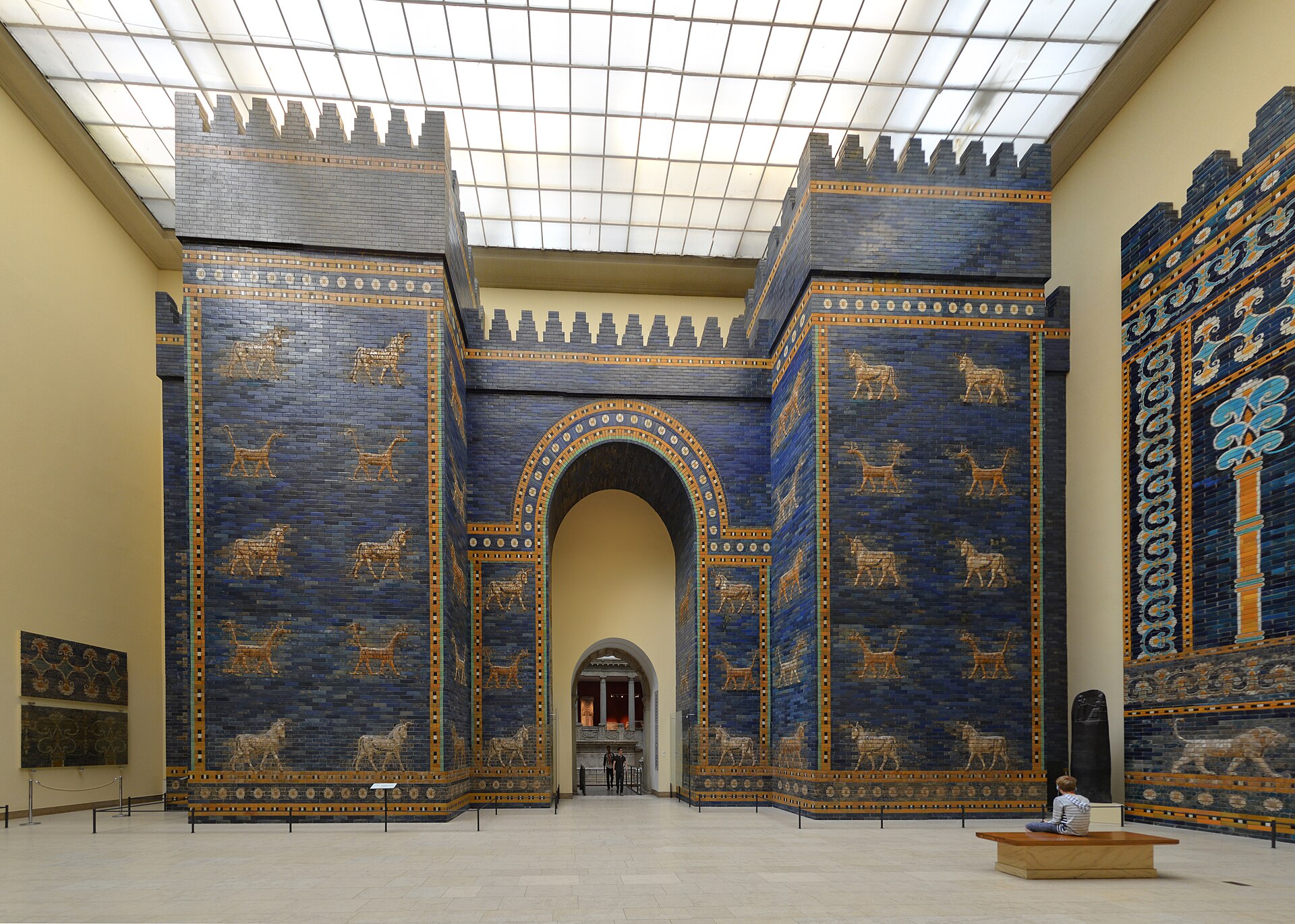
The Ishtar Gate stands as one of those rare monuments that seem to fold time in on itself, pulling you into an era long past. Built in the sixth century BCE under the rule of King Nebuchadnezzar II, these gates once formed the grand entrance to Babylon, a city that dominated the ancient world. What remains today are reconstructions and fragments, yet even in this state, the gate commands attention. Its deep blue glazed bricks, adorned with reliefs of dragons and bulls, must have gleamed under the Mesopotamian sun, a vivid declaration of the empire’s power and ambition.
The architecture of the Ishtar Gate was never just decoration. Every detail carried meaning. The dragons represented Marduk, Babylon’s patron deity, while the bulls symbolized Adad, the god of storms and fertility. Together, they wove a narrative of a city not only wealthy and formidable but also divinely protected. The gate was part of a double wall that encircled Babylon, serving both as a defensive structure and a ceremonial threshold. It was the first thing travelers saw as they approached the city, a statement of Babylon’s place at the center of the world.
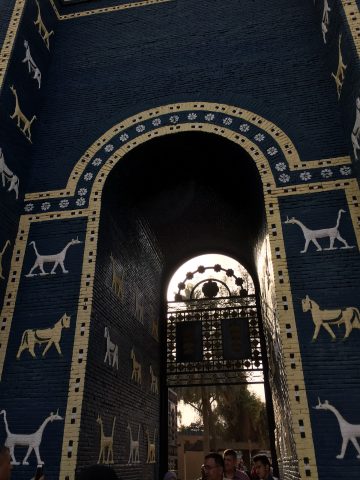
Today, the Ishtar Gate exists in two forms. The original fragments are housed in Berlin’s Pergamon Museum, reassembled by German archaeologists in the early 20th century. In Iraq, near the ruins of ancient Babylon, a full-scale reconstruction stands, built in the 1980s. It isn’t a perfect replica, but it offers a sense of the gate’s original grandeur. Standing before it, it’s hard not to wonder about the countless people who passed through its arches—merchants, soldiers, pilgrims, rulers—each carrying their own stories into the city.
Babylon in its prime was more than a city; it was the heart of civilization. The Ishtar Gate opened onto the Processional Way, a broad paved street where statues of the gods were paraded during religious festivals, followed by crowds of worshippers. This road led to the Esagila temple, Marduk’s sacred precinct, and the Etemenanki ziggurat, which some believe inspired the legend of the Tower of Babel. The gate was both an entrance and a farewell, the last impression of Babylon for those leaving and the first for those arriving.
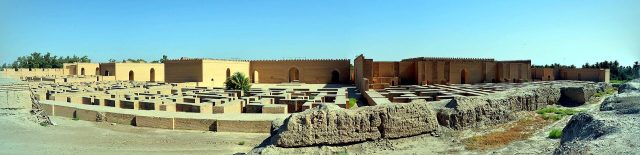
The history of the Ishtar Gate is inseparable from Babylon’s own rise and fall. The city was destroyed and rebuilt multiple times, yet the gate, as a symbol of its former glory, was always restored. It survived the Persian conquest and later Arab invasions, only to fade as Babylon itself declined. By the Middle Ages, the city was little more than ruins, and the gate lay buried beneath the sand until archaeologists uncovered it in the 19th century. Its rediscovery was a reminder of how much had been lost—and how much could still be found.
Now, the Ishtar Gate serves as more than an architectural relic. It’s a quiet testament to the fragility of human achievement. It has endured wars, conquests, and centuries of neglect, yet its beauty remains. Visiting it today, you realize that history isn’t just a record of events; it’s a living thing, woven from the hopes, fears, and ambitions of those who came before. The gate is a bridge between past and present, a way to touch something that once seemed gone forever.
Standing before the reconstruction, it’s natural to wonder what those who passed through the gate thousands of years ago might have felt. Pride in their city? Awe at its scale? Or perhaps unease at the unknown ahead? The Ishtar Gate doesn’t offer answers, but it invites questions—about power, faith, and the passage of time. That, perhaps, is its greatest value. It isn’t just a monument; it’s proof that humanity has always reached for greatness, even when that greatness was doomed to fade.
Babylon today is a quiet place, where the wind stirs the dust of ancient streets and tourists wander among the ruins. But if you listen closely, you might catch echoes of the past—the murmur of crowds on the Processional Way, the clatter of chariots, the chants of priests. The Ishtar Gate isn’t just bricks and glaze; it’s a fragment of a living history, still speaking in a language we can almost understand. That’s why it draws the eye, why it lingers in the mind long after you’ve left. It’s not just a relic; it’s a conversation across millennia.