Few can picture it clearly, though the name is familiar. South of Baghdad, brick and clay fragments lie scattered across the plain—what’s left of a structure that once pierced the sky. The Babylonians called it *The House of the Foundation of Heaven and Earth*, a name that still carries the weight of its purpose.
Its history begins in the early second millennium BCE, though no one knows for certain who first built it. Hammurabi may have laid its foundations, or perhaps later rulers expanded it to glorify Babylon. By its final form, the ziggurat rose nearly a hundred meters high, a stack of sun-dried brick faced with fired brick to endure Mesopotamia’s storms.
Seven tiers, each painted a different color, mirrored the seven planets known to the ancient world. At the top, a small temple of blue-glazed brick gleamed in the sun, believed to house Marduk, Babylon’s chief deity. Ramps spiraled upward, but only priests and the chosen could climb them. For everyone else, it was a distant symbol, untouchable and sacred.
Ancient texts, including the biblical Tower of Babel, echo the awe it inspired. The story of a tower that confused languages is myth, but the myth captures something real—the way Etemenanki must have loomed over the city, impossible to ignore. Herodotus, who saw it in the fifth century BCE, wrote of golden statues at its summit and the way it dominated the skyline like a mountain.
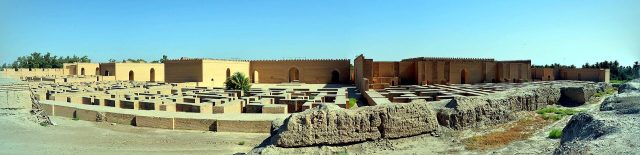
Today, only the base remains. Twentieth-century restorations faltered under war and neglect. Saddam Hussein later ordered a partial rebuild, using concrete to mimic the original—an attempt that left archaeologists uneasy. The result is a mix of ancient ruin and modern intervention, neither fully authentic nor entirely false.
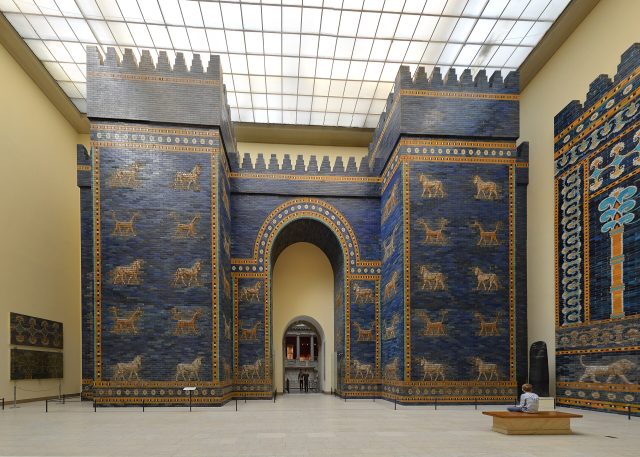
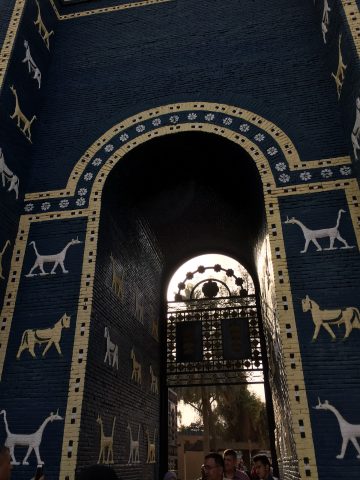
Visiting isn’t like visiting other sites. There are no crowds, no vendors, just the wind and the occasional researcher sifting through rubble. Around you, Babylon’s remnants stretch out: the Ishtar Gate with its glazed reliefs, the skeletal remains of palaces, the old canals. The silence makes it easier to imagine the city as it was.
Why did they build it? The Babylonians believed a tower could bring them closer to the gods. We know now that it couldn’t—but the idea persists. The ruins remind us how quickly empires fade, how even the grandest structures crumble. Yet something here feels permanent.
If you go to Iraq, make time for Babylon. It doesn’t reveal itself immediately. You’ll need to walk its empty paths, examine the broken bricks, and try to see what it once was. Etemenanki is at its center, a puzzle that still holds answers.