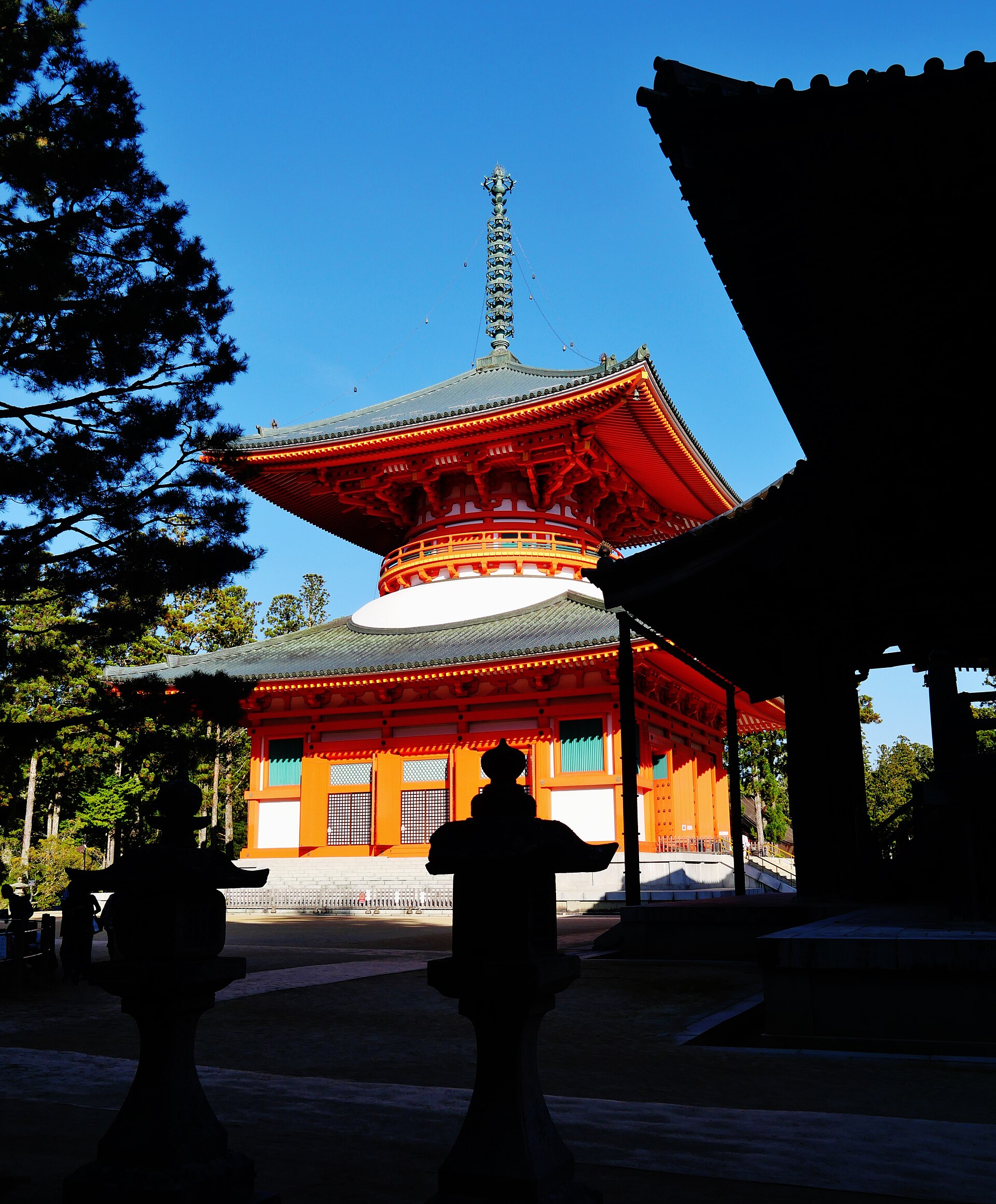
Mount Koya is one of those rare places where Japan reveals itself not as a land of bullet trains and neon lights, but as a realm of quiet depth, where silence feels almost tangible. At its heart stands Konpon Daito, a temple that is more than just part of a Buddhist complex—it is its spiritual core, a testament to centuries of faith and architectural mastery. There is no rush here, only the unhurried rhythm of prayers, the whisper of pines, and the distant chime of bells that seem to echo from another time.
For over a thousand years, Mount Koya, or Koyasan, has drawn pilgrims seeking solitude, spiritual renewal, or a connection to Japan’s cultural roots. Konpon Daito, founded in the ninth century, was conceived as the center of Shingon Buddhism, a tradition brought to Japan by the monk Kukai. According to legend, Kukai wandered for years before choosing this mountain, seeing in its secluded slopes the perfect sanctuary for meditation and enlightenment. Today, the temple remains an active monastery, where monks uphold ancient rituals, and visitors can stay overnight to experience the stillness that has defined this place for generations.
The architecture of Konpon Daito is a study in harmony between human craft and the natural world. The towering pagoda, rising above the forest canopy, is not merely a structure but a physical representation of Buddhist cosmology. Its three tiers symbolize the three realms of existence: the world of desire, the world of form, and the formless world. At its center stands a colossal statue of Dainichi Nyorai, the cosmic Buddha, embodying absolute truth, surrounded by four guardian Buddhas facing the cardinal directions. The temple’s interior, with its dark wood and gilded accents, feels like a sacred space where every detail carries meaning, inviting contemplation rather than mere observation.
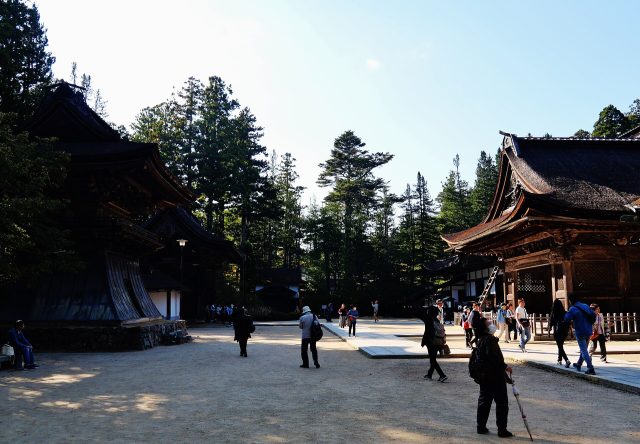
Visiting Konpon Daito is less about sightseeing and more about stepping into a different pace of life. Mornings begin with chanting in an ancient language, while evenings fade into the quiet recitation of sutras. The monastery welcomes guests to join meditation sessions, sample shojin ryori—the austere yet nourishing vegetarian cuisine of Buddhist monks—or wander the surrounding forests, where moss-covered graves and small shrines lie hidden among cedars and maples. Time moves differently on Koyasan, and even a brief stay leaves the sense of having touched something enduring.
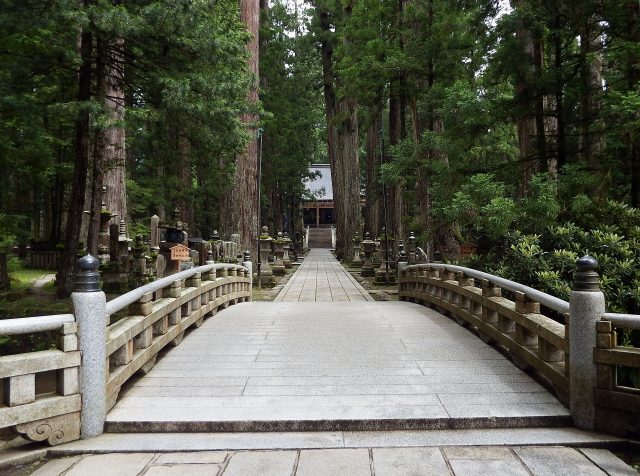
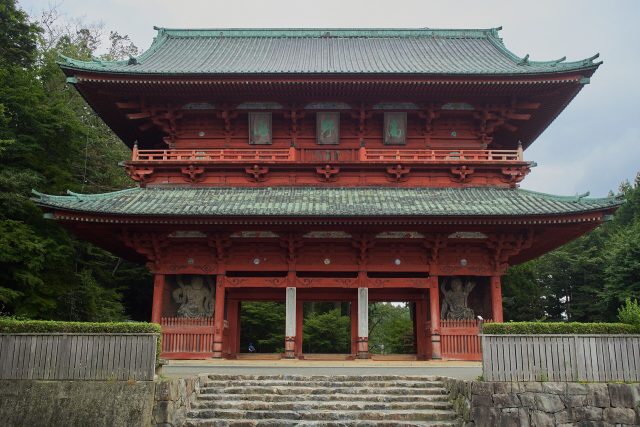
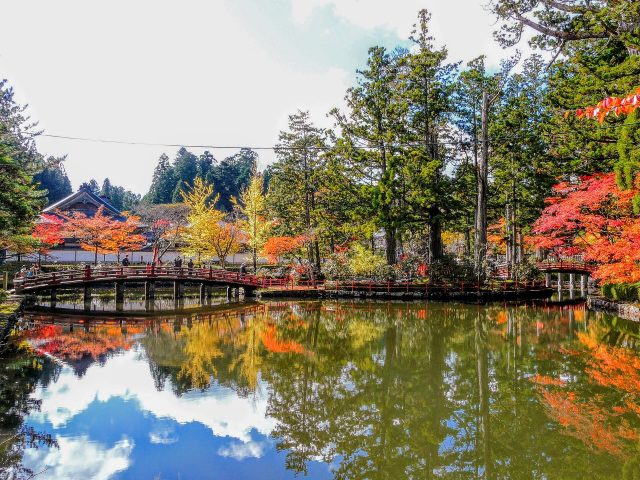
The temple’s setting is part of its magic. Mount Koya is enveloped in dense forests that blaze with autumn colors or hush under a blanket of winter snow. The path to Konpon Daito winds through ancient gates, past stone lanterns and weathered tombstones, each with its own story. Unlike the crowded streets of Kyoto or Tokyo, this is a place of quiet, where the only sounds are the rustle of leaves and the occasional call of a bird. Even those indifferent to religion find themselves slowing down, drawn into the temple’s meditative atmosphere.
Konpon Daito is not a tourist attraction but a living tradition, governed by its own rhythms. There are no modern conveniences here, only an authenticity that feels increasingly rare. The monks do not perform for visitors, but their hospitality is genuine and unobtrusive. Whether you spend a day or several nights, participating in the monastery’s daily life, each visit reveals something new. Perhaps that is the essence of Koyasan’s appeal: it does not offer answers but creates a space for reflection, a pause from the noise of the outside world.
For many, a visit to Konpon Daito becomes more than a stop on a journey—it is a place to return to. People come back to restore balance, seek inspiration, or simply be alone with their thoughts. The temple itself remains unchanged, yet it feels different with each visit, shaped by the season, the weather, or the visitor’s own state of mind. Autumn is especially striking, when maples set the mountain ablaze, while winter transforms the forest into a quiet, snow-dusted landscape. Even in summer, when the trees are lush and cool, the place retains its quiet allure.
Reaching Koyasan requires time and effort. The journey begins in Osaka or Wakayama, followed by a train and cable car, with the final stretch covered on foot or by bus. But it is this remoteness that makes Konpon Daito special. There are no crowds here, only the stillness of the forest and the ancient walls that have witnessed centuries of devotion. That is why people keep returning—not for grand spectacles, but for the chance to step outside time, if only for a moment, and feel part of something greater.