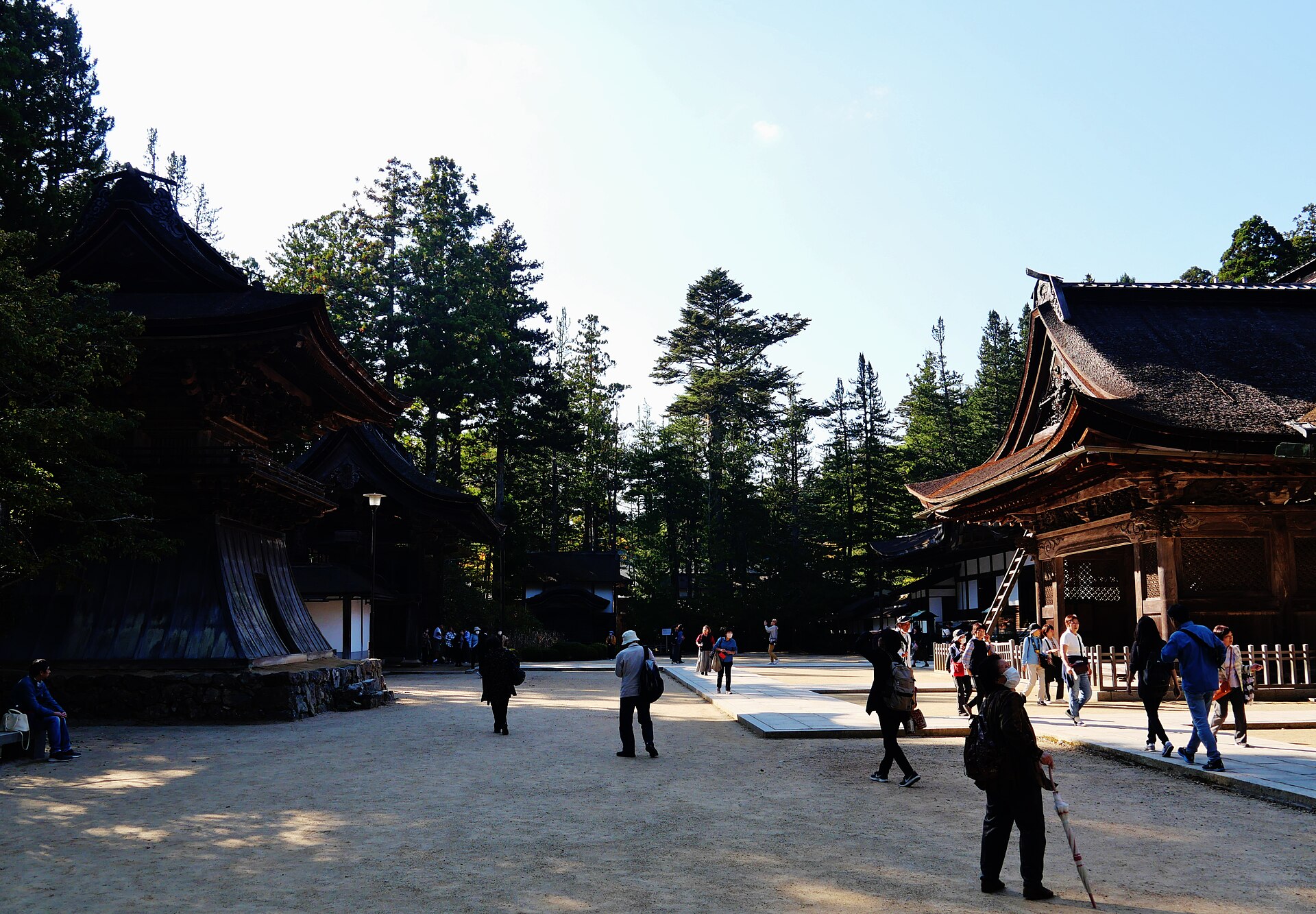
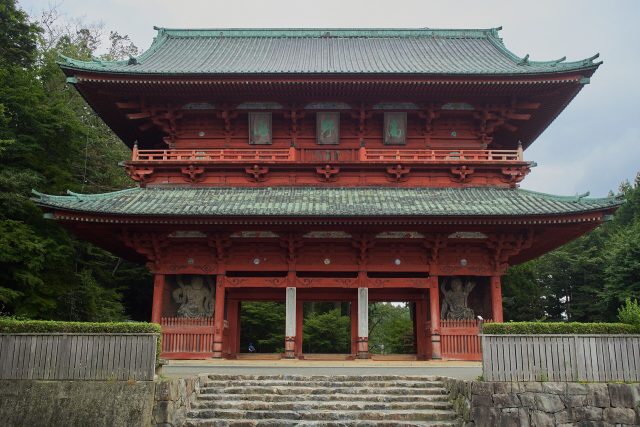
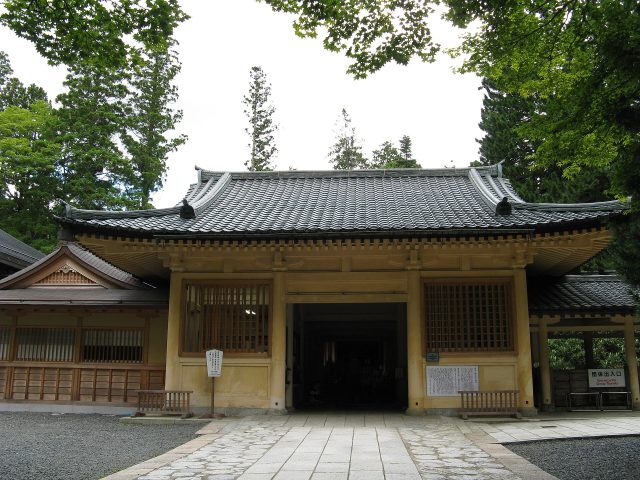
Mount Koya is a place where the weight of centuries settles gently on your shoulders. At its heart stands Kongobu-ji, not just a temple but a living center of faith, where the air itself seems to hum with quiet devotion. Founded in the early ninth century by the monk Kukai, the founder of Shingon Buddhism, it has drawn seekers for over a thousand years—those in search of solitude, wisdom, or simply the stillness that comes from being surrounded by ancient cedars. Perched nearly a thousand meters above sea level, the mountain moves to its own rhythm, marked by the toll of bells, the rustle of leaves, and the measured footsteps of monks performing their daily rituals.
The temple’s architecture tells a story without words, one of wood, stone, and paper shaped by time and human hands. The main hall, rebuilt in the sixteenth century, balances simplicity and grandeur in a way that feels almost effortless. Its massive wooden pillars, darkened by age, support a roof with gracefully curved eaves, while sliding partitions adorned with ink paintings blur the line between interior and nature. The most striking feature is the ceiling of the Dragon Hall, where a pair of painted dragons coils across the wooden panels. Visitors often clap beneath it, and the echo that returns is said to resemble the growl of the mythical creatures, a reminder of the unseen forces that have always been part of this place.
Kongobu-ji is woven into Japan’s history in ways that go beyond religion. During the medieval period, it was not only a spiritual hub but a political one, where emperors and shoguns came to seek guidance before battles or state decisions. In the Edo era, the temple became a repository for cultural treasures—scrolls bearing Kukai’s calligraphy, ancient Buddhist texts, and artifacts tied to figures who shaped the nation. Today, these relics remain within its walls, offering a tangible connection to the past for those who take the time to look.
One of the temple’s most intriguing spaces is Banryutei, a rock garden designed in the sixteenth century by Sen no Rikyu, the master of tea ceremony. It is one of the oldest gardens in the karesansui style, where raked gravel and carefully placed stones evoke mountains and rivers. The garden is small, but every element—the arrangement of the rocks, the shape of the trimmed shrubs, even the direction of the sand—serves a purpose. Visitors often linger here, trying to decipher the meaning in its abstract lines, though some things reveal themselves only in silence.
Life at Kongobu-ji follows a rhythm set by tradition. Monks rise before dawn for morning prayers, then tend to the temple grounds, work in the gardens, or prepare meals. Guests who stay overnight can join the communal meals, simple but nourishing, made from recipes passed down through generations. The food is vegetarian, as Buddhist practice dictates, and served in bowls that are held with both hands as a sign of gratitude. There is no hurry here, no need to fill the silence with words.
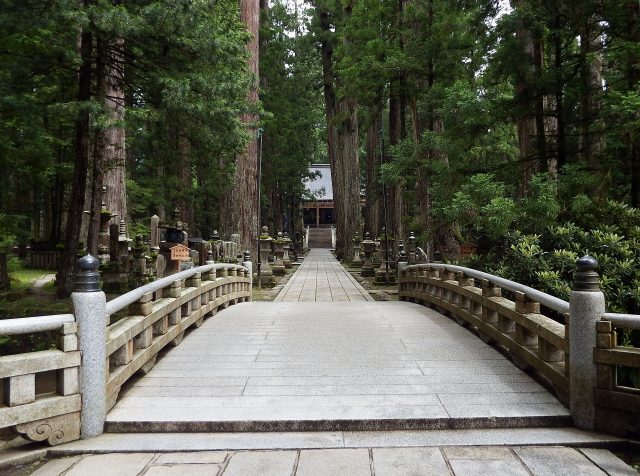
The mountain itself is a world apart. Surrounding the temple is Okunoin, one of Japan’s largest cemeteries, where tens of thousands of graves lie beneath towering cedars. Some belong to samurai, others to monks or artists, and many to people whose names have long been forgotten. Walking through Okunoin is not just a stroll among the dead; it is a reminder of how thin the line is between the everyday and the eternal. Lanterns flicker along the paths at dusk, and the air carries the scent of moss and damp earth, a quiet counterpoint to the bustle of modern life.
A visit to Kongobu-ji is not about checking off a sightseeing list. There are no crowds rushing for photographs, no guides hurrying you along. Even those who come for just a day find themselves slowing down, listening to the sound of their own footsteps on the wooden floors. The temple does not offer grand spectacles or easy answers, but something rarer—a sense of time stretching out, unhurried and unbroken. It is why people return, not for entertainment or enlightenment, but for the chance to simply be, if only for a little while.