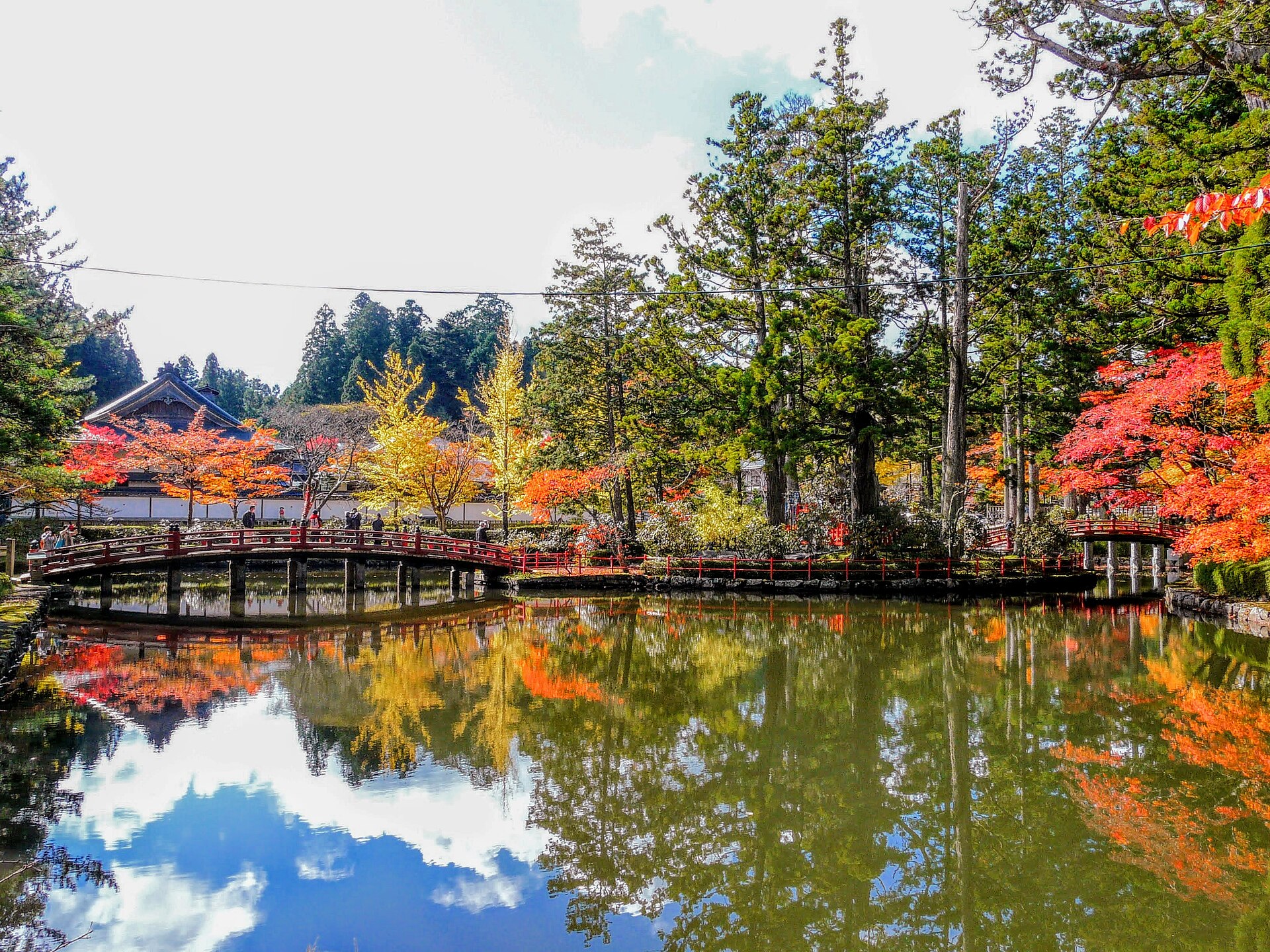
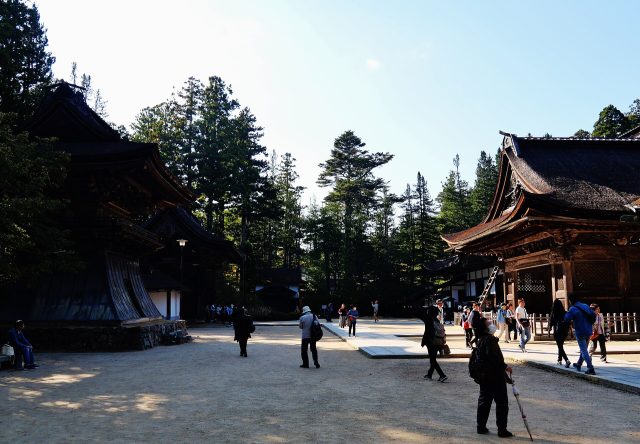
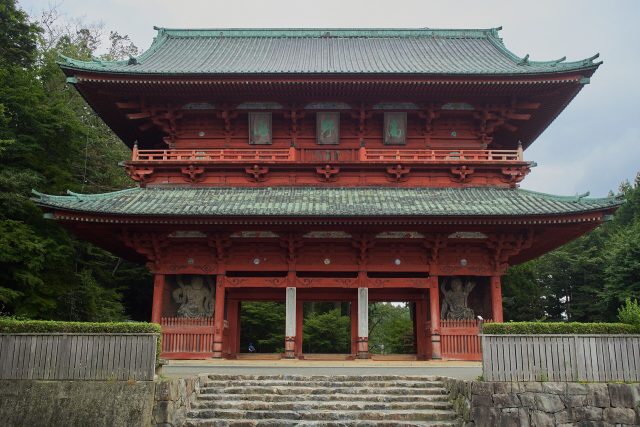
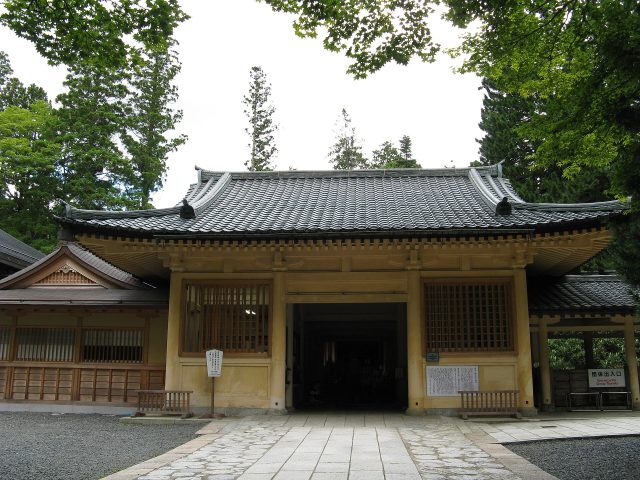
Mount Koya has long been one of Japan’s most sacred places, a mountain wrapped in mist and ancient cedars where the air itself seems to carry the weight of centuries. At its heart lies Danjo Garan, a sprawling temple complex founded in the ninth century by the monk Kukai, who brought the esoteric Shingon school of Buddhism to these slopes. More than a collection of buildings, Danjo Garan remains a living center of faith, where rituals, architecture, and the surrounding forest exist in quiet harmony. Walking its paths, it’s easy to imagine the murmur of sutras, the scent of incense drifting through the halls, and the steady presence of monks who have meditated here for over a thousand years.
The architecture of Danjo Garan tells a story of resilience and devotion, shaped by fire, time, and the hands of countless craftsmen. The centerpiece is Kongobu-ji, the main hall, rebuilt in the sixteenth century after repeated destruction. Its vast wooden pillars, darkened by age and lacquer, support a ceiling so high it seems to dissolve into shadow. Sliding doors painted with scenes from Kukai’s life—his travels, his teachings, his moments of quiet reflection—add a layer of narrative to the space. Nearby, the Hall of a Thousand Buddhas feels like stepping into another dimension, where row upon row of small statues create an endless, meditative rhythm. Many of the structures here have burned and been rebuilt, yet each restoration has preserved the original intent: simplicity, reverence for nature, and an unshakable sense of the sacred.
The most striking landmark in the complex is the Konpon Daito, a towering red pagoda that stands out against the green of the forest like a beacon. In Shingon Buddhism, it represents the center of the universe, and its vivid color is said to ward off misfortune. Inside, the space is dim, lit only by narrow windows that cast shifting patterns of light across the gilded surfaces. At its heart sits a massive statue of Dainichi Nyorai, the cosmic Buddha, surrounded by four bodhisattvas. The pagoda has been destroyed by earthquakes and fires more times than records can count, but each reconstruction was seen as an act of faith—a belief that its presence protects the mountain and all who come here.
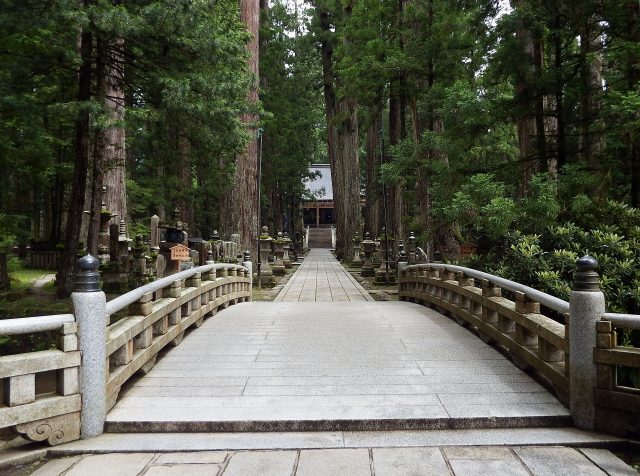
Danjo Garan is as much about the land as it is about the buildings. The forest that surrounds the temples is considered sacred, and some of the cedars are older than the structures themselves, their gnarled roots holding stories of centuries past. Unlike more famous tourist sites in Japan, this place rarely feels crowded. Even in peak seasons, the atmosphere remains hushed, broken only by the rustle of leaves or the distant toll of a temple bell. Visitors and pilgrims move along winding paths, passing stone lanterns that glow softly at dusk. There’s a sense that the mountain is watching, that the trees are listening.
Rituals are the heartbeat of Danjo Garan. Every morning, monks gather for services, chanting sutras and making offerings in a rhythm that has remained unchanged for generations. One of the most powerful ceremonies is the goma fire ritual, where wooden prayer tablets are burned on an altar, their smoke rising as a symbol of purification. These rituals are open to the public, and even without understanding the words or gestures, the intensity of the moment is palpable. There’s a weight to the silence that follows, as if the air itself has been altered by the prayers.
For over a thousand years, people have made the journey to Mount Koya, drawn by the legacy of Kukai and the promise of spiritual solace. Emperors, warriors, and farmers have all come here, seeking something beyond the ordinary. Today, the tradition continues. Some visitors arrive for the iconic image of the red pagoda against the forest, while others stay overnight in a temple, waking before dawn to join the morning service and share in shojin ryori, the austere yet nourishing vegetarian cuisine of the monks. There’s no luxury here, only the quiet comfort of simplicity and the chance to step outside the rush of modern life.
Time moves differently at Danjo Garan. In the early hours, when mist still clings to the trees and the first light filters through the branches, the mountain feels suspended in eternity. By evening, as the stone lanterns are lit and the sound of chanting drifts from the halls, the boundary between past and present blurs. This isn’t a place for hurried sightseeing. It demands stillness, a willingness to listen—not just to the wind or the distant chime of a bell, but to something deeper. That’s why people return, even after they’ve seen everything. Danjo Garan isn’t just observed; it’s experienced. And perhaps that’s the point.