The Church of the Holy Sepulchre is in Jerusalem’s Old City. For Christians, it marks where Jesus was crucified, buried, and resurrected. The stones here have seen centuries of prayer and struggle.
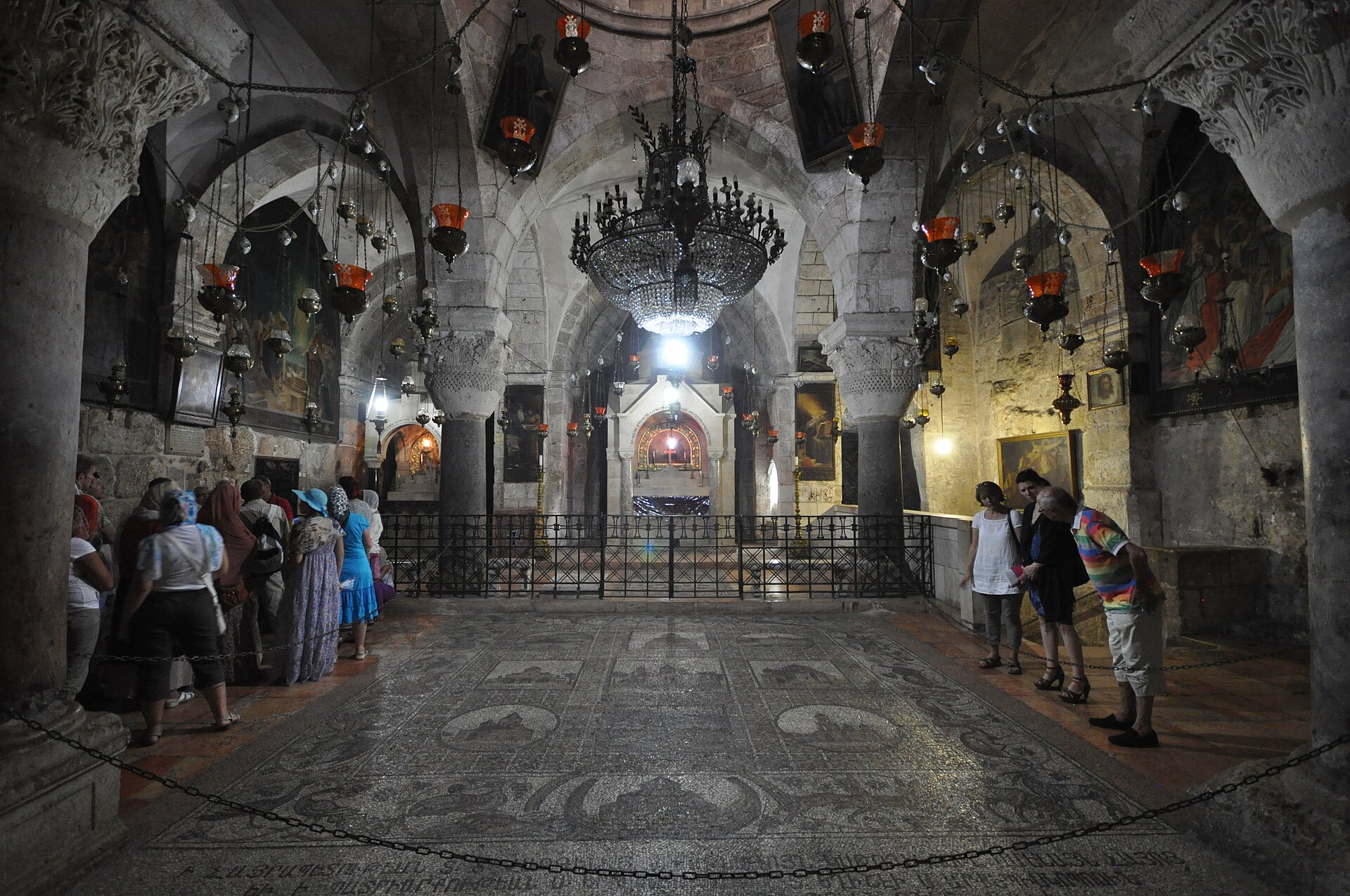
The building shows layers of history. Constantine and Helena built the first church in the 4th century after Helena found the tomb and the True Cross. Over time, fires, wars, and reconstructions added Byzantine, Crusader, Mamluk, and Ottoman details. Now, domes, arches, and chapels crowd together—each run by a different Christian group. The mix feels less like a plan and more like history left its marks.
The air inside smells of incense and wax. A narrow path leads to the Stone of Anointing, where Jesus’ body was prepared for burial. Pilgrims touch the stone, light candles, or pray. The Edicule, a small chapel, holds the tomb. Only a few people enter at once, and the line often takes hours. But the wait is part of it—standing where everything changed.
Six Christian groups share the church: Greek Orthodox, Catholic, Armenian, Coptic, Syrian, and Ethiopian. Each controls a section. Two Muslim families have held the keys to the main door for centuries. Inside, monks from rival groups pray near each other, though arguments sometimes break out over rituals or space. Even here, old divisions don’t disappear.
The mood shifts between quiet and ordinary. One moment, a priest leads a ceremony; the next, someone sells candles or a monk rushes by. On holidays, thousands fill the church, chanting and praying. On quiet days, the weight of history still presses down. Every step, every candle flame, ties you to the past.
The church sits in the Christian Quarter, close to other holy sites and narrow streets. But inside, time feels different. There are no plaques or guided tours—just faith, raw and unfiltered. Some come as tourists; others feel belief take shape. Either way, it stays with you. The lack of explanations can frustrate, but it also lets you watch, listen to prayers in different languages, and see how light falls on old stone.
The Church of the Holy Sepulchre isn’t just one thing. It’s a pilgrimage site, a monument, and a place of worship. No signs or curated paths tell you what to think. You might leave with questions, but that’s why it works. Here, history isn’t just remembered—it’s alive. The cracks in the walls, the candle smoke, the echo of footsteps all pull you into a story that started long before you and won’t end after you leave.