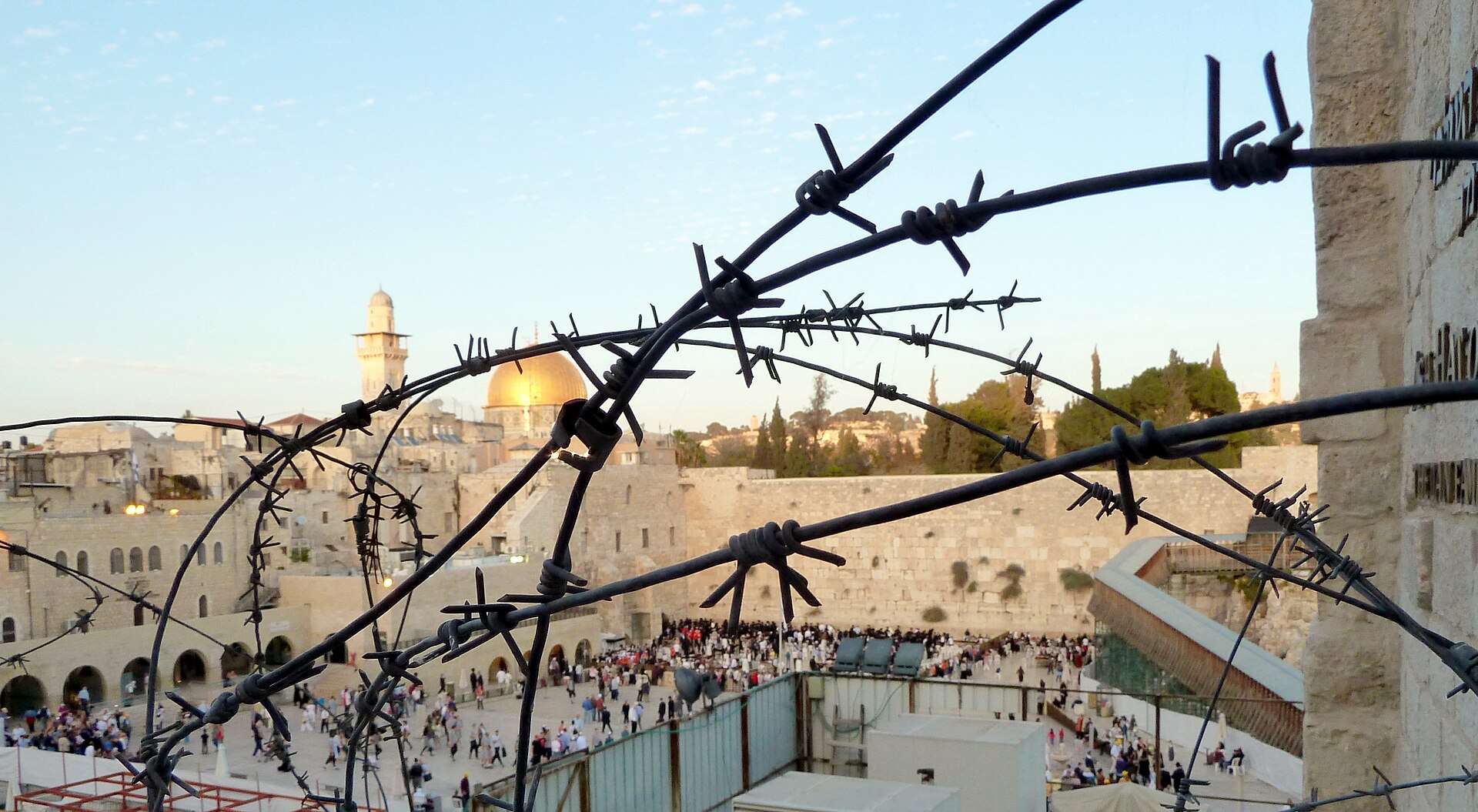
The Western Wall is one of those rare places where history isn’t just remembered—it’s felt. Standing in the heart of Jerusalem’s Old City, this ancient limestone barrier is all that remains of the Second Temple’s western retaining wall, destroyed by the Romans in 70 CE. For Jews, it’s the holiest site where prayer is permitted, a place of pilgrimage and quiet devotion. The Temple Mount itself, where the Holy of Holies once stood, lies just beyond, but access is restricted, making the Wall the closest connection to that sacred past.
The stones themselves tell a story. The lower courses, massive blocks weighing several tons each, were laid without mortar during King Herod’s expansion of the Temple Mount in the first century BCE. Later additions, including the upper layers, came under Muslim rule. Over centuries, the Wall has absorbed the weight of human longing—its surface worn smooth by touch, its crevices stuffed with folded prayers. People press their palms against the cool stone, whispering wishes or reciting psalms, as if the Wall might carry their words straight to the heavens.
The atmosphere shifts with the time of day. At dawn, the plaza is nearly empty, save for a few figures wrapped in prayer shawls, rocking gently as they murmur. By midday, the space hums with activity: tourists snapping photos, Orthodox men in black hats swaying over Torah scrolls, women in headscarves clutching prayer books. Fridays bring a particular energy, as crowds gather before the Sabbath. On holidays like Yom Kippur or Passover, the square swells with worshippers, their voices rising in unison, the air thick with incense and the rustle of paper prayers tucked into the cracks.
The Wall isn’t just a Jewish site. Christians and Muslims, too, are drawn here, recognizing its place in the shared history of Jerusalem. You might see a group of pilgrims listening to a guide, or a lone traveler sitting on a bench, watching the scene unfold. The stones have witnessed centuries of faith, conflict, and coexistence, and that layered history is palpable.
For much of its existence, the Wall was hidden behind the homes of Jerusalem’s Muslim Quarter. It wasn’t until the 16th century, under Ottoman Sultan Suleiman the Magnificent, that the area was cleared, transforming it into the open plaza we see today. Even then, access was often contested. During the British Mandate, regulations governed who could pray here. After the 1948 Arab-Israeli War, the Wall fell under Jordanian control and was off-limits to Jews. It wasn’t until the Six-Day War in 1967 that Israel regained the Old City, and the Wall once again became a place of Jewish worship.
Today, the plaza is divided into separate sections for men and women. The larger men’s area is where Torah scrolls are kept, and where the most visible prayers take place. The women’s section, though smaller, is no less significant. In recent years, debates over gender equality in prayer have brought new attention to the Wall, challenging long-held traditions about who can participate in certain rituals.
Beyond the Wall itself, the area is an open-air museum. Archaeological excavations have uncovered ancient streets, drainage systems, and remnants of buildings from the Second Temple period. Some of these discoveries are visible in the Western Wall Tunnels, a network of underground passages that offer a glimpse into Jerusalem’s past. Walking through them, you can almost hear the echoes of the city as it was two thousand years ago.
There’s no right way to experience the Wall. Some visitors stand in silence, pressing a hand to the stone. Others slip a written prayer into a crevice, a tradition that dates back generations. You might see a young boy in a kippah reciting his first prayers, an elderly woman weeping against the Wall, or a group of soldiers arriving before their induction ceremony. The only rule is respect—for the place, and for those who come here to pray.
Even if you’re not religious, the Wall has a way of making you pause. It’s not just the weight of history that lingers, but the weight of human emotion—centuries of hope, grief, and devotion pressed into every stone. You don’t have to believe in miracles to feel something here. Sometimes, all it takes is standing still for a moment, and letting the place speak for itself.