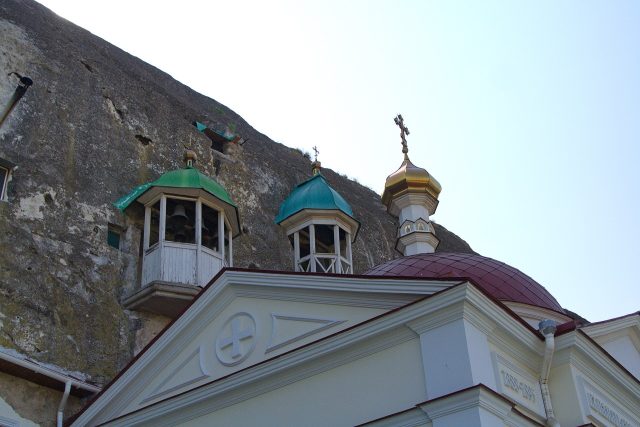
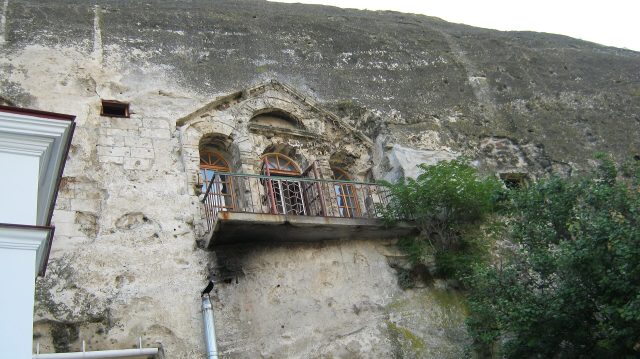
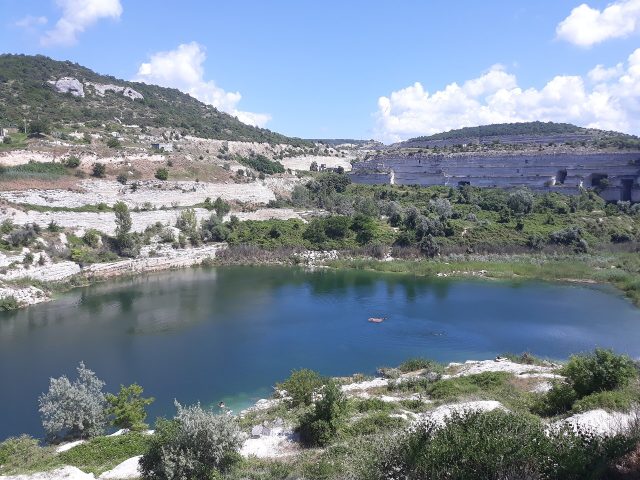
Perched on a rocky outcrop overlooking the Black Sea near Sevastopol, the Church of Saint Eugraphius feels like a fragment of another era, untouched by the rush of modern life. Its weathered limestone walls, softened by time and moss, blend seamlessly into the rugged landscape, as if the cliffs themselves had given birth to this modest structure. The church is small, almost unassuming, yet its presence carries the weight of centuries—of empires risen and fallen, of faiths that have taken root and faded, and of the quiet resilience of those who kept its memory alive.
Built in the 12th century, the church was dedicated to Saint Eugraphius, an early Christian martyr whose veneration ran deep in these lands. Constructed by Byzantine craftsmen, it was once part of a larger monastic complex that served as a spiritual anchor for the region. The architecture reflects the simplicity of early Christian design, with its unadorned lines and sturdy construction, a style that echoes the cave monasteries scattered across Crimea. Inside, faint traces of frescoes cling to the walls, their colors muted by damp and time, their details barely discernible—ghosts of devotion that once filled this space.
The church’s history mirrors the turbulent fate of Crimea itself. After the fall of Byzantium, it passed into the hands of the Genoese, who dominated the peninsula’s trade routes in the late Middle Ages. When the Ottomans arrived, the region’s religious landscape shifted once more, and many Christian sites fell into neglect. Yet the Church of Saint Eugraphius was never entirely abandoned. Even under Ottoman rule, locals continued to visit, and the building took on a dual role—as both a place of worship and a strategic lookout, its elevated position offering a commanding view of the bay below.
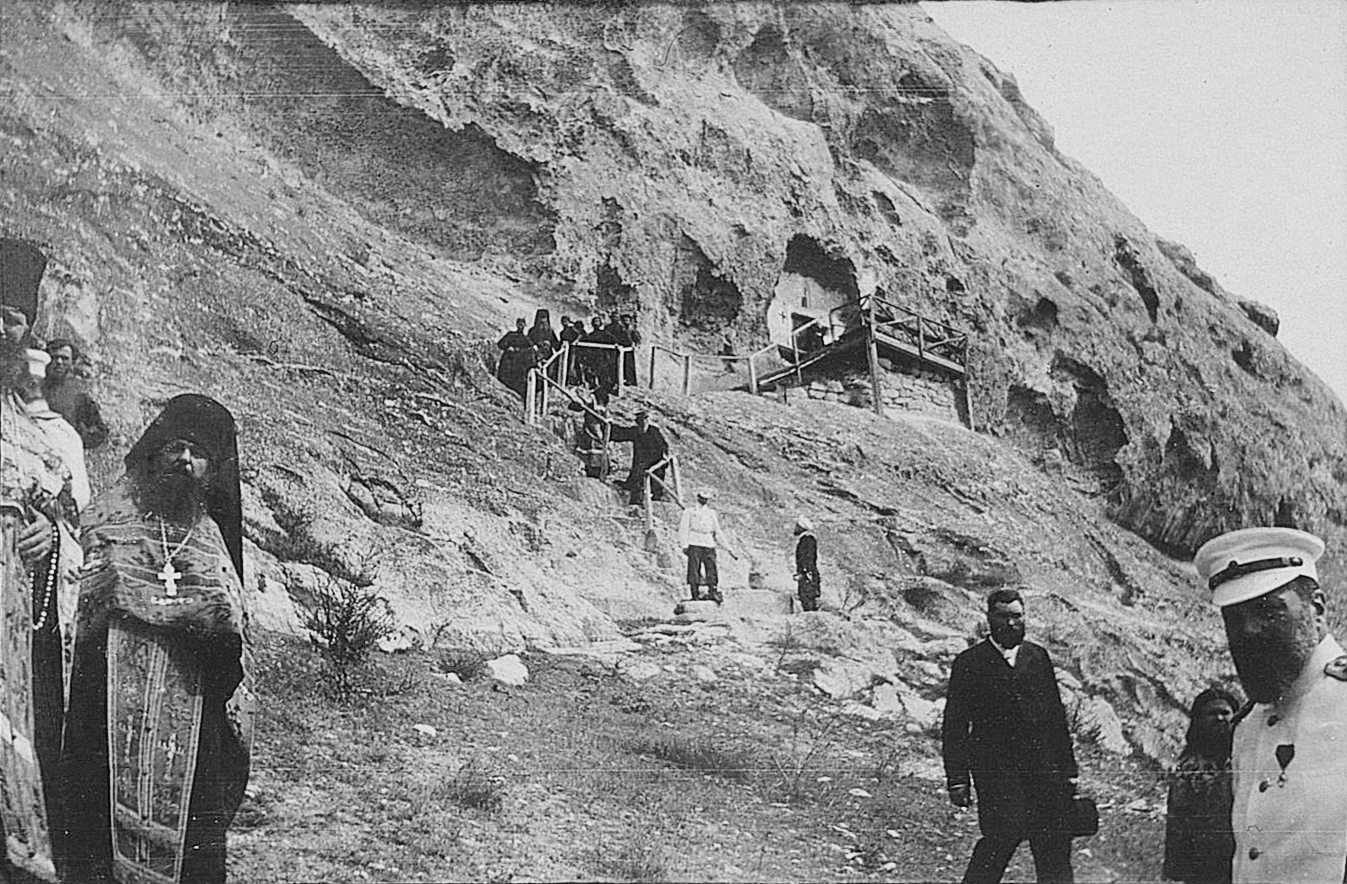
The 19th century brought renewed interest in the church, as Crimea became part of the Russian Empire. Scholars and travelers began documenting its history, and partial restorations were undertaken, though the building never regained its former prominence. The upheavals of the 20th century—revolution, war, and Soviet rule—left their mark. For decades, the church served as a storage space before being left to decay. Only in recent years have efforts been made to preserve it, allowing visitors to step inside once more.
Today, the Church of Saint Eugraphius remains a quiet, almost forgotten place. There are no crowds here, no guided tours rushing through its dim interior. The air is cool and still, the only sounds the distant lap of waves against the shore and the occasional cry of a gull. Outside, wild grasses and vineyards stretch toward the horizon, while the sea below glints under the sun. The church’s simplicity is its strength—there is no grand ornamentation, no modern distractions, just the raw, unfiltered presence of history.
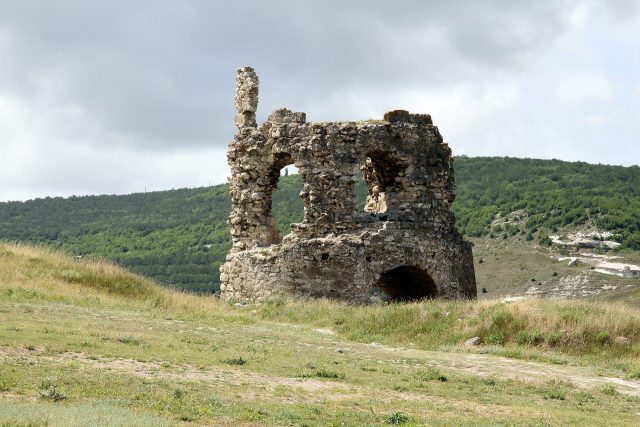
A visit here is best paired with a walk through the surrounding area. Inkerman itself is a small town, but its past is rich and layered. Nearby, the ruins of the Genoese fortress Kalamita cling to the cliffs, a reminder of the region’s medieval importance. The caves that honeycomb the rocks were once home to monks, their silent chambers still holding echoes of prayer and solitude. Locals share stories of hidden treasures buried in these hills, of monks who are said to wander the ruins at night, and of the many cultures that have left their mark on this land.
The church is more than just a relic of the past; it is a living testament to the ebb and flow of history in Crimea. It stands as a reminder of the peninsula’s role as a crossroads—where East met West, where Christianity and Islam coexisted, and where the echoes of ancient traditions still resonate. There are no grand attractions here, no modern amenities to distract from the weight of the place. Instead, it offers something far rarer: a chance to sit in silence, to look out over the sea, and to feel the passage of time in the stones beneath your feet. For those who seek not entertainment but connection—to history, to the land, to the quiet persistence of memory—this is a place to linger.