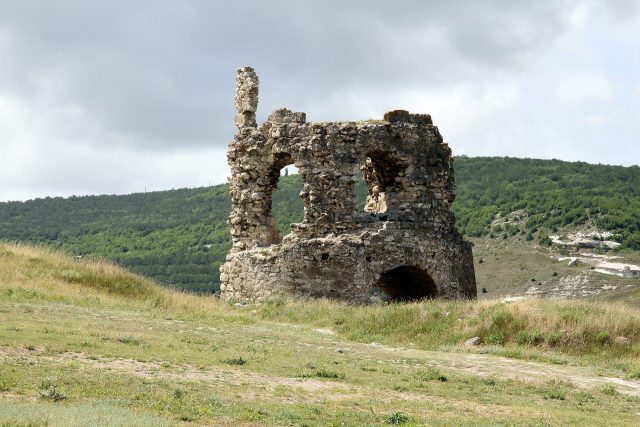
The Inkerman Cave Monastery sits quietly on the outskirts of Sevastopol, where the rocky cliffs of Crimea meet the Black Sea. Carved into the soft limestone of Mount Koshka, its origins stretch back to the early centuries of Christianity, though the exact date of its founding remains lost to time. Some believe the first monks settled here as early as the 8th century, seeking solitude in the labyrinth of natural caves that honeycomb the hillside. Others point to the Byzantine era, when the region was a frontier of the empire, and the monastery served as both a spiritual retreat and a fortress against invaders. The caves themselves tell a story of endurance—some were expanded by hand, others reinforced with stone, their rough walls bearing the marks of centuries of prayer and labor.
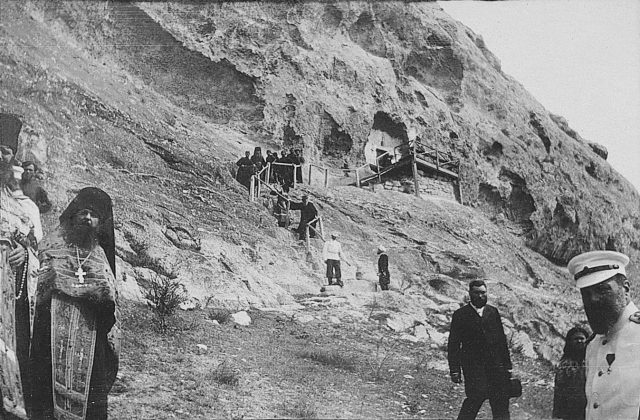
By the 15th century, the monastery had become an important religious center under the rule of the Principality of Theodoro, a small but resilient Christian state that flourished in the mountains of Crimea. The monks here were not just keepers of faith but also guardians of knowledge, preserving manuscripts and icons in a land often caught between warring powers. When the Ottomans conquered the region in 1475, the monastery was abandoned for a time, its caves left to the mercy of the elements. It wasn’t until the 19th century, under Russian rule, that the site was revived. The new authorities saw in Inkerman not just a relic of the past but a symbol of imperial ambition, and the monastery was restored with a mix of reverence and pragmatism, its chapels and cells rebuilt to serve a growing Orthodox community.
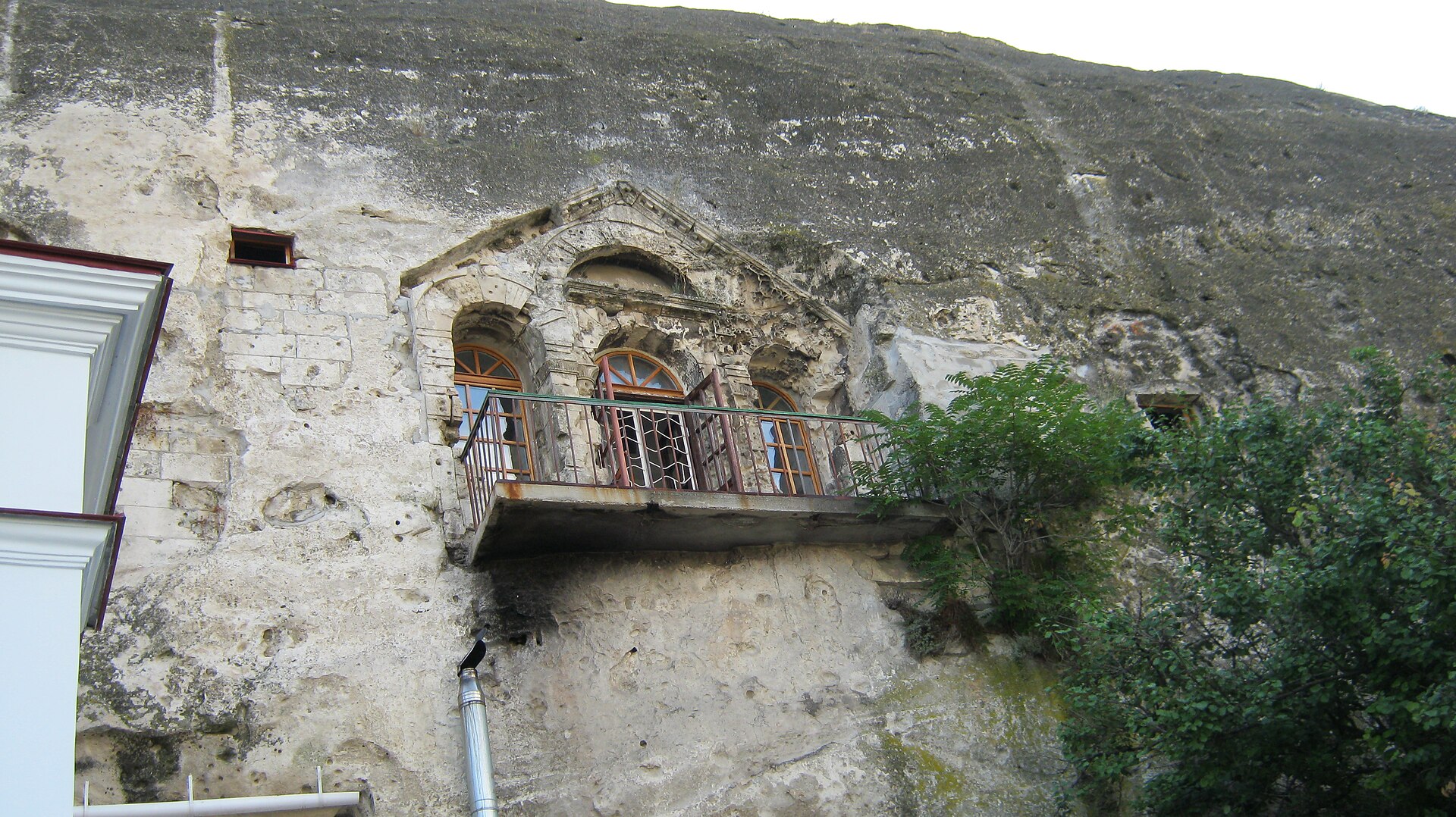
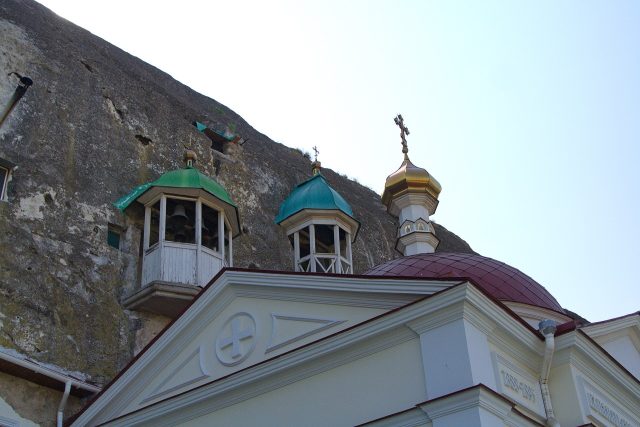
The architecture of the monastery is a blend of the accidental and the intentional. The oldest caves are raw and unadorned, their ceilings blackened by centuries of candle smoke, their floors worn smooth by the footsteps of generations of monks. Later additions, like the 19th-century bell tower and the whitewashed facades of the upper chapels, stand in contrast—neat, symmetrical, and designed to impress. The most striking feature is the Church of St. Clement, named after the early Christian martyr whose relics were said to have been brought here from Rome. Its interior is modest, with simple frescoes and an iconostasis that has seen better days, but the space feels alive in a way that grander cathedrals sometimes do not. The acoustics are strange, too—the slightest whisper carries, and the sound of chanting lingers long after the last note has faded.
Life at the monastery has always been shaped by its isolation. Even today, the journey to Inkerman feels like a step away from the modern world. The road winds through industrial outskirts before giving way to a steep path that climbs the hillside, past scrubby bushes and the occasional lizard darting across the rocks. At the top, the view opens up: the Black Sea stretches out below, its surface shimmering under the Crimean sun, while the ruins of ancient fortresses dot the coastline in the distance. The monks who live here now are few, their daily routines a quiet rhythm of prayer, work, and maintenance. Visitors are welcome, but the monastery does not cater to them—there are no souvenir stalls or guided tours, just the occasional sign pointing the way to the chapels.
The monastery’s history is not just one of faith but of survival. During the Crimean War in the 1850s, Inkerman was caught in the crossfire between Russian and Allied forces, its caves used as shelters and its walls scarred by cannon fire. In the 20th century, it suffered again under Soviet rule, when religious sites across the country were closed or repurposed. The monastery was turned into a warehouse, its icons removed, its frescoes whitewashed. It wasn’t until the collapse of the Soviet Union that the site was returned to the Orthodox Church, and even then, the restoration was slow. Today, the scars of those years are still visible—some frescoes remain half-erased, and the bell tower bears the marks of neglect—but the monastery endures, a testament to the stubborn persistence of belief.
For those who visit, Inkerman offers more than just a glimpse into the past. It is a place where history feels tangible, where the weight of centuries presses down in the cool, damp air of the caves. The monastery does not demand reverence; it simply exists, as it has for so long, a quiet witness to the rise and fall of empires, the ebb and flow of faith. On a clear day, when the sea breeze carries the scent of salt and wild herbs, it is easy to imagine the monks who once lived here, their lives measured in the slow turning of the seasons. There is no grand narrative here, no single story to tell—just the accumulated layers of time, each one leaving its mark on the stone.