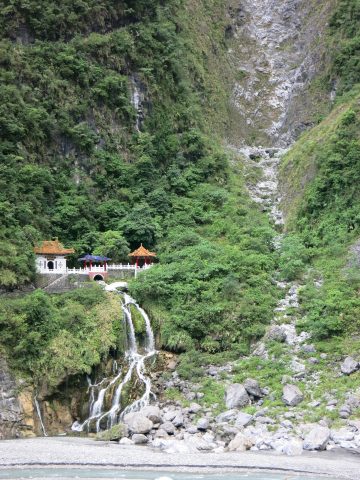
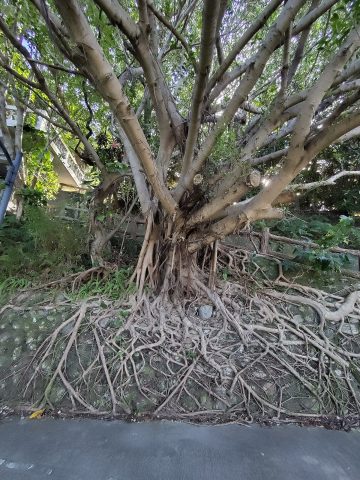
Ji’an Temple in Hualien is the kind of place that reveals itself slowly. It doesn’t announce its presence with bold colors or grand gates like many of Taiwan’s more famous temples. Instead, it sits quietly off the usual tourist paths, holding onto the stillness and measured pace of old Chinese sanctuaries. There are no crowds here, no visitors rushing for luck or photo opportunities—just the unhurried rhythm of locals who come to pray, or simply to sit beneath the shade of the trees.
The temple’s architecture is understated, functional, and deeply respectful of tradition. Low-slung roofs curve gently at the edges, wooden beams gleam with a patina of age, and stone statues of deities stand along the altars, their expressions serene. Unlike the ornate temples of Taipei or Tainan, Ji’an doesn’t aim to impress with grandeur. It invites contemplation instead. The inner courtyards are adorned with carved panels depicting mythological scenes, but even these are rendered with restraint, as if to remind visitors that what matters here isn’t outward splendor, but inner peace.
The temple’s history is woven into Hualien’s own story. This eastern coastal city has long existed in the shadow of Taiwan’s western regions, developing at its own unhurried pace. Ji’an Temple, like many of Hualien’s religious sites, emerged during the Japanese occupation, when locals sought to preserve their cultural identity under foreign rule. At the time, the temple wasn’t just a place of worship—it was a symbol of resilience, a quiet act of defiance that bound the community together. Today, it continues to serve that role, though in a gentler way.
Among the deities worshipped here, Mazu holds a special place. As the patron goddess of fishermen and sailors, her presence resonates deeply in Hualien, a city whose fortunes have always been tied to the sea. In the past, fishermen would visit the temple before setting out, praying for safe voyages and bountiful catches. While the ocean no longer dictates the city’s rhythm as it once did, the traditions endure. During festivals dedicated to Mazu, the air fills with the scent of incense, and the courtyard echoes with the rhythmic beats of gongs and drums accompanying processions.
One of the temple’s most striking features is its location. Perched on a small hill, it offers sweeping views of Hualien and the coastline beyond. On clear days, the distant mountains lining Taiwan’s eastern shore come into focus, and the ocean shimmers on the horizon. Locals say this is a place where thoughts come easily, and it’s not uncommon to see people sitting on the stone benches, gazing into the distance. Perhaps that’s why Ji’an Temple is especially beloved by Hualien’s older residents—it’s a place to escape the noise of modern life and simply be.
Unlike many tourist attractions, Ji’an Temple doesn’t offer entertainment or souvenirs. There are no stalls selling trinkets or guides reciting rehearsed stories. Instead, it feels lived-in, authentic. In the morning, you might see an elderly man sweeping the courtyard with deliberate care. By afternoon, women arrange offerings on the altars, their movements unhurried. In the evening, children play near the stone lions guarding the entrance. These small, everyday moments make the temple feel less like an open-air museum and more like a natural part of the city’s fabric.
For those accustomed to more dramatic sights, Ji’an Temple might seem too modest. But that’s precisely where its charm lies. There’s no need to follow the crowd or chase the perfect photo—just the quiet invitation to sit on a bench and listen to the wind rustling through the leaves. It’s why the temple remains a place people return to, whether they’re locals or the rare traveler who stumbles upon it in search of something real.
Hualien itself is an unassuming city, and Ji’an Temple fits its character perfectly. It doesn’t compete for attention or chase fame. It simply exists—peaceful, unpretentious, and slightly forgotten by time. In an era where everything moves faster and louder, places like this serve as a reminder that sometimes, the most meaningful experiences come from slowing down and simply being present.