Standing on a gentle rise in the ancient city of Paestum, the Temple of Athena feels like a quiet conversation between the past and the present. Built in the middle of the sixth century BCE, it belongs to a time when this part of southern Italy was known as Magna Graecia, a land where Greek colonists settled and thrived. Paestum, originally called Poseidonia, was one of the most prosperous cities in the region, and the temple was more than just a place of worship—it was a statement of identity, a testament to the skill of its builders and the devotion of its people.
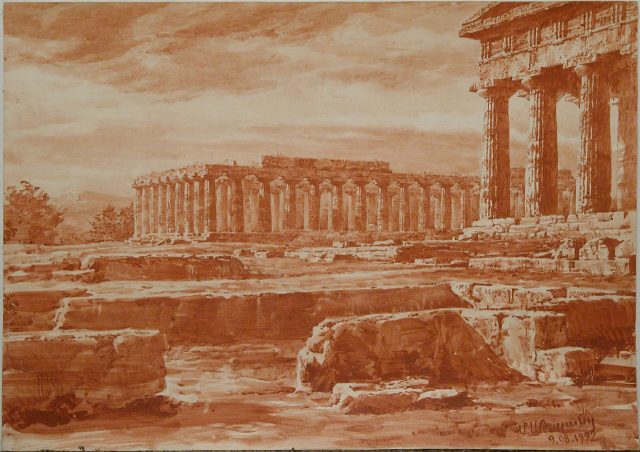
What makes the Temple of Athena remarkable is its restraint. Unlike the grander temples dedicated to Hera or Poseidon nearby, this one feels almost understated, yet that simplicity is precisely what gives it its character. It follows the Doric order, the oldest and most austere style of Greek architecture, where form follows function with uncluttered elegance. The columns here are slimmer than those in other Paestum temples, their proportions refined rather than imposing. They don’t dominate the space so much as define it, creating a sense of balance that feels almost modern in its clarity. The stone, a local limestone, is heavy and rough to the touch, yet the way it catches the light makes the structure appear lighter than it is.
The temple’s survival over the centuries is partly due to luck, partly to adaptation. In the Middle Ages, it was repurposed as a Christian church, which likely saved it from being dismantled for building materials. The locals must have seen something enduring in its form, something worth preserving beyond its original purpose. Inside, the cella—the inner chamber where offerings to Athena were once kept—is now an empty space, its walls stripped of the statues and frescoes that once adorned them. Only fragments remain, hints of the artistry that once filled this sacred enclosure. Still, the foundation stands firm, a silent witness to the rituals that took place here millennia ago.
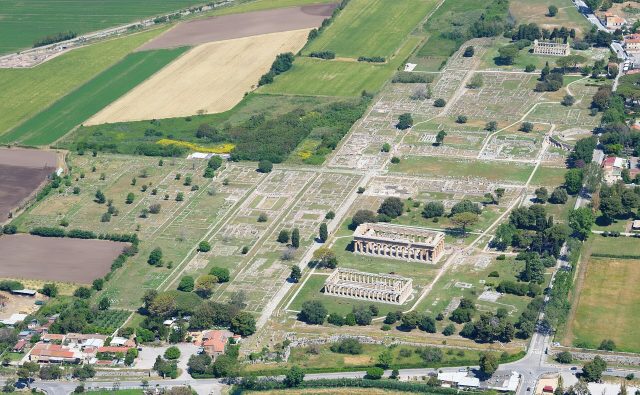
Paestum sits in Campania, not far from the Tyrrhenian coast, and its temples are often called the best-preserved examples of Greek architecture outside of Greece itself. The Temple of Athena, though not the largest, holds a special place among them. From its steps, you can see the other ruins of the city stretching out below—the grander temples, the remnants of streets, the low walls that once marked public spaces. Beyond them, the landscape rolls into green fields and gentle hills, and on clear days, the sea shimmers in the distance. This was the world of the ancient Greeks here: a land of fertile soil and busy harbors, where trade and culture flowed as freely as the tides.
The story of Paestum is tied to the broader history of Greek colonization in southern Italy. The city was founded in the seventh century BCE by settlers from Sybaris, one of the wealthiest Greek colonies of the time. They brought with them their gods, their architectural traditions, and their way of life, which took root in this new land. The Temple of Athena was built during Paestum’s golden age, when the city was known for its craftsmen, its merchants, and its artists. But by the third century BCE, its fortunes had begun to fade. The Romans eventually absorbed it, and over time, the once-great city was forgotten, buried beneath the earth until its rediscovery centuries later.
Today, Paestum is an archaeological park where visitors can wander among the ruins and imagine the city as it once was. The Temple of Athena, despite its modest size, draws people in—not just scholars, but anyone who feels the pull of history. There’s something approachable about it, something that feels less like a monument and more like a place where people once gathered, prayed, and lived. The other temples in Paestum can feel overwhelming in their grandeur, but this one has a warmth to it, as if the goddess of wisdom and war still lingers in the shadows.
If you visit, take a moment to notice the details that might otherwise go unnoticed. The way the columns taper slightly toward the top, creating an illusion of height. The play of light on the stone, how it shifts from golden in the morning to cool gray at midday, then softens into shadow as the sun sets. The temple doesn’t demand attention; it invites contemplation. It’s a place where you can sit on the steps and listen to the wind moving through the grass, where the past doesn’t feel distant so much as present in a different form.
Paestum isn’t a place overrun by tourists like Rome or Pompeii. It’s quieter, more reflective. The absence of crowds makes it easier to connect with the space, to feel the weight of the centuries that have passed since these stones were first laid. The Temple of Athena, like the rest of the ruins here, is a reminder that civilizations rise and fall, but the things they leave behind—art, architecture, ideas—carry on in ways we don’t always expect. Maybe that’s why people still come here: not just to see history, but to feel its pulse, faint but unmistakable, beneath the surface.