Paestum is where the past lingers in a way that feels almost tangible. The ruins here aren’t just remnants of ancient structures—they’re fragments of a world where Greek myths, Roman ambition, and the rhythms of daily life once intertwined. At the heart of this place stands the National Archaeological Museum, not as a mere repository of artifacts, but as a gateway into that vanished era. Every stone, fresco, and shard of pottery here carries a story, and together they weave a narrative of a city that was once one of the most important in Magna Graecia.
The museum itself is a product of decades of excavation and research, established in the mid-20th century to house the discoveries that had begun to reshape our understanding of this region. Its collection spans from the 7th century BCE, when Greek settlers founded the city, to its decline in the Middle Ages. What makes it remarkable is how thoroughly it captures the layers of history—not just the grand monuments, but the everyday lives of the people who built them. Among the most striking finds are those from the necropolises, where archaeologists uncovered not only burial gifts but true works of art: painted vases, intricate jewelry, and bronze figurines that offer a glimpse into the beliefs and customs of Paestum’s ancient inhabitants.
One of the museum’s most celebrated exhibits is the Tomb of the Diver, a 5th-century BCE burial complex discovered in 1968. The tomb’s walls are adorned with frescoes depicting scenes of life and the afterlife, but it’s the image on the sarcophagus lid that has captivated scholars—a young man diving into water, a symbol of the soul’s passage into the next world. Before this discovery, it was widely believed that the Greeks did not decorate tombs with wall paintings. The Tomb of the Diver challenged that assumption and became a defining symbol of Paestum, illustrating its unique place in the history of ancient art.
Beyond the tomb, the museum holds countless artifacts that reveal the texture of daily life in the city. Tools, household items, coins, weapons, and even traces of food found during excavations paint a vivid picture of how people lived, worked, and traded. The ceramics collection is particularly rich, ranging from simple clay vessels to elaborately painted vases. Some bear scenes from mythology, while others depict ordinary moments—fishermen at work, athletes in competition, or women weaving. Each piece is a silent storyteller, offering a window into a world that might otherwise feel distant and abstract.
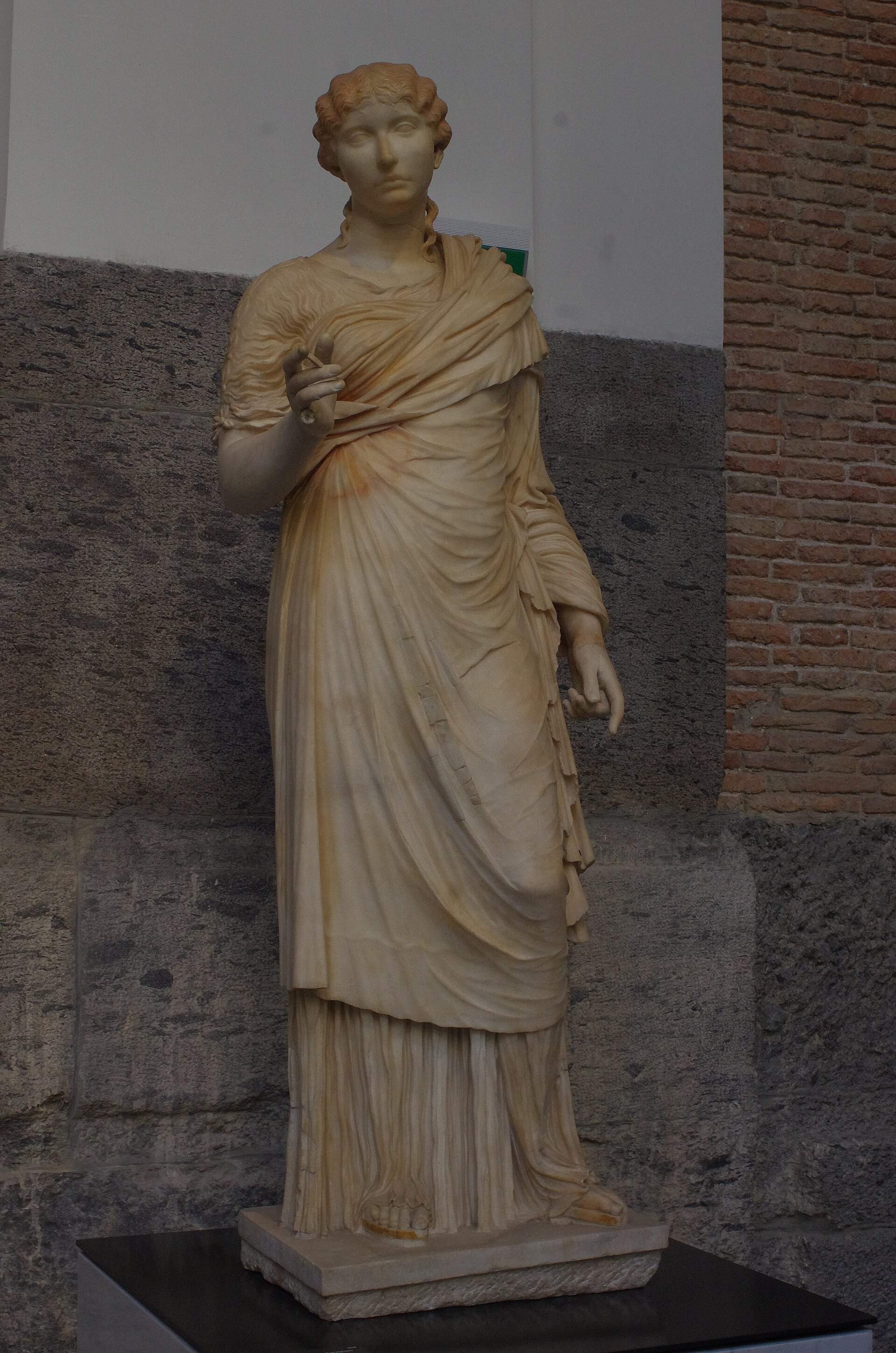
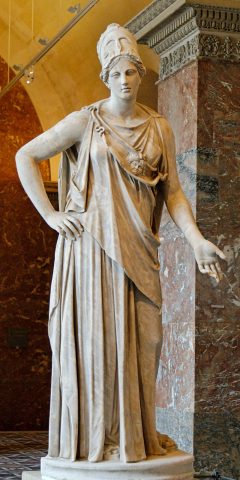
Religion and ritual also play a central role in the museum’s exhibits. Statues of gods and heroes, votive offerings, and altars reflect the deep spiritual life of the city’s inhabitants. The bronze figurines found in sanctuaries are especially striking, crafted with such precision that they seem to breathe. Among them, a small but imposing statue of Zeus radiates power, while figures of Athena embody the wisdom and protection she was believed to bestow upon the city. These objects weren’t just symbols of faith; they were part of a living tradition that shaped the identity of Paestum.
The museum building itself is unassuming yet thoughtful in its design. Constructed in the 1950s to house the growing collection, it blends seamlessly into the landscape. Its clean lines, light walls, and large windows create a sense of openness, allowing visitors to focus on the artifacts without distraction. The space is compact enough to explore in a few hours, yet dense with meaning—each room leaves an impression that lingers long after you’ve moved on.
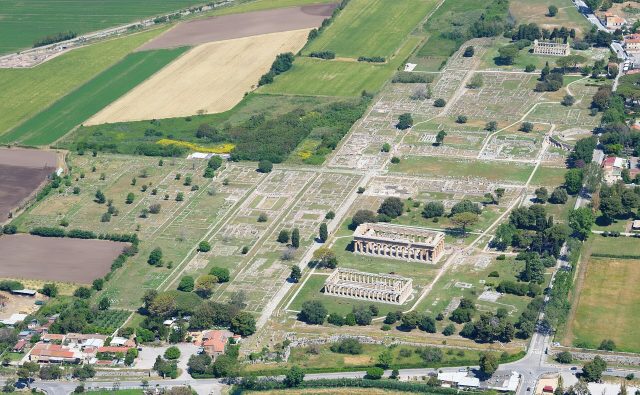
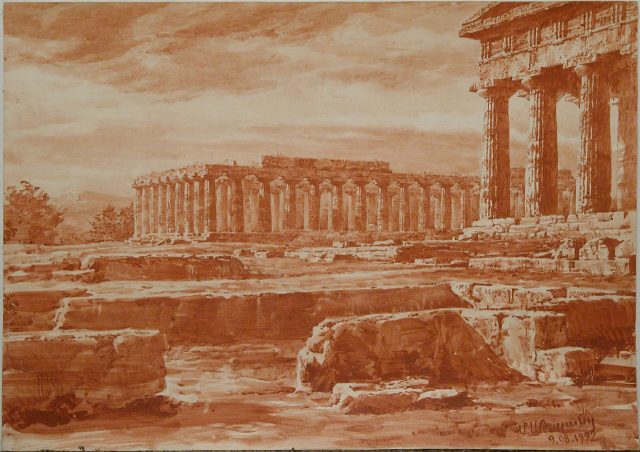
Paestum is more than an archaeological site; it’s a place where history feels alive. The temples of Hera, Athena, and Neptune still stand tall against the sky, their columns weathered but unbroken, as if defying time itself. The museum acts as a bridge between those ancient stones and the present, turning what might seem like mere ruins into something far more profound. It doesn’t just preserve the past—it invites you to walk through it, to see how the people of Paestum lived, worshipped, and created.
A visit here is best paired with a walk through the archaeological park. The temples, with their towering columns and harmonious proportions, are breathtaking in their own right, but the museum adds depth to the experience. It’s one thing to stand before the Temple of Neptune and admire its architecture; it’s another to understand the rituals that once took place there, the craftsmen who built it, and the society that revered it. Together, the ruins and the museum create a fuller picture of a city that was once a thriving center of culture and trade.
What makes Paestum special is how it makes history feel immediate. There are no dry recitations of facts here—just the tangible remnants of a world that once was. The artifacts don’t just sit behind glass; they speak, in their own way, of the people who made and used them. For anyone who has ever wondered what it was like to live in a Greek colony or a Roman city, this is a place where those questions come alive. It’s a reminder that the past isn’t just something we study—it’s something we can still touch, if only through the traces it left behind.