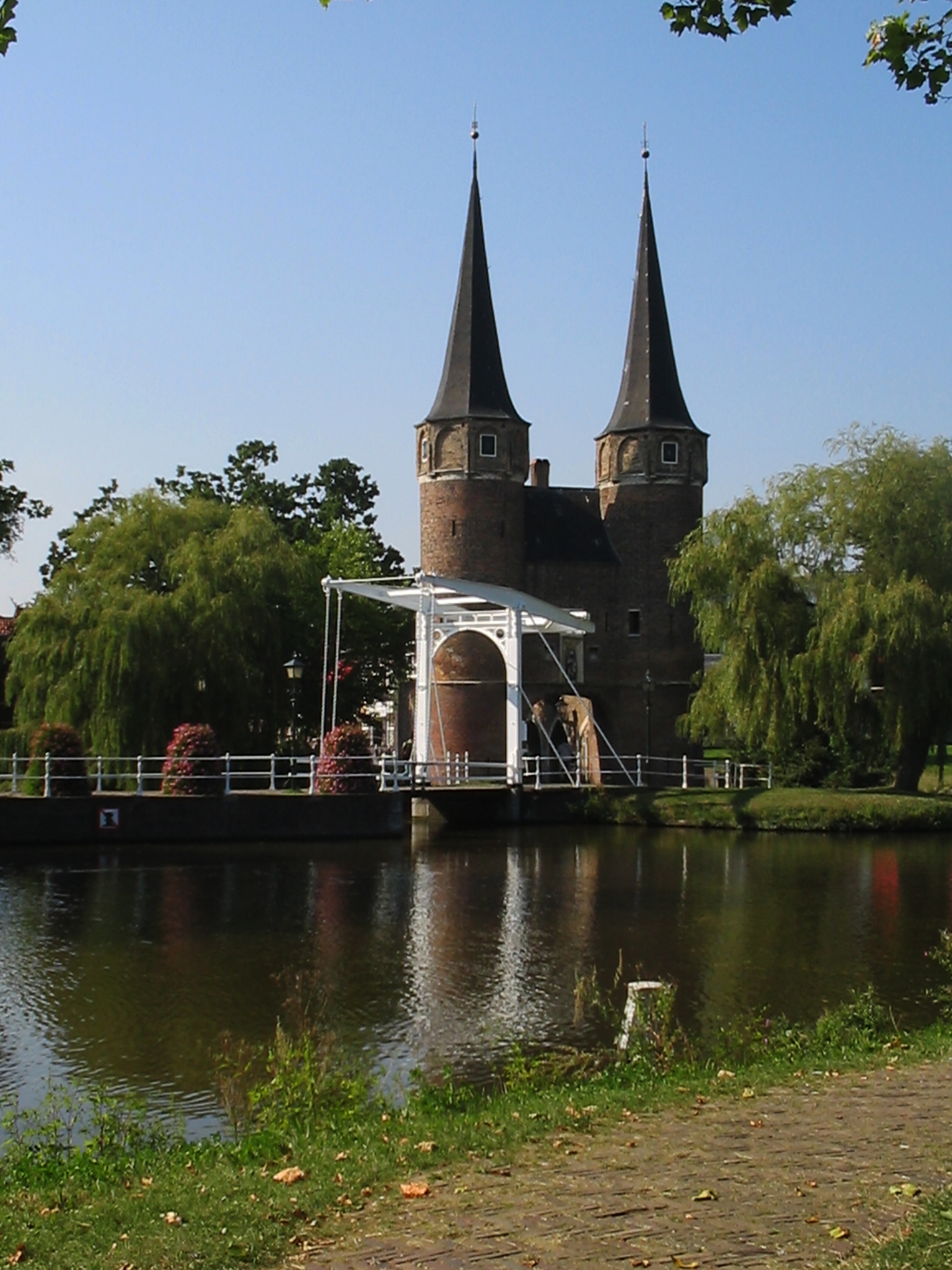
Delft’s Oostpoort, or Eastern Gate, stands as a quiet witness to the city’s medieval past, its weathered brick walls and pointed roofs almost unchanged since the early fifteenth century. It was built as part of Delft’s defensive fortifications, guarding the eastern entrance to the city at a time when walls and gates were the only things standing between a town and its enemies. Of the eight original gates that once encircled Delft, this is the only one that remains, a solitary survivor of an era when the city’s safety depended on its ability to keep invaders out.
The architecture is unmistakably late Gothic, a style that defined much of the Netherlands during that period. Two sturdy towers flank a central arched passage, their solid construction designed to withstand sieges and attacks. Inside, the vaulted ceilings and narrow staircases still hint at their original purpose—places where guards once kept watch for approaching threats. Today, visitors can climb to the upper levels, though access is limited and often seasonal, offering a rare view over the rooftops of Delft, much as it would have looked centuries ago.
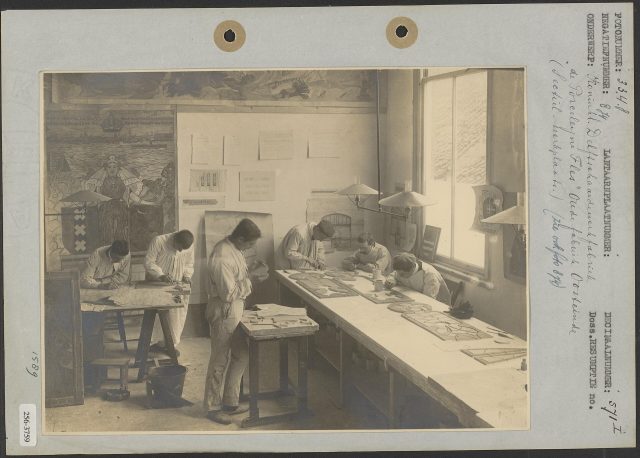
Over the years, the Oostpoort has served many roles beyond its military function. In the nineteenth century, it was converted into living spaces, with families making their homes within its thick walls. Later, an artist’s studio occupied one of the towers, leaving behind traces of its more recent past—layers of plaster, old fireplaces, and window frames that tell stories of everyday life. These changes have softened the gate’s austere appearance, giving it a lived-in feel that contrasts with its original purpose as a fortress.
Delft was once a thriving commercial hub, known for its textiles and breweries, and the Oostpoort played a crucial part in its prosperity. Merchants, travelers, and soldiers passed through its arches, while the gate itself stood as a symbol of the city’s strength and independence. In an age when cities were defined by their ability to defend themselves, the Oostpoort was more than just a structure—it was a statement. Now, with Delft’s military significance long faded, the gate remains a tangible link to that time, a reminder of how cities once relied on stone and mortar for survival.
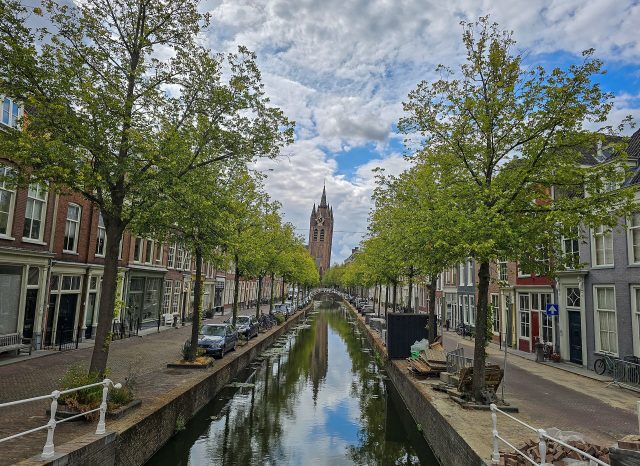
Today, the Oostpoort is surrounded by the kind of scenery that defines the Netherlands—quiet canals, narrow streets, and old warehouses with timber-framed facades. A small branch of the Schie River flows nearby, adding to the peaceful atmosphere. The gate blends seamlessly into its surroundings, its medieval silhouette contrasting with the more modern buildings around it. It’s a favorite spot for painters and photographers, drawn to the way the light plays on its brickwork and the reflections in the water below.
Unlike many historic sites that become little more than museum pieces, the Oostpoort has never lost its place in the life of the city. It’s still very much a part of Delft, not just a relic to be admired from a distance. In the summer, small markets and concerts are held nearby, while in winter, the gate is lit up with festive decorations. For locals, it’s simply part of the landscape—something as familiar as the canals or the bike paths that crisscross the city.
For those who take the time to look, the Oostpoort offers a glimpse into how Delft has evolved over the centuries. It’s a place where history isn’t just about grand events or famous figures, but about the quiet, everyday changes that shape a city. The layers of plaster, the worn steps, the way the light falls through the old windows—all of it tells a story of adaptation, of how a defensive structure became a home, and then a landmark.
Delft isn’t as crowded as Amsterdam or as bustling as Rotterdam, and that’s part of its charm. Here, you can wander without rushing, noticing details that might go unnoticed elsewhere. The Oostpoort is one of those details—a small but striking piece of the past that invites you to pause and consider the layers of history hidden within this unassuming Dutch city. It doesn’t demand attention, but for those who stop to look, it offers a quiet connection to the people who once walked through its arches, long before the modern world arrived.