Delft’s Nieuwe Kerk, or New Church, stands at the heart of the city, its towering spire rising above the marketplace like a quiet sentinel of centuries past. Though called "new," its history stretches back over six hundred years, rooted in a time when Delft flourished as a center of trade and craftsmanship. Built in the fifteenth century, the church answered the growing needs of a bustling population—Old Church, now known as Oude Kerk, could no longer accommodate the city’s faithful, and so a grander space was conceived, one that would serve not just as a place of worship but as a symbol of Delft’s prosperity.
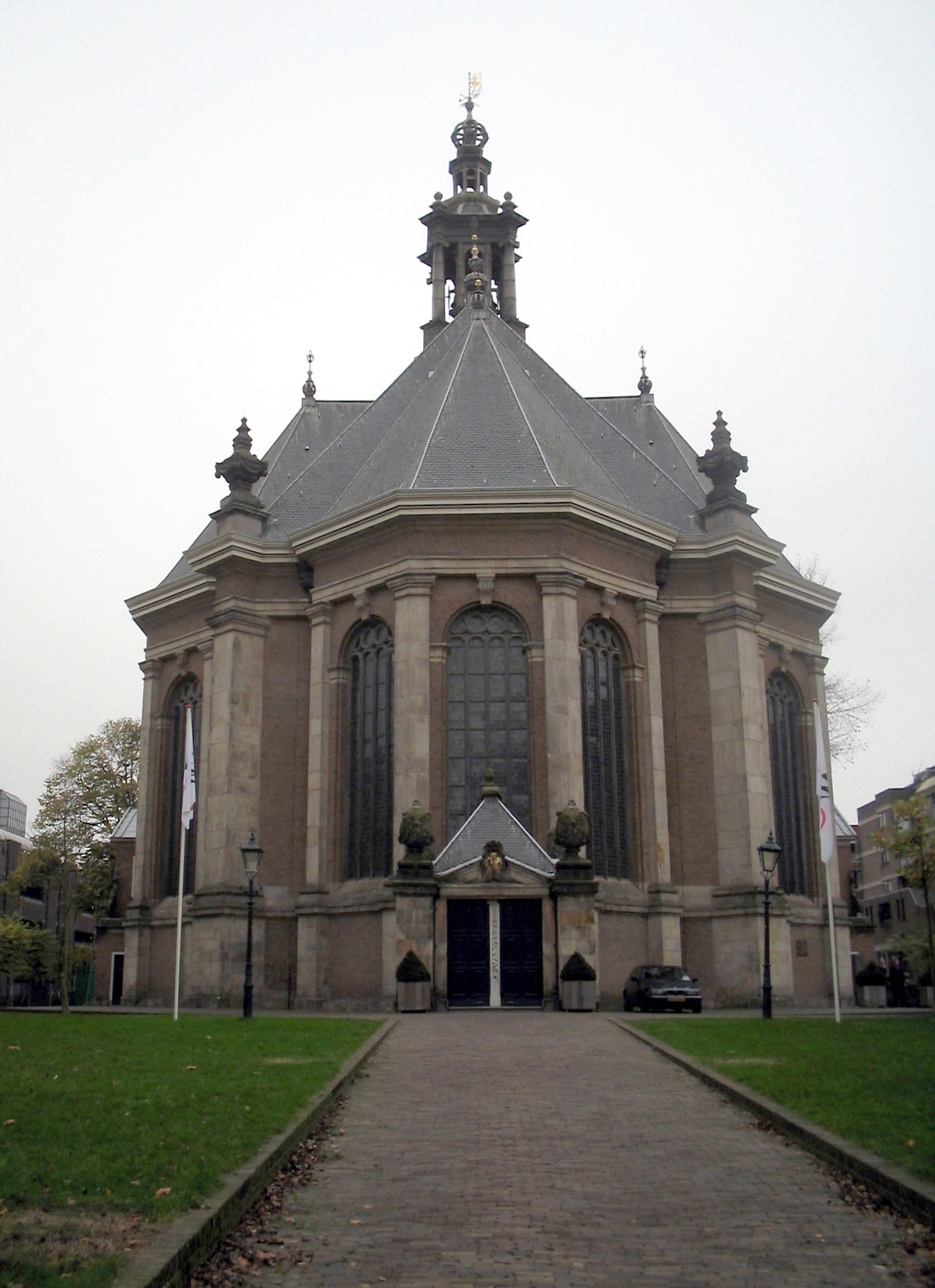
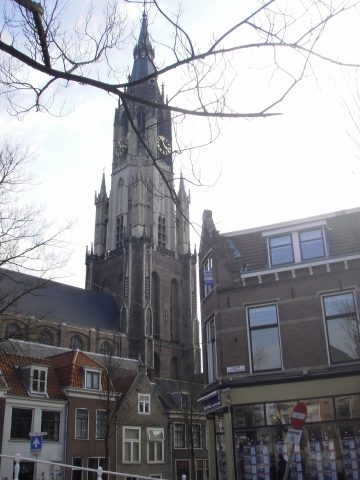
The architecture of Nieuwe Kerk is a striking example of late Gothic style, a hallmark of Dutch ecclesiastical design. Its soaring pointed windows, intricate buttresses, and delicate stone tracery lend the massive structure an unexpected lightness. The spire, which has been rebuilt multiple times after fires and storms, now reaches nearly a hundred meters into the sky, making it one of the tallest church towers in the Netherlands. Inside, the vast nave feels airy and luminous, its high vaults supported by slender columns that draw the eye upward. The stained glass, though not as old as the building itself, casts shifting patterns of color across the stone floors, adding warmth to the solemn atmosphere.
The church’s most significant feature is its royal mausoleum, the final resting place of the House of Orange, the dynasty that has shaped Dutch history for generations. Here lies William the Silent, the leader of the Dutch Revolt, whose tomb is a masterpiece of seventeenth-century artistry. Carved from marble and adorned with allegorical figures, the monument honors his legacy as the father of the Dutch nation. Nearby rest his descendants, including William I, the first king of the independent Netherlands. For many Dutch people, this space is more than a burial site—it’s a place where the foundations of modern Holland were laid, where the ideals of freedom and resilience took root.
Nieuwe Kerk has long been intertwined with the story of Delft and the nation. In the sixteenth century, it witnessed pivotal moments of the Dutch Revolt, while in the seventeenth, during the Golden Age, it became a place of both celebration and mourning. The walls bear memorials to the city’s most notable figures—scientists, artists, and civic leaders—among them Johannes Vermeer, whose paintings immortalized Delft’s quiet beauty. Though the artist himself is buried in Oude Kerk, his presence lingers in the church’s light-filled interiors, reminiscent of the soft glow in his canvases.
Today, Nieuwe Kerk remains an active place of worship, its doors open for services, concerts, and visitors. On weekdays, the vast space is hushed, broken only by the occasional footsteps of tourists or the murmur of prayer. Sundays bring a different energy, as the sound of the organ fills the nave during services. The instrument, one of the oldest in the Netherlands, has been restored over the centuries but retains its rich, resonant tone. In summer, the church often hosts classical music performances, where the works of Bach, Mozart, and others echo beneath the vaulted ceilings, transforming the sacred space into a concert hall.
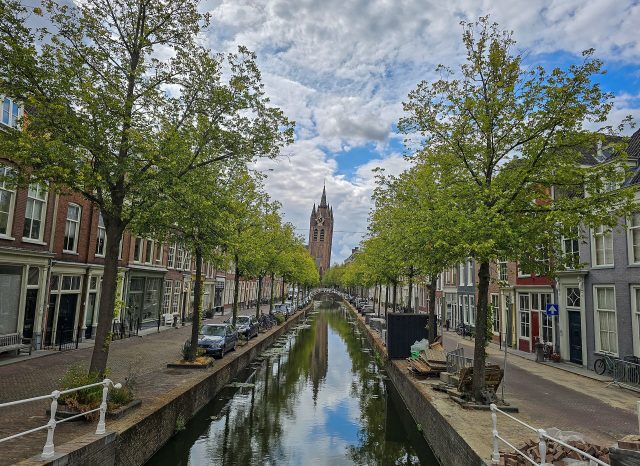
Climbing the church tower is an experience in itself. The staircase is narrow and steep, but each step rewards the effort with an ever-expanding view of Delft. From the top, the city unfolds like a living map—red-tiled roofs, winding canals, cobblestone streets, and hidden courtyards. On clear days, the horizon stretches toward The Hague and Rotterdam, and if the weather is particularly fine, the distant shimmer of the North Sea becomes visible. Below, the marketplace bustles with life, the town hall’s elegant facade standing as a counterpoint to the church’s towering presence.
Beyond its historical and architectural significance, Nieuwe Kerk is a place where the past feels tangible. It’s easy to spend an hour studying the details of the royal tombs or simply sitting on a wooden pew, listening to the silence that has settled over the centuries. The church holds memories of both grand events and ordinary lives, of the people who shaped Delft and those who simply passed through. It reminds visitors that history isn’t just a record of dates and battles—it’s the atmosphere of a place, the way light filters through stained glass, the weight of stone worn smooth by time.
For those who visit, Nieuwe Kerk offers more than a glimpse into the past. It’s a space where the present and history coexist, where the echoes of prayers and music blend with the quiet footsteps of today’s visitors. Whether drawn by its royal connections, its architectural beauty, or the chance to stand where generations have stood before, few leave without a sense of having touched something enduring. In a city known for its canals and ceramics, the church stands as a testament to the layers of meaning that make Delft more than just a picturesque stop—it’s a place where stories are still being told.