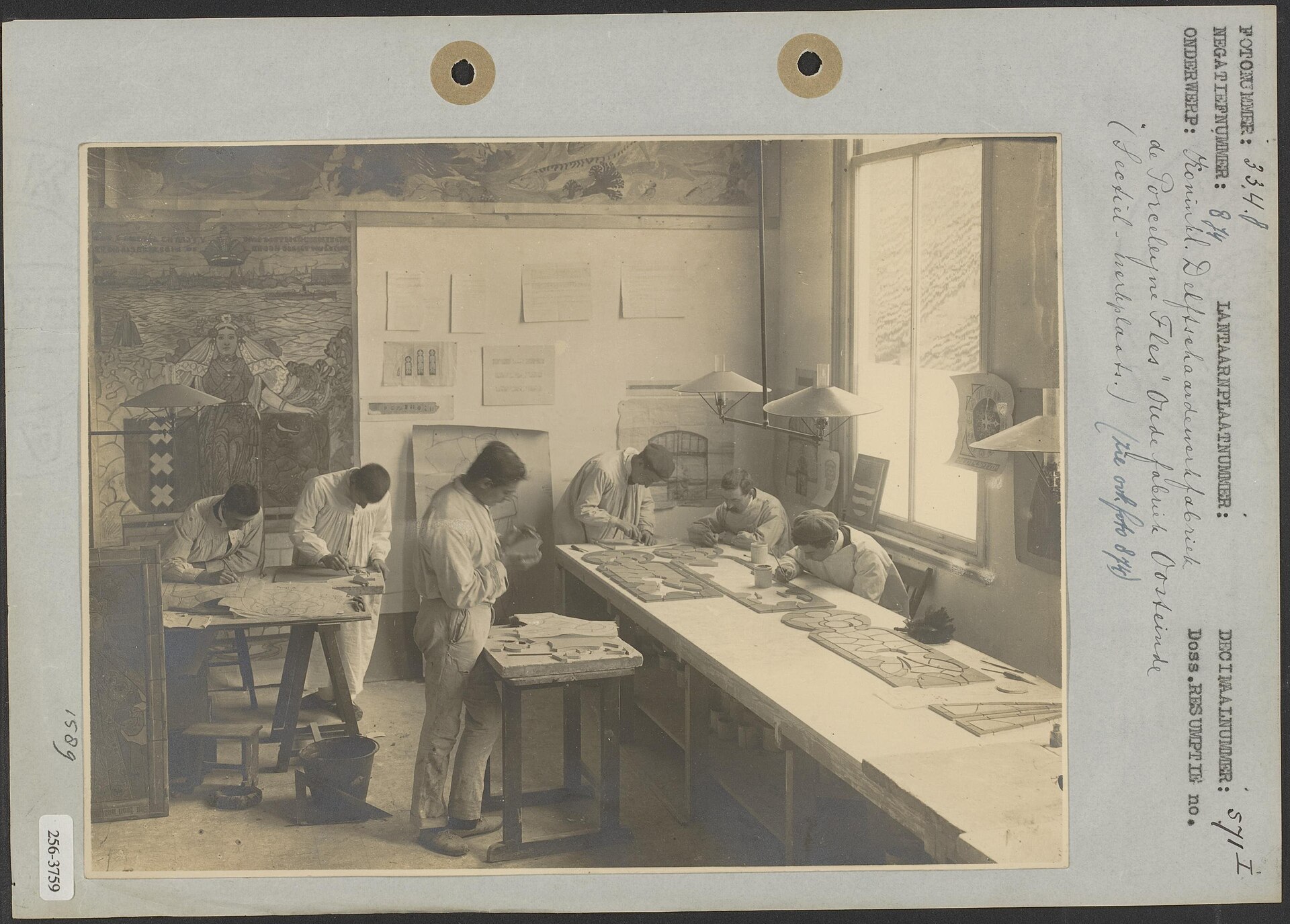
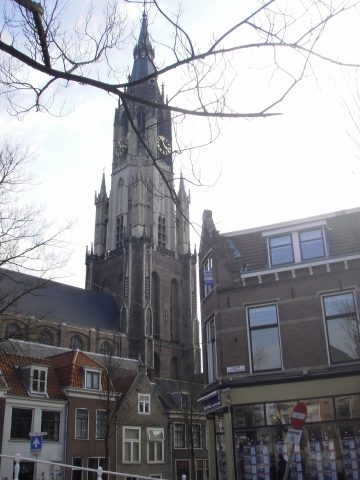
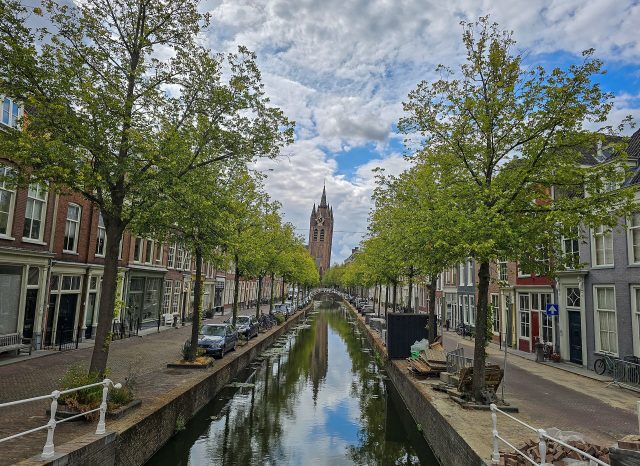
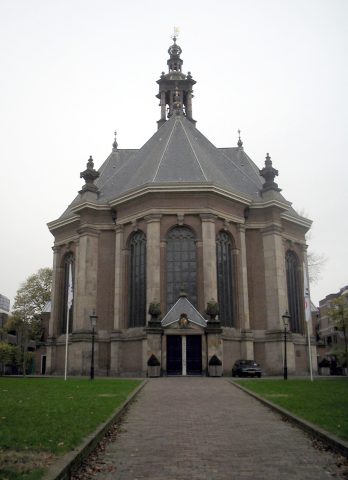
Delft’s Royal Delft pottery manufactory is one of those rare places where time seems to slow, as if the centuries-old craft still dictates the rhythm of life. Nestled along the edge of an old canal, this workshop has been shaping clay into art since 1653, when the city was at the height of its golden age. Back then, Delft was a hub of trade and creativity, and the manufactory emerged as a testament to that era’s spirit. Today, it remains a living museum where traditions are passed down through generations, not as relics of the past, but as a continuous, evolving practice.
The buildings themselves tell a story. The brick facades, with their tall windows and weathered wooden beams, speak of a time when craftsmanship was measured in patience and skill rather than speed. Inside, the courtyards are paved with cobblestones worn smooth by centuries of footsteps, and narrow passageways connect the workshops where the air still carries the scent of clay and glaze. There’s no rush here—just the quiet, deliberate pace of hands shaping, painting, and perfecting.
Royal Delft is best known for its iconic blue-and-white pottery, a style that originated in the 17th century as a European interpretation of Chinese porcelain. When Asian ceramics became a luxury in the Netherlands, local artisans didn’t just replicate the designs; they made them their own. The familiar blue motifs—windmills, fishing boats, tulip fields—were joined by scenes from everyday Dutch life, playful caricatures, and intricate landscapes. Over time, these patterns became synonymous with Delft itself, and the technique behind them has barely changed. The cobalt blue paint, the delicate brushstrokes, the careful layering of glaze—all of it remains as it was centuries ago.
Watching the process unfold is mesmerizing. It begins with raw clay, shaped by hand or on a wheel, then fired at high temperatures to create a durable base. The real magic happens in the painting studios, where artists sit at easels, their hands steady as they trace intricate designs with brushes so fine they seem to dance across the surface. Every line must be precise; there’s no room for error. Once painted, the pieces are dipped in glaze and fired again, emerging with the glossy finish that defines Delftware. It’s a method that demands not just skill, but an almost meditative focus.
While the classic blue-and-white designs remain the heart of Royal Delft’s work, the manufactory hasn’t shied away from innovation. Modern collections experiment with bold colors, abstract patterns, and sleek, contemporary forms, all while staying true to the craft’s roots. Some pieces blend minimalist aesthetics with traditional techniques, proving that even centuries-old methods can feel fresh. Yet no matter how modern the design, there’s always a connection to the past—whether in the materials used, the way the glaze catches the light, or the unmistakable touch of a hand-painted detail.
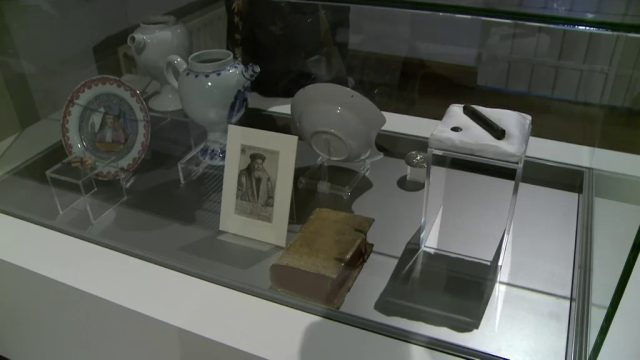
The manufactory’s museum offers a deeper dive into this history. Display cases hold rare pieces spanning the centuries, from early experiments in the 17th century to works by today’s artists. You can trace how tastes and technologies have shifted, yet the pursuit of perfection has remained constant. Among the highlights are pieces commissioned by the Dutch royal family, a nod to the manufactory’s long-standing prestige. It was this reputation, built over generations, that earned Royal Delft its royal designation in the 19th century.
For those who want to do more than observe, the manufactory offers workshops where visitors can try their hand at painting. Under the guidance of master artisans, you’ll learn the basics of the craft—how to hold the brush, how to control the flow of paint, how to turn a blank plate into something unique. It’s humbling to realize just how much skill goes into even the simplest design. Many leave with a newfound appreciation for the craft, along with a small piece of their own making, a tangible memory of their time in Delft.
Beyond production, Royal Delft has become a cultural hub. The manufactory hosts exhibitions, lectures, and collaborations with contemporary artists, bridging the gap between tradition and modernity. It’s a place where young designers can experiment, where historians share insights, and where the public can engage with the craft in unexpected ways. The workshops aren’t just about preserving the past; they’re about ensuring that the art of Delftware continues to evolve, inspiring future generations just as it has for nearly 400 years.
There’s something deeply human about Delftware. It’s not just pottery; it’s a piece of Dutch identity, a symbol of the patience and precision that define the craft. Every plate, vase, or tile carries with it the history of the city, the country, and the people who have kept this tradition alive. That’s why, even now, Royal Delft’s creations feel timeless. They’re not just beautiful objects—they’re a connection to something real, something enduring. And perhaps that’s the most remarkable thing about them.