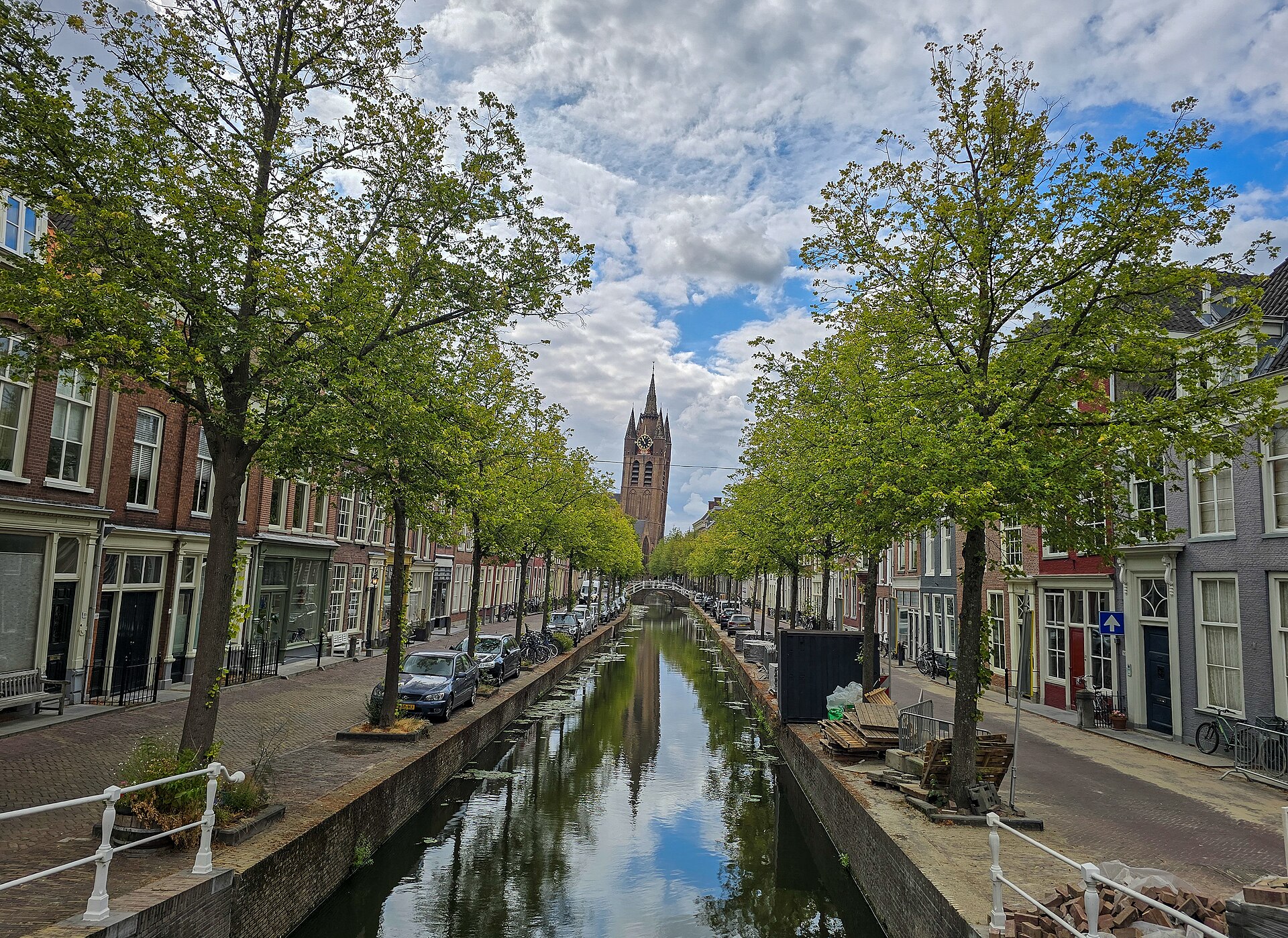
Oude Delft is one of those rare places where time seems to have settled into the very stones beneath your feet. This canal, winding through the heart of Delft, is more than just a waterway—it’s a living record of the city’s past, stretching back to the Middle Ages. Originally dug in the 13th century, it was part of a network of fortifications and trade routes that connected Delft to Rotterdam and The Hague. Back then, the canal was wider and deeper, lined with warehouses, shipyards, and the homes of merchants whose vessels carried goods across the region. Trade may have moved elsewhere, but the canal has retained its quiet charm, a silent witness to centuries of change.
Walking along Oude Delft feels like flipping through the pages of a history book written in brick and mortar. The narrow facades that line the water tell the story of Dutch architecture’s evolution, from Gothic to Renaissance and beyond. Many of these buildings date back to the 16th and 17th centuries, when Delft was at the height of its prosperity. The stepped gables, a hallmark of Dutch design, rise above the canal like silent sentinels, some adorned with intricate carvings or wrought-iron details that hint at the wealth of their former owners. Even the more modest structures—tiny houses with dormer windows or converted warehouses—carry a certain elegance, their weathered bricks and wooden shutters adding to the canal’s timeless appeal.
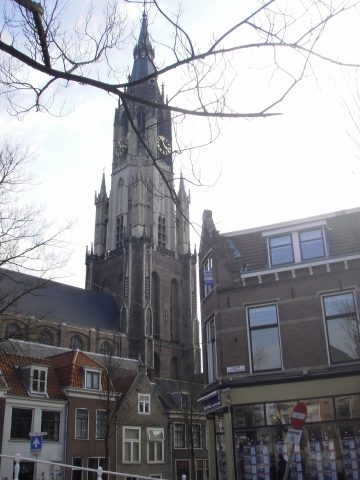
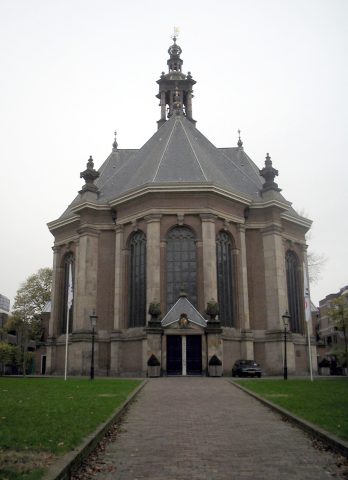
Among the most significant landmarks here is the Prinsenhof, a former monastery where William of Orange, the leader of the Dutch Revolt, was assassinated in 1584. Today, the building houses a museum, but its walls still echo with the weight of history. Nearby stands the Nieuwe Kerk, or New Church, though its construction began as far back as the 14th century. Its towering spire dominates the skyline, and inside lies the mausoleum of William of Orange, a solemn reminder of Delft’s role in shaping the Netherlands. Together, these sites anchor Oude Delft to some of the most pivotal moments in Dutch history.
Yet Oude Delft is far from a relic of the past. It’s a place where history and modern life coexist effortlessly. In the summer, the canal comes alive with tourists snapping photos of the bridges, students lounging on the banks with books, and locals cycling along the cobblestone paths. Winter transforms the scene into something quieter, the water misting over and the warm glow from the windows making the old houses feel even more inviting. Small cafés and shops dot the waterfront, selling handmade ceramics—a nod to Delft’s long-standing tradition of pottery. The canal may no longer be a bustling trade route, but it remains the city’s beating heart.
What makes Oude Delft special is its refusal to be frozen in time. It’s not a museum exhibit but a living, breathing part of the city. You might find a contemporary art gallery tucked into a centuries-old building or a trendy café occupying a former warehouse. The contrast is striking—one moment, you’re looking at a facade that hasn’t changed in 300 years; the next, you’re stepping into a space that feels entirely modern. This blend of old and new gives the canal its unique character, a place where the past isn’t just preserved but actively woven into the present.
The canal also serves as a natural axis for Delft, shaping the city’s layout in subtle ways. Streets and alleys radiate outward from Oude Delft, as if drawn to its quiet waters. In the evening, the reflections of the buildings shimmer on the surface, creating a play of light and shadow that feels almost magical. The air carries the scent of fresh bread from nearby bakeries and the faint perfume of flowers from hidden courtyards. It’s the kind of place where you want to linger, watching the water flow as slowly as life itself seems to move here.
For locals, Oude Delft is simply part of everyday life. You’ll see people going about their routines—commuters hurrying to work, dog walkers pausing for a chat, or an elderly man reading a newspaper on a bench. There’s nothing staged or performative about it; this is just how the city lives. That authenticity is what makes the canal so compelling. It doesn’t try to impress visitors; it just exists, carrying the weight of history while remaining firmly rooted in the present. That’s why Oude Delft feels so real—it’s a place without pretense, where the past and present coexist in quiet harmony.
If you wander off the main path, you’ll discover hidden corners that feel like secrets. Tiny courtyards tucked behind old houses, where ivy climbs the walls and ancient wells stand forgotten. Narrow alleys lead to other canals, each with its own character. Every turn reveals something new—a glimpse of the Nieuwe Kerk’s spire, a weathered coat of arms above a doorway, or a sudden view of the water framed by overhanging trees. Oude Delft rewards those who take the time to explore, offering up its stories one quiet moment at a time.
There’s a rhythm to this place, one that’s easy to fall into. The gentle lapping of water against the stone banks, the distant chime of church bells, the occasional laughter from a café—it all blends into a soundtrack that feels both timeless and deeply human. Whether you’re here for an hour or a day, Oude Delft has a way of making you slow down, of reminding you that some places are meant to be savored, not rushed. It’s not just a canal; it’s the soul of Delft, a place where history isn’t just remembered—it’s lived.