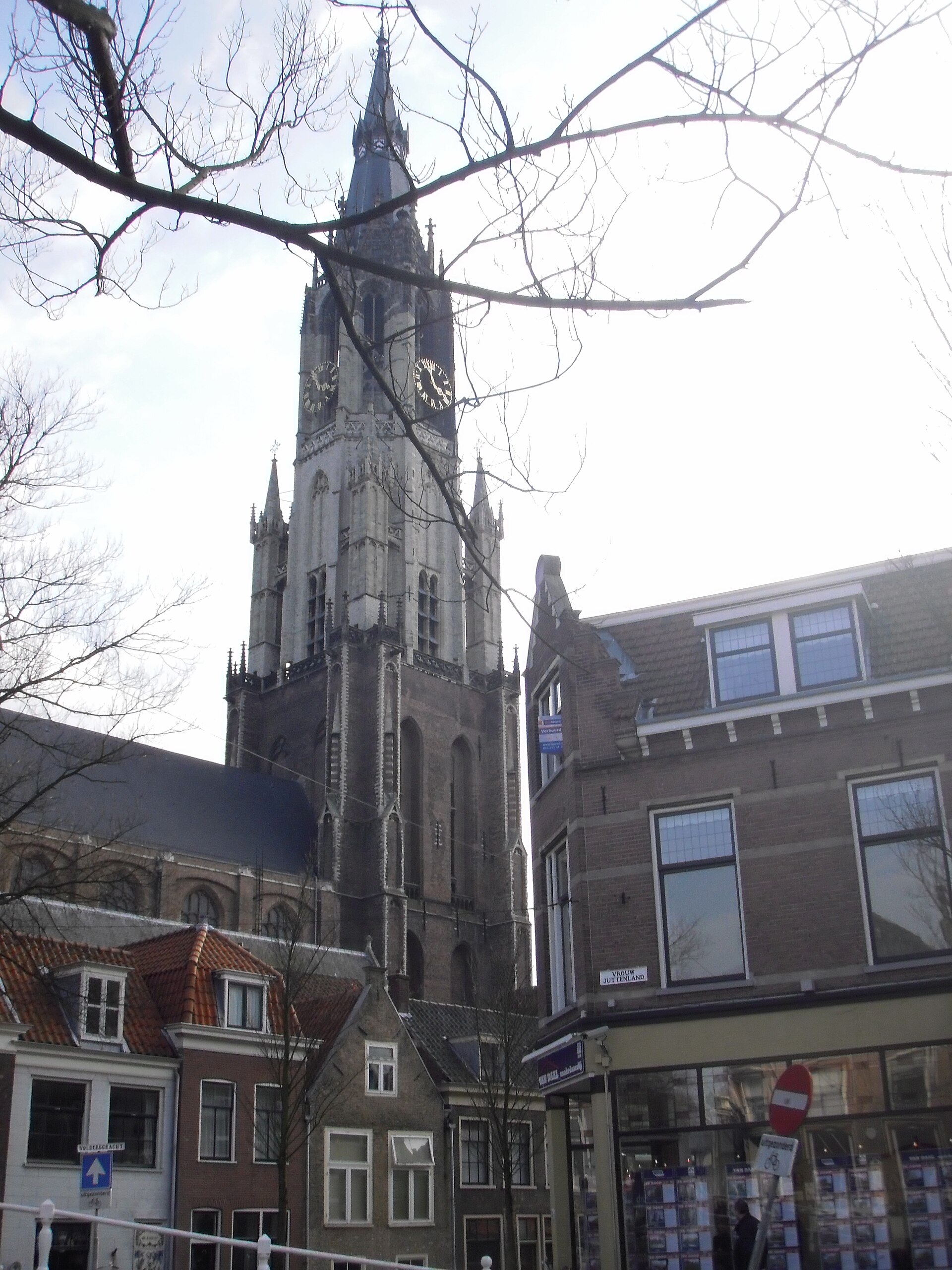
New Church in Delft stands as more than just a place of worship—it’s a quiet witness to centuries of Dutch history, a landmark that has watched over the city’s triumphs and sorrows. Rising above the Market Square, directly across from the town hall, its slender spire crowned with an ornate finial is one of Delft’s most recognizable silhouettes. The church doesn’t just occupy space in the city; it holds its memories, from the rise of the Dutch Republic to the everyday lives of generations of townspeople. Inside, the walls seem to whisper stories that could fill volumes, stories of revolution, art, and resilience.
Built in the fifteenth century on the site of an earlier chapel, the church has evolved over time, though its core identity remains rooted in the Gothic style that took shape by the mid-sixteenth century. The soaring pointed arches, sturdy buttresses, and delicate stone tracery are classic elements of Dutch Gothic architecture, yet there’s something distinct about New Church. The bricks used in its construction are lighter than those in other cities, giving the facade a warm, almost golden hue in certain light. Inside, the high vaulted ceilings and slender columns create an unexpected sense of airiness, defying the weight of the stone. The space feels both grand and intimate, a place where history lingers in the quiet corners.
The church’s most famous feature is the mausoleum of William of Orange, the leader of the Dutch Revolt and a central figure in the country’s struggle for independence from Spanish rule. Designed in the Renaissance style, the tomb resembles a small temple within the church, its marble columns, bronze figures, and intricate carvings commanding attention. William was assassinated in Delft in 1584, and though he was initially buried elsewhere, his remains were later moved here, turning the church into a place of pilgrimage for those tracing the roots of the Dutch nation. The tomb is more than a monument—it’s a symbol of the ideals that shaped the Netherlands.
Beyond the mausoleum, the church holds other reminders of the past. The graves of royalty and notable citizens line the floors and walls, including the tomb of Admiral Piet Hein, a seventeenth-century naval hero. Memorial plaques and monuments tell fragmented stories of lives once lived, though not all have survived the passage of time. During World War II, the church suffered damage from bombing, and parts of its interior were lost. What remains, however, is enough to imagine the church in its prime, when it was a focal point of civic and spiritual life.
Today, New Church remains an active place of worship, with services held on Sundays and visitors welcomed on weekdays. The thick stone walls and high ceilings muffle the sounds of the bustling square outside, creating a sense of stillness that feels almost timeless. Occasionally, the church hosts organ concerts, filling the space with music that seems to echo from another era. The organ itself is one of the oldest in the Netherlands, its powerful tones a testament to the craftsmanship of centuries past. Even when silent, the instrument adds to the church’s atmosphere, a tangible link to the generations who have gathered here.
The Market Square surrounding the church is a lively contrast to the quiet within. Tourists pause to photograph the town hall, locals sip coffee at outdoor cafés, and on Wednesdays and Saturdays, the square transforms into a market brimming with fresh produce, cheese, flowers, and traditional Dutch treats. New Church stands at the heart of this activity, yet it feels apart from it, a steady presence amid the ebb and flow of daily life. Centuries ago, the square was not a marketplace but a cemetery, with graves encircling the church. Only in the nineteenth century were the remains relocated, leaving the space open for the vibrant scene that exists today.
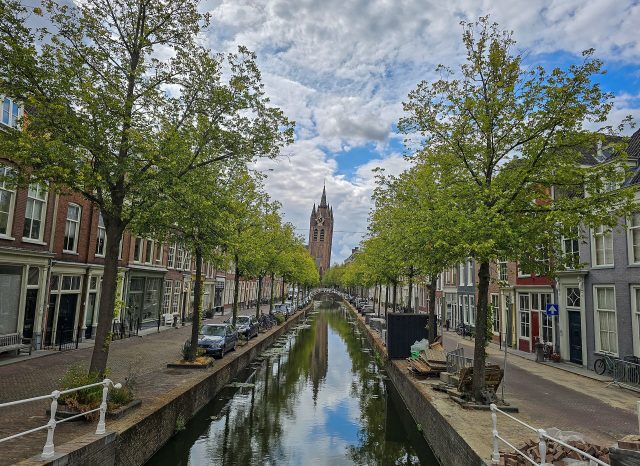
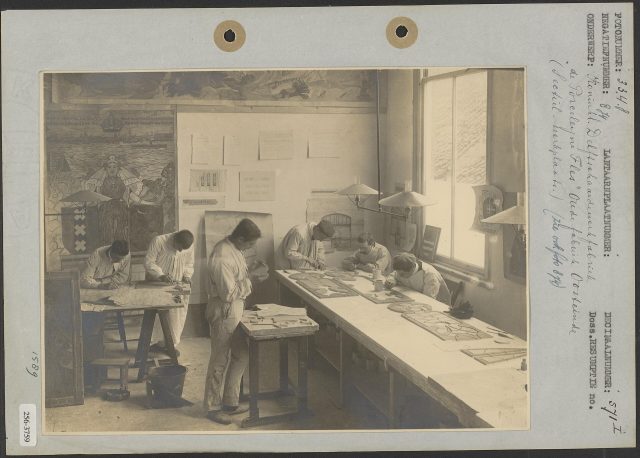
Delft is a small city, and New Church is just one of its many historic sites. A short walk away lies the Old Church, with its leaning tower, and the famous Delftware factories, where the iconic blue-and-white pottery is still made. Yet New Church stands out for its historical weight and its continued role in the life of the city. It’s not a relic frozen in time but a living place where the past and present intersect. Whether for prayer, reflection, or simply a moment of quiet, people still come here, drawn by something deeper than mere curiosity.
For those willing to climb the narrow, winding staircase of the church tower, the reward is a breathtaking view of Delft and its surroundings. The ascent is steep and a little daunting, but the panorama from the top is unforgettable. From this height, the city unfolds like a painting: the red-tiled roofs, the winding canals, the patches of green parks, and in the distance, the fields and windmills that define the Dutch landscape. On clear days, the skyline of The Hague is visible just a few kilometers away. The tower is open to visitors during the warmer months, and though the climb isn’t for the faint of heart, many consider it the best way to truly see Delft.
New Church is more than a monument—it’s a piece of the city’s soul. It holds the memories of those who walked its aisles centuries ago, yet it remains a place where people come to pray, to remember, or simply to sit in silence. In a world that changes so rapidly, places like this remind us that some things endure. That’s why, perhaps, New Church continues to draw the eyes and hearts of those who pass through Delft, offering a connection to something timeless.