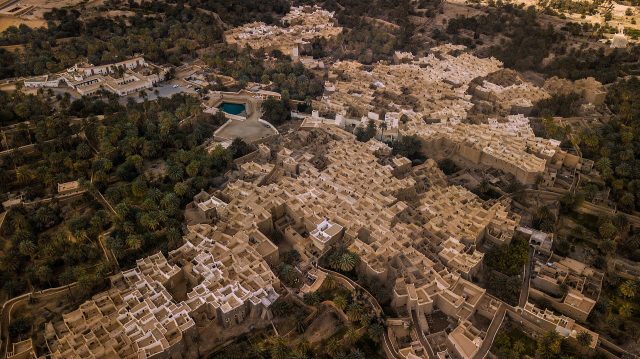
Ghadames clings to the edge of the Sahara, its low houses blending into the dunes. The city has been called the pearl of the desert, and the name fits—not because it sparkles, but because it endures. Bab el-Bahr, the Gate of the Sea, stands where the old city meets the open sand.
The gate marks the end of a journey. For centuries, Ghadames was a crossroads where North African merchants met traders from the Sahel and the Mediterranean. They carried salt, gold, and textiles, turning the city into a hub of exchange. Bab el-Bahr was the first sign of shelter after weeks of travel. Its name confuses visitors—the nearest sea is far beyond the horizon. Some say it refers to the oasis that once surrounded the city, or to the underground water that kept it alive. The truth is lost, but the name still carries weight.
The gate is built from sandstone and clay, materials that stay cool in the heat and last through the years. The arch is just wide enough for a loaded camel to pass beneath. Above it, the remains of watchtowers show where guards once stood, watching for caravans or danger. Now, only fragments remain, but they’re enough to picture the past.
Every morning, locals walk through the gate on their way to the market. Tourists, if any, stop to take photos. At sunset, the arch throws long shadows, and the desert beyond seems to pause.
Ghadames has always been remote. For much of its history, outsiders were barred. Even now, few come here. That isolation has kept something rare: a city that still lives as it did centuries ago. Bab el-Bahr is part of that. It’s not just a gate between the city and the desert—it’s a bridge between then and now. The wind carries sand and the scent of distant fires through the arch, mixing with the sounds of the old town: voices, laughter, the bark of a dog.
Beyond the gate, the old city begins. The alleys are so narrow you can touch both walls at once. There are no cars, only donkeys and footsteps. The houses are built close together, their rooftops connected by bridges so women can move between neighborhoods without stepping into the open. It’s a world designed for survival, and Bab el-Bahr is the way in.
The city has seen wars and hardship, but the gate still stands. For the people of Ghadames, it’s more than stone. It’s a reminder of those who came before, of a way of life that has lasted through the centuries.
If you come here, don’t just walk through. Stop. Touch the rough surface of the gate. Look at the desert beyond. Try to imagine the travelers who passed through over the centuries—their stories, their lives. Some are forgotten, but the gate remembers.