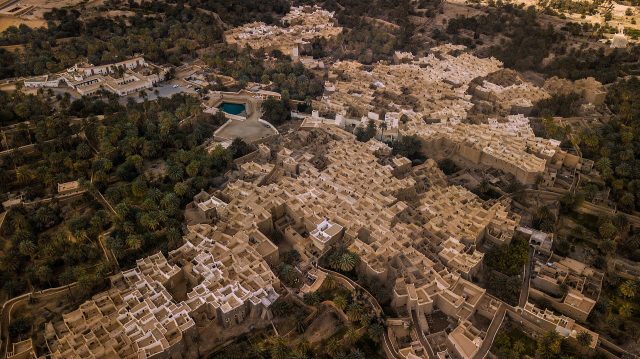
Ghadames Museum is a quiet, unassuming place that holds the stories of one of Libya’s most distinctive cities. Tucked within the winding lanes of the old town, it feels less like a formal exhibition and more like a conversation with the past. There are no grand halls or polished displays here—just a collection of objects that speak of the rhythms of life in an oasis where time moves differently. The museum doesn’t try to impress with scale or spectacle; instead, it offers something rarer: a sense of intimacy with a place that has endured for centuries.
The city of Ghadames is often called the Pearl of the Sahara, and the museum helps explain why. Its architecture is unlike anywhere else—clusters of mud-brick houses with flat roofs, connected by covered walkways and bridges that once allowed women to move through the city without being seen. The museum preserves this legacy with models of the old town’s layout, along with everyday items that reveal how people lived within these walls. There are clay water jars, worn wooden tools, and handwoven textiles that still carry the scent of spices and desert air. Even the traditional clothing on display feels alive, as if its wearers had just stepped out of the room.
Ghadames has long been a crossroads, and the museum dedicates space to its role in the trans-Saharan trade. For centuries, caravans passed through here, carrying salt, gold, and spices between North Africa and the Sahel. The city was a hub of commerce, its markets bustling with goods from distant lands. The museum’s collection includes old scales, coins from different eras, and objects that traveled across the desert—ivory carvings, beads made from semi-precious stones, and leather flasks designed to keep water cool. These items tell a story of movement and exchange, of cultures meeting in the heart of the Sahara.
The history of Ghadames stretches back millennia, and the museum carefully preserves fragments of its past. There are Roman inscriptions found on the outskirts of the city, remnants of a time when empires brushed against this remote oasis. But the deeper roots belong to the Amazigh, or Berbers, who have lived here for generations. The museum showcases their craftsmanship—tools for tending the oasis gardens, jewelry worn by women, and even examples of traditional facial tattoos, some of which can still be seen on the elders of the city. These artifacts are more than relics; they’re evidence of a way of life that has adapted but never disappeared.
Islam arrived in Ghadames in the seventh century, and the museum reflects how deeply it shaped the city’s identity. A separate room holds ancient Quranic manuscripts, wooden stands for reading sacred texts, and objects tied to religious rituals. Ghadames has always been a devout place, its streets filling with the call to prayer five times a day. The exhibits show how Islamic traditions blended with Amazigh customs, creating a unique cultural fabric that endures today. Even the architecture of the old town—with its narrow alleys and shaded courtyards—was designed to accommodate both faith and daily life.
The museum doesn’t just dwell on the past. It also captures the more recent chapters of Ghadames, from the colonial era to the upheavals of the 20th century. Photographs document how the city has changed, while works by local artists reveal how its beauty continues to inspire. Some displays touch on the challenges the city has faced—war, shifting borders, and the pressures of modernity—but the overall impression is one of resilience. Ghadames has always been a place where history intersects, yet it has managed to hold onto its character.
Walking through the museum is like stepping into the quiet pulse of the city itself. The air carries the earthy scent of clay and dried herbs, the same ones used in traditional cooking. The exhibits are arranged without fanfare, as if inviting visitors to sit and listen rather than rush through. There’s no need for grand narratives here; the objects speak for themselves, each one a thread in the larger story of Ghadames. The museum doesn’t try to dazzle—it simply offers a chance to understand how this oasis has survived, how its people have carried their traditions forward, and how the past still lingers in the present.